Lockheed C-130 Hercules Tactical Transport Aircraft
Introduction
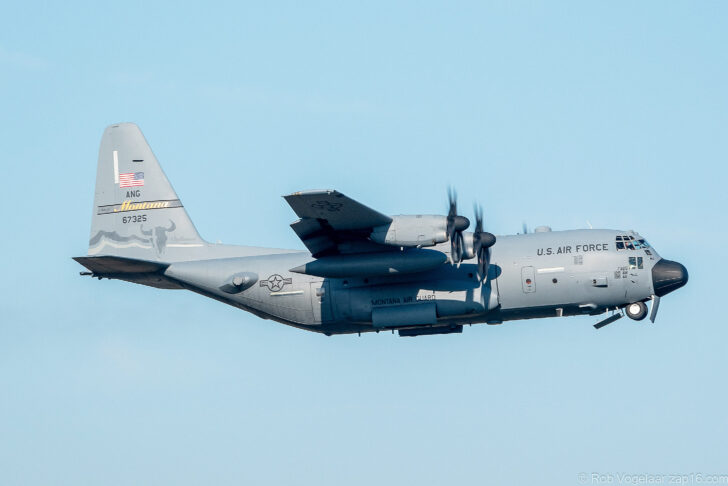
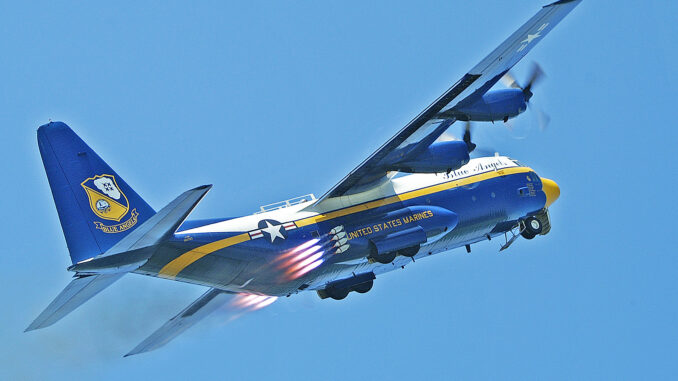
The Lockheed C-130 Hercules is a four-engine turboprop tactical transport aircraft designed to transport military personnel, combat equipment, and supplies into short, unprepared runways. Developed in the 1950s, the versatile platform remains in active production and continuous service worldwide.
General information
-
Type: Tactical military transport aircraft
-
Manufacturer: Lockheed Corporation / Lockheed Martin
-
First flight: August 23, 1954
-
Status: In service
-
Primary users: United States Air Force, United States Marine Corps, Royal Air Force, Royal Canadian Air Force, Republic of Korea Air Force, Japanese Air Self-Defense Force, Royal Australian Air Force, Egyptian Air Force, Saudi Arabian Air Force, Brazilian Air Force
-
Number built: Over 2,700
History
The United States Air Force issued a design requirement in February 1951 for a modern military airlifter. The requirement called for a cargo plane capable of operating from rough, unimproved airstrips while accommodating heavy artillery and armored vehicles. Boeing, Douglas, Fairchild, and Lockheed submitted competing proposals.
On July 2, 1951, the military selected Lockheed to build two YC-130 prototypes. The aircraft completed its maiden flight on August 23, 1954, in Burbank, California. Serial production began shortly after, and the C-130A entered operational service in December 1956. Continuous modernization over seven decades has preserved the structural relevance of the airframe.
Design
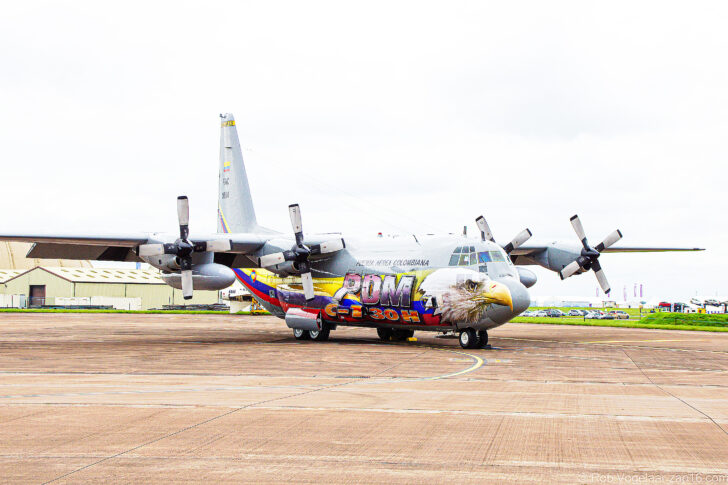
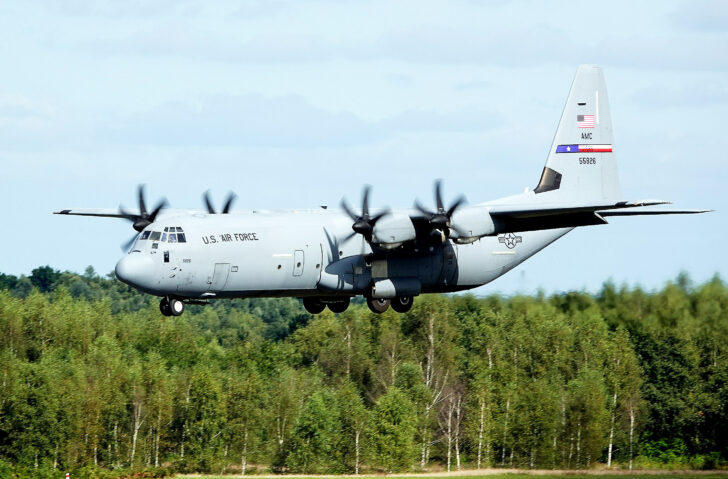
The design of the Lockheed C-130 Hercules emphasizes cargo accessibility, high structural stability, and landing reliability. It features a high-mounted wing layout that protects the engines from ground debris during landings on unimproved dirt strips.
The rear fuselage incorporates an integrated loading ramp and door system that permits direct drive-on loading for military vehicles and rapid palletized cargo entry. The pressurized interior cabin holds troops, medical litters, or heavy cargo pallets. Powered by four turboprop engines, the airframe produces high reverse thrust for short-field landings and low landing speeds.
Operational impact
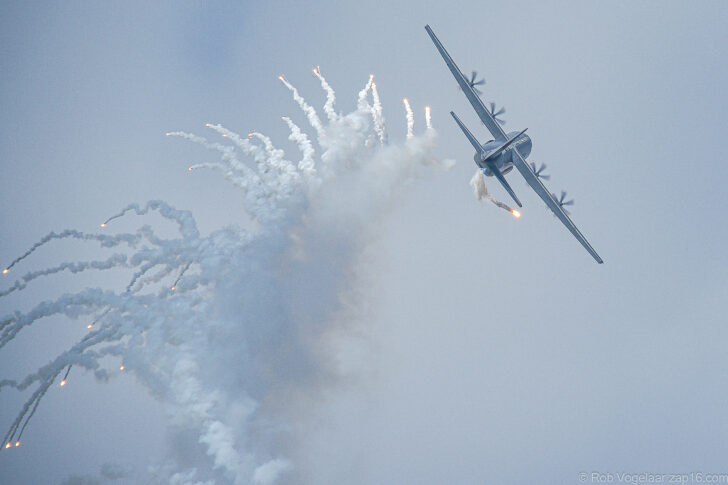
The C-130 Hercules established the standard for tactical transport missions worldwide. Its short takeoff and landing capability enables air forces to project troop presence and deliver aid directly into conflict zones or disaster sites without long runway infrastructure. Beyond cargo transport, operators utilize specialized airframes for aerial refueling, air assault, electronic warfare, search and rescue, maritime patrol, and aerial firefighting.
Variants
-
C-130A / B / E / H: Core cargo transport variants produced across multiple decades featuring incremental propulsion and avionics updates.
-
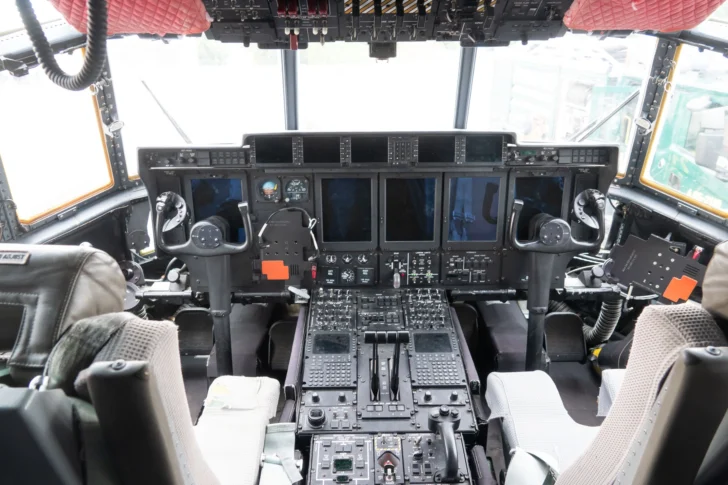
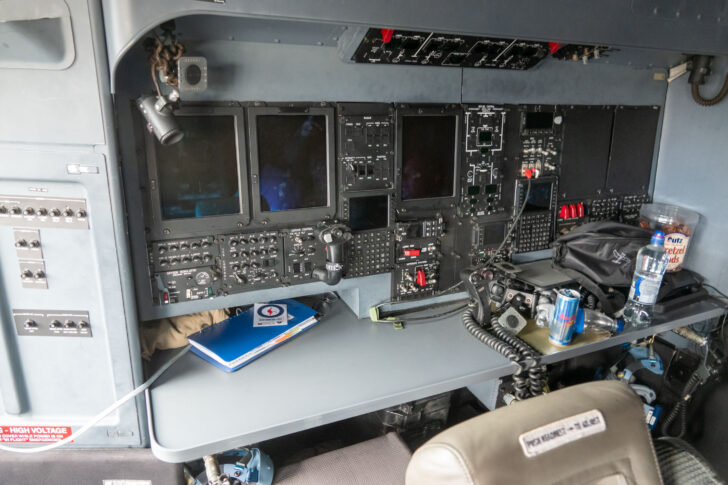
C-130J Super Hercules: Advanced modern production mark featuring Rolls-Royce AE 2100D3 turboprop engines, six-blade composite propellers, and a digital glass cockpit.
-
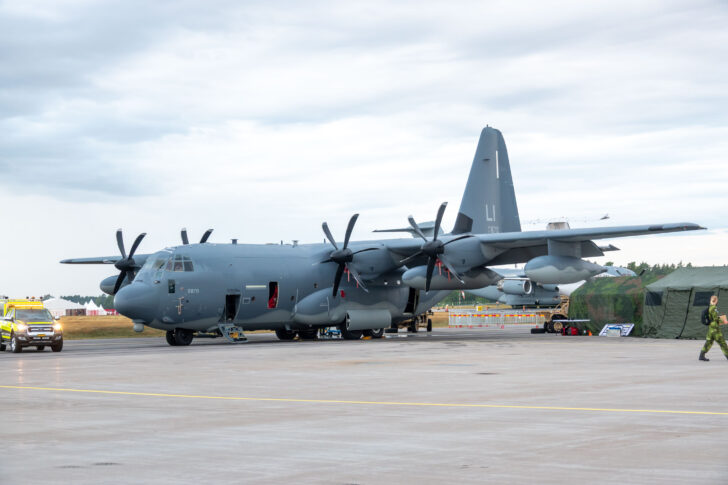
AC-130 Spectre / Ghostrider: Heavily armed gunship variant equipped with side-firing weaponry for close air support.
-
KC-130 Hercules: Aerial refueling tanker variant serving air force and naval aviation branches.
-
EC-130 Commando Solo / Compass Call: Specialized electronic warfare and psychological operations platforms.
-
LC-130 Hercules: Ski-equipped variant engineered for arctic and antarctic operational support.
-
L-100 / LM-100J: Civilian commercial cargo variants.
Operators
-
Current: United States Air Force, Royal Canadian Air Force, Royal Australian Air Force, Egyptian Air Force, Saudi Arabian Air Force, and dozens of international defense forces.
-
Former: Royal Air Force (retired standard C-130K fleet), Royal Norwegian Air Force (legacy models replaced by C-130J).
Specifications (C-130J Super Hercules)
General characteristics
-
Crew: 3 (two pilots, one loadmaster)
-
Length: 29.79 m (34.37 m for stretched C-130J-30)
-
Wingspan: 40.41 m
-
Height: 11.84 m
-
Wing area: 162.1 m²
-
Empty weight: 34,274 kg
-
Maximum takeoff weight: 74,393 kg
-
Powerplant: 4 × Rolls-Royce AE 2100D3 turboprops, 3,500 kW (4,700 shp) each
Performance
-
Maximum speed: 670 km/h
-
Cruise speed: 660 km/h
-
Range: 3,334 km with maximum payload
-
Service ceiling: 8,615 m with 19,090 kg payload
Armament
-
Standard transport: Unarmed
-
AC-130 Gunship variants: 30 mm autocannon, 105 mm M102 howitzer, precision-guided munitions (Hellfire missiles, Small Diameter Bombs)
The Lockheed C-130 Hercules remains an essential foundation of worldwide military logistics and tactical air transport. Its durable design, adaptability across diverse military mission sets, and continuous technological upgrades maintain its operational necessity. As air forces modernize their fleets, the Super Hercules variant will extend the operational lifespan of the family well into the future.