Fokker 100 Regional Jet: History, Technical Specifications, and Fleet Overview
Introduction
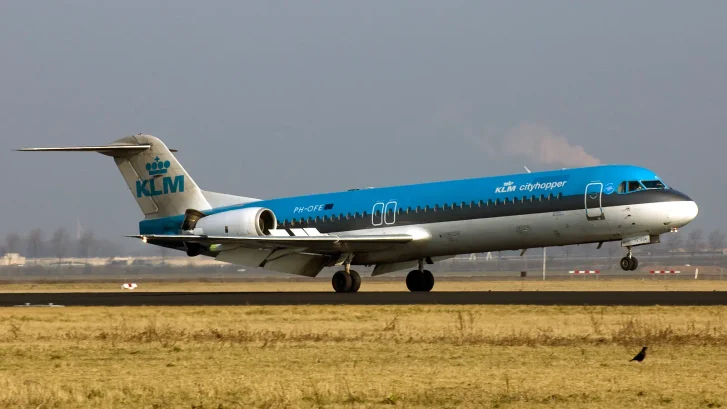
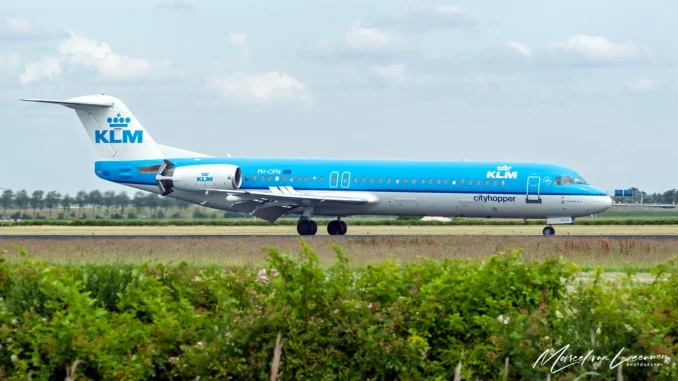
The Fokker 100 is a Dutch twin-engine, narrow-body regional jet airliner developed and manufactured by Fokker. Designed as a stretched, modernized derivative of the Fokker F28 Fellowship, it balances low operational costs with quiet turbofan propulsion. The twinjet became the largest airliner produced by the Netherlands and served extensive European and international airline networks.
General Information
- Type: Narrow-body twin-engine regional jet airliner
- Manufacturer: Fokker
- First Flight: November 30, 1986
- Status: In active service (limited)
- Primary Users: Alliance Airlines, QantasLink (Network Aviation), Iran Aseman Airlines, Iran Air, Skyward Express, Karun Airlines, Air Niugini
- Number Built: 283 production airframes (plus 2 flight prototypes)
History
Fokker announced development of the aircraft in November 1983 alongside the smaller Fokker 50 turboprop. The program aimed to meet airline demands for a fuel-efficient 100-seat regional transport to replace first-generation short-haul jetliners like the BAC One-Eleven and Douglas DC-9.
Launch orders arrived quickly from Swissair in late 1983, followed by KLM and USAir. The first prototype completed its maiden flight on November 30, 1986, at Schiphol Airport. Type certification followed in November 1987, allowing Swissair to introduce the jet into revenue passenger service in February 1988. Substantial orders from American Airlines and TAM boosted production numbers, but severe corporate cash-flow deficits led to Fokker declaring bankruptcy in March 1996. Final aircraft deliveries concluded in 1997.
Design
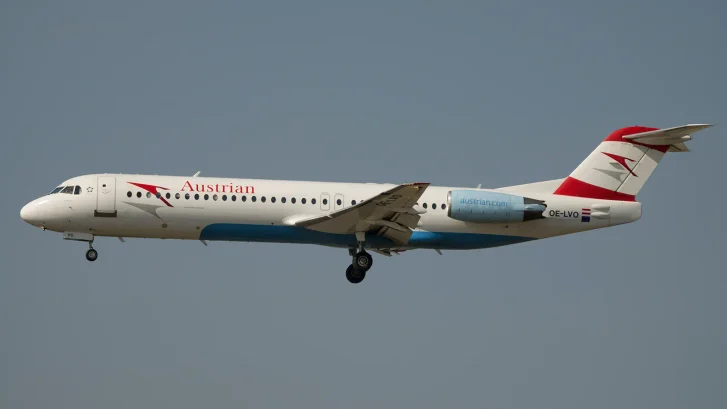
The airframe integrates several structural and aerodynamic advancements over the foundational F28:
- Aerodynamic Redesign: An elongated fuselage incorporates a 5.7-meter stretch alongside an entirely redesigned, highly efficient supercritical wing profile that raises cruise speeds and lift-to-drag ratios.
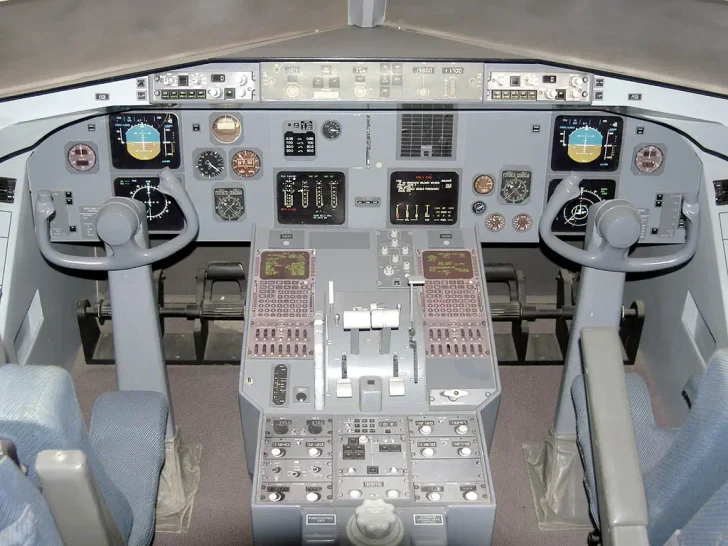
- Glass Cockpit: The two-crew flight deck features an advanced Electronic Flight Instrument System (EFIS) paired with Category IIIa autoland capabilities, modern flight management systems, and centralized maintenance diagnostics.
- Propulsion Placement: Two Rolls-Royce Tay turbofan engines mount on rear-fuselage pylons, reducing internal cabin noise levels and allowing uninhibited full-span trailing-edge wing flaps.
- Hydraulic and Control Systems: The aircraft uses dual hydraulic systems and a split-rudder tailcone airbrake, eliminating the need for complex wing thrust reversers or heavy lift dumpers.
Operational Impact
The Fokker 100 pioneered quiet, cost-effective hub-and-spoke feeder operations during the late 1980s and 1990s. Its quiet engine profile allowed airlines to operate into noise-restricted municipal airports across Europe and North America where older short-haul jets faced curfews. While European flag carriers eventually transitioned to Airbus A320 and Embraer families, the jet earned a robust second-life reputation in charter, fly-in fly-out (FIFO) mining transport, and regional commuter flying across Australia and parts of Africa and the Middle East.
Variants
- Fokker 100 (F.28-0100): Standard base production model powered by Rolls-Royce Tay 620-15 or higher-thrust Tay 650-15 engines.
- Fokker 100QC (Quick Change): Convertible configuration enabling rapid interior reconfigurations between all-passenger and all-cargo layouts.
- Fokker 100EJ (Executive Jet): Long-range corporate and VIP shuttle modification with auxiliary fuel tanks and executive lounge cabins.
- Fokker 70: Shortened baseline sister variant with a 4.62-meter fuselage reduction, seating up to 79 passengers.
Operators
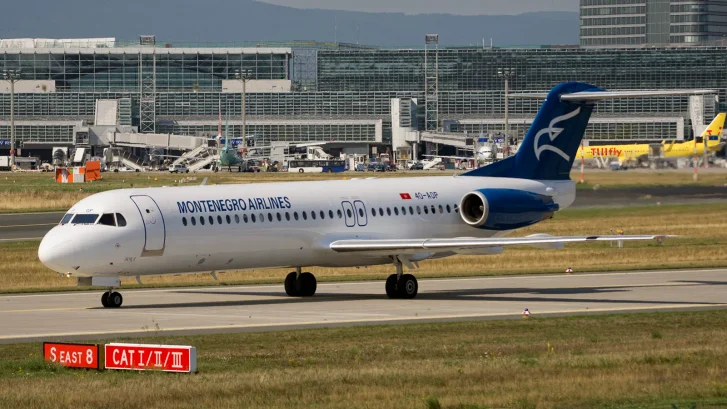
- Current: Australia (Alliance Airlines, Network Aviation/QantasLink), Iran (Iran Aseman Airlines, Iran Air, Karun Airlines, Kish Air), Kenya (Skyward Express, Premier Airlines), Papua New Guinea (Air Niugini).
- Former: Swissair, KLM Cityhopper, American Airlines, USAir/US Airways, TAM Linhas Aéreas, Austrian Airlines, British Midland (bmi), Mexicana, Mandarin Airlines, Alpi Eagles, Pelita Air.
- Future: None (airframe out of production; global fleets are scheduled for phased retirement over the coming years).
Specifications
General Characteristics
- Crew: 2 flight crew (pilot and co-pilot)
- Length: 35.53 m
- Wingspan: 28.08 m
- Height: 8.50 m
- Wing Area: 93.5 m²
- Empty Weight: 24,541 kg
- Maximum Zero Fuel Weight: 36,740 kg
- Maximum Landing Weight: 39,915 kg
- Maximum Takeoff Weight: 45,810 kg (high gross weight version)
- Powerplant: 2 × Rolls-Royce Tay Mk 650-15 turbofans
- Takeoff Thrust: 67.2 kN per engine
Performance
- Cruising Speed: 845 km/h (Mach 0.77)
- Maximum Operating Speed: 856 km/h (Mach 0.777)
- Range: 3,170 km (with typical full passenger payload)
- Ferry Range: 4,300 km (with reserves)
- Service Ceiling: 10,670 m (35,000 ft)
- Takeoff Run: 1,620 m (at MTOW, standard conditions)
Passengers Layout
- Typical Single-Class: 100 to 109 passengers arranged in a 5-abreast (2–3) layout with 79 to 81 cm seat pitch.
- Typical Two-Class: 97 passengers (8 business class seats in a 2–2 layout with 86 cm pitch; 89 economy class seats in a 2–3 layout).
- Maximum Certified Capacity: 122 passengers at high-density charter configuration.
- Cargo Volume: 16.7 m³ split across forward and aft underfloor cargo holds.
The Fokker 100 established an enduring standard for short-haul passenger comfort and airfield noise abatement through its streamlined cabin and aft-mounted turbofan configuration. Dedicated engineering support from Fokker Services has enabled specialized operators to maintain airworthiness decades after production ended. As carriers transition to newer regional aircraft like the Airbus A220 and Embraer E-Jets, the Dutch twinjet approaches the final phase of its commercial service life.