The Original Wide-Body Commercial Jet Airliner
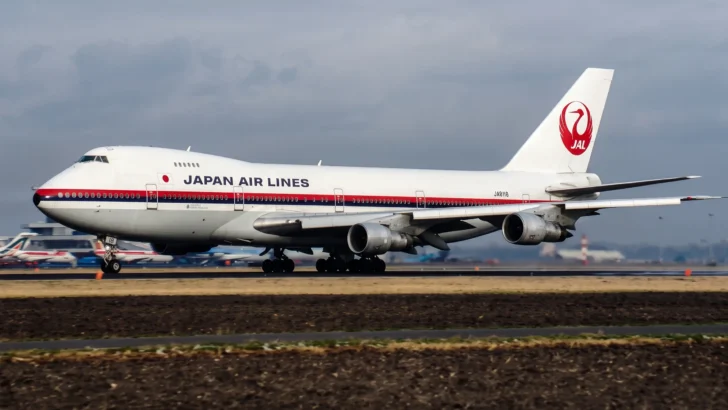
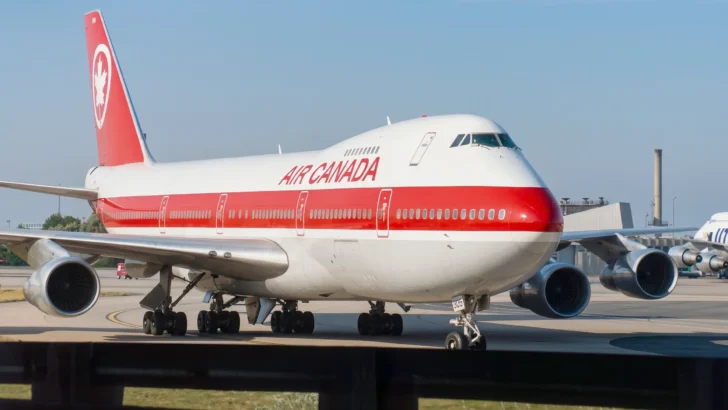
The Boeing 747-100 is a long-range, four-engine wide-body jet airliner developed by Boeing Commercial Airplanes. As the foundational variant of the Boeing 747 family and the world’s first wide-body commercial aircraft, it introduced twin-aisle passenger cabins, high-bypass turbofan propulsion, and unprecedented passenger capacity that transformed global long-haul air travel.
General Information
- Type: Wide-body commercial jet airliner
- Manufacturer: Boeing Commercial Airplanes (United States)
- First Flight: February 9, 1969
- Status: Retired from commercial service
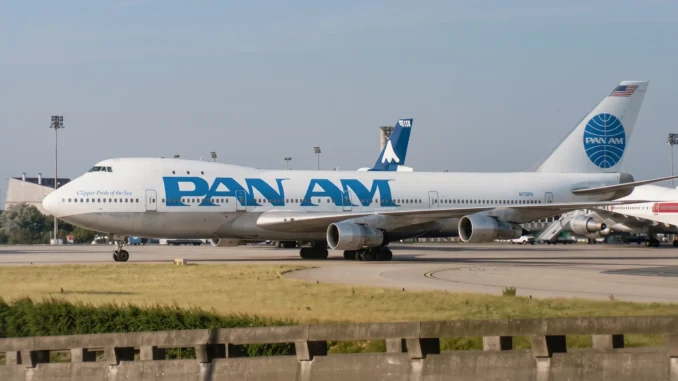
- Primary Users: Pan Am, TWA, United Airlines, American Airlines, Northwest Orient, BOAC (British Airways), Air France, Lufthansa, Japan Airlines, KLM
- Number Built: 205 (comprising 168 standard 747-100, 9 747-100B, and 29 747SR units)
History
In the mid-1960s, rapid growth in commercial air travel created severe airport and airway congestion, prompting Pan American World Airways (Pan Am) to ask Boeing for an aircraft more than twice the size of the Boeing 707. At the same time, Boeing lost a U.S. Air Force heavy military transport competition (the CX-HLS program) to Lockheed, leaving Boeing with surplus engineering talent and wide-body fuselage studies.
Boeing officially launched the Boeing 747-100 program in April 1966 after Pan Am signed an order for 25 aircraft worth $525 million. Chief engineer Joe Sutter led the development team at a newly constructed assembly facility in Everett, Washington. The prototype rolled out on September 30, 1968, completed its maiden flight on February 9, 1969, received Federal Aviation Administration certification in December 1969, and entered commercial service with Pan Am between New York and London on January 22, 1970. Production of the 747-100 series continued until 1986.
Design
The Boeing 747-100 introduced the distinctive partial double-deck fuselage that became the hallmark of the Jumbo Jet. Engineers positioned the three-crew cockpit above the main passenger deck so that future freighter variants could load cargo through a hinged nose door without obstructing the flight deck. Early 747-100 airframes featured three upper-deck windows per side and used the space as a first-class lounge, while later production aircraft and retrofitted units featured ten windows per side for upper-deck seating.
The aircraft featured a 37.5-degree swept wing equipped with complex triple-slotted trailing-edge flaps to allow operation from existing international runways. To support a maximum takeoff weight exceeding 333,000 kg, Boeing installed four main landing gear bogies (16 main wheels) plus a two-wheel nose gear. Propulsion came from four Pratt & Whitney JT9D high-bypass turbofan engines, which delivered double the thrust of earlier jet engines while reducing specific fuel consumption.
Operational Impact
The Boeing 747-100 democratized international air travel by drastically lowering seat-mile operating costs and making intercontinental flights affordable to mass-market travelers. Carrying more than 7 million passengers in its first year of operation, it established the twin-aisle, 10-abreast economy cabin standard that still defines modern long-haul wide-body aviation.
Beyond passenger transport, the 747-100’s 6.13-meter fuselage width was engineered specifically to accommodate two standard 2.44-meter-wide intermodal cargo containers side-by-side on the main deck. Although Boeing built no factory freighters on the -100 line, dozens of retired passenger airframes were later converted into 747-100SF freighters, extending their operational lifespan in global air cargo networks.
Variants
- 747-100: The initial baseline production model powered by Pratt & Whitney JT9D-3A or JT9D-7A engines (168 built, including the prototype).
- 747-100B: An improved version featuring a strengthened airframe and landing gear for higher takeoff weights (up to 340,200 kg), offered with Pratt & Whitney JT9D-7A, General Electric CF6-50, or Rolls-Royce RB211-524 engines (9 built for Iran Air and Saudia).
- 747SR (Short Range): A specialized high-cycle derivative built primarily for Japanese domestic airlines, featuring structural reinforcements to withstand frequent takeoffs and landings and seating up to 550 passengers (29 built).
- 747-100B SR SUD: Two specialized short-range aircraft built for Japan Airlines combining the 747-100B structure with the stretched upper deck (SUD) of the 747-300, accommodating up to 563 passengers.
- 747-100SF (Special Freighter): Passenger 747-100 airframes converted post-delivery into cargo aircraft with a reinforced main deck and side cargo door.
- 747-100 Shuttle Carrier Aircraft (SCA): Two 747-100 airframes modified by NASA with external fuselage struts and tail stabilizers to ferry Space Shuttle orbiters across the United States.
Operators
- Current: No commercial airlines, military branches, or government agencies operate the Boeing 747-100. Preserved airframes remain on static display at aviation museums worldwide, including the prototype in Seattle.
- Former: Major airline operators included Pan Am, TWA, United Airlines, American Airlines, Northwest Orient, Delta Air Lines, Continental Airlines, BOAC / British Airways, Air France, Lufthansa, Alitalia, Iberia, KLM, Sabena, Aer Lingus, Air Canada, Japan Airlines, All Nippon Airways, Saudia, and Iran Air (which operated the final commercial passenger flight in January 2014). Special operators included NASA and the United States Air Force (designated C-19 in the Civil Reserve Air Fleet).
- Future: None; production ended in 1986 and all operational airframes have been retired.
Specifications
General Characteristics
- Flight Crew: 3 (Captain, First Officer, Flight Engineer)
- Length: 70.66 m
- Wingspan: 59.64 m
- Height: 19.33 m
- Wing Area: 511 m²
- Cabin Width: 6.13 m (internal main deck)
- Operating Empty Weight: 162,400 kg
- Maximum Takeoff Weight (MTOW): 333,400 kg (340,200 kg for 747-100B)
- Maximum Landing Weight: 255,800 kg
- Fuel Capacity: 183,380 L
- Powerplant: 4 × Pratt & Whitney JT9D-7A high-bypass turbofans (206.8 kN thrust each)
Performance
- Cruise Speed: 895 km/h (Mach 0.84 at 10,670 m)
- Maximum Operating Speed: 970 km/h (Mach 0.92)
- Range: 8,560 – 9,800 km (with typical passenger payload)
- Service Ceiling: 13,700 m
- Takeoff Field Length (at MTOW): 3,190 m
- Landing Field Length: 1,890 m
Passenger Layout
- Typical Three-Class Configuration: 366 passengers
- Typical Two-Class Configuration: 452 passengers
- High-Density One-Class Configuration: Up to 480 – 550 passengers (747SR domestic layout)
The Boeing 747-100 fundamentally reshaped commercial aviation by proving the technical and economic viability of high-capacity, wide-body jet transport. Its distinctive upper-deck silhouette, high-bypass turbofans, and twin-aisle cabin established design standards that influenced every subsequent wide-body airliner. Although commercial passenger flights concluded in 2014, the surviving museum airframes—including the original prototype in Seattle—continue to preserve the legacy of the aircraft that launched the Jumbo Jet era.