Complete Aircraft Fact Sheet and Technical Overview
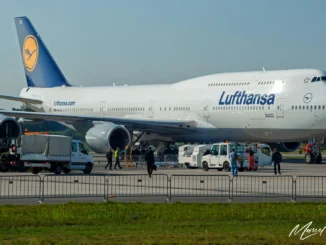
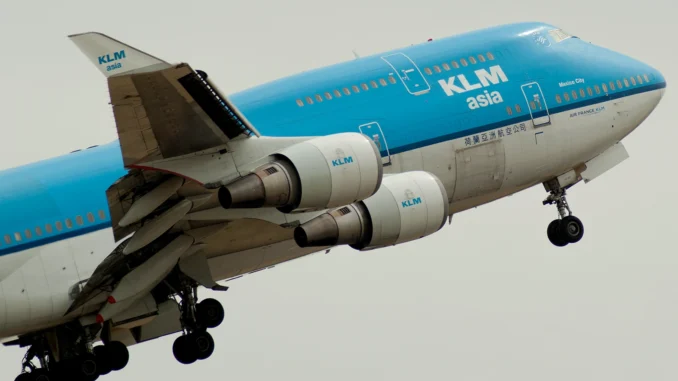
The Boeing 747-400 is the most successful and widely produced variant of the iconic four-engine wide-body airliner family. Featuring distinctive canted winglets, a two-crew digital glass cockpit, and extended range capabilities, the aircraft modernized intercontinental commercial aviation upon entering service in 1989.
General Information
- Type: Wide-body commercial airliner and cargo freighter
- Manufacturer: Boeing Commercial Airplanes (United States)
- First Flight: April 29, 1988
- Status: Active (primarily in cargo service, with limited scheduled passenger operations)
- Primary Users: Atlas Air, UPS Airlines, Cargolux, Kalitta Air, Lufthansa, Rossiya Airlines, British Airways (former), Japan Airlines (former), KLM (former), Qantas (former)
- Number Built: 694
History
In the early 1980s, Boeing began studying upgrades to the Boeing 747-300 to reduce operating costs and extend non-stop range on transpacific routes. The manufacturer formally launched the Boeing 747-400 program in October 1985. Northwest Airlines became the launch customer on October 22, 1985, placing an initial order for 10 aircraft. Other major international carriers, including Cathay Pacific, KLM, Lufthansa, Singapore Airlines, and British Airways, quickly followed with substantial orders.
Boeing rolled out the first prototype at its Everett, Washington facility on January 26, 1988, and completed the maiden flight on April 29, 1988. The Federal Aviation Administration (FAA) granted type certification on January 9, 1989. Northwest Airlines placed the aircraft into commercial passenger service on February 9, 1989. Production of passenger models concluded in 2005, while freighter production continued until December 2009, bringing total deliveries to 694 units.
Design
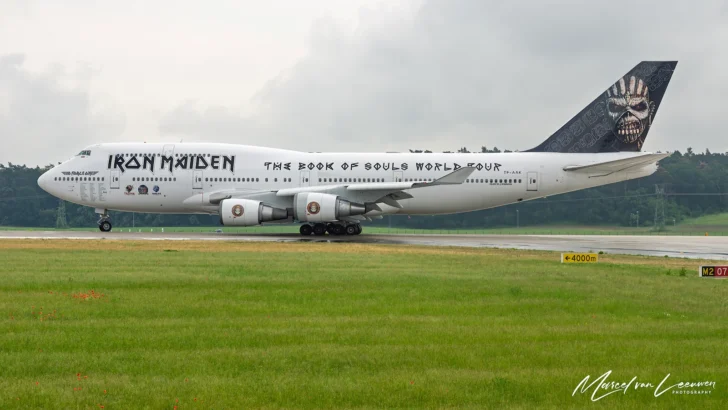
The Boeing 747-400 retained the stretched upper deck introduced on the 747-300 while incorporating major structural, aerodynamic, and avionics advancements:
- Aerodynamics and Wings: Engineers extended the wingspan by 5.2 meters compared to earlier models and added 1.8-meter canted winglets. New lightweight aluminum alloys reduced structural wing weight while improving cruise fuel efficiency by approximately 3 percent.
- Digital Glass Cockpit: A redesigned two-crew glass cockpit replaced traditional analog dials with six cathode-ray tube (CRT) displays, eliminating the flight engineer position and reducing cockpit crew requirements from three to two.
- Propulsion and Fuel Systems: Airlines selected from three high-bypass turbofan engine options—the Pratt & Whitney PW4000, General Electric CF6-80C2, or Rolls-Royce RB211-524—all equipped with Full Authority Digital Engine Control (FADEC). An additional fuel tank integrated into the horizontal stabilizer increased total fuel capacity and extended maximum range.
Operational Impact
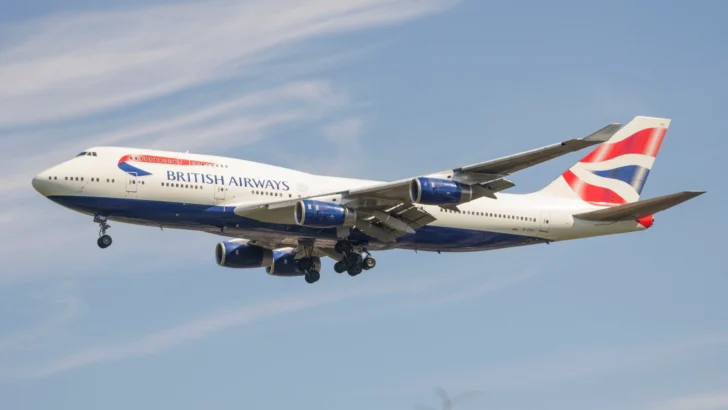
The Boeing 747-400 reshaped global long-haul aviation throughout the 1990s and 2000s. Its range enabled airlines to operate non-stop ultra-long-haul routes—such as London to Sydney and Los Angeles to Sydney—without technical fuel stops. In August 1989, a Qantas 747-400 set a commercial distance record by flying 18,001 kilometers non-stop from London to Sydney in 20 hours and 9 minutes during a delivery flight.
By lowering seat-mile costs and increasing payload efficiency, the 747-400 democratized international air travel and dominated trunk routes across the Pacific and Atlantic oceans. In the air cargo sector, factory-built freighters and converted passenger airframes established the type as a cornerstone of global express logistics and heavy freight transport.
Variants
- 747-400: The baseline intercontinental passenger version featuring the stretched upper deck, winglets, and two-crew cockpit (442 built).
- 747-400M (Combi): A mixed passenger-and-freight variant equipped with a large rear main-deck cargo door, allowing operators to carry both passengers and cargo pallets simultaneously (61 built).
- 747-400D (Domestic): A high-density, short-range variant built specifically for Japanese domestic trunk routes, featuring strengthened landing gear, reinforced fuselage structures, and deleted winglets (19 built).
- 747-400F (Freighter): An all-cargo model combining the shorter upper deck of the 747-200 with the upgraded wings, engines, and avionics of the -400 series, featuring an upward-hinged nose cargo door (126 built).
- 747-400ER (Extended Range): An increased-gross-weight passenger variant featuring strengthened airframe components and optional auxiliary body fuel tanks for an extra 800 kilometers of range (6 built, all delivered to Qantas).
- 747-400ERF (Extended Range Freighter): The all-cargo counterpart to the -400ER, offering higher maximum takeoff weight and increased payload capacity (40 built).
- 747-400BCF (Boeing Converted Freighter): Former passenger 747-400 airframes modified after service into dedicated main-deck cargo freighters.
Operators
Current Operators
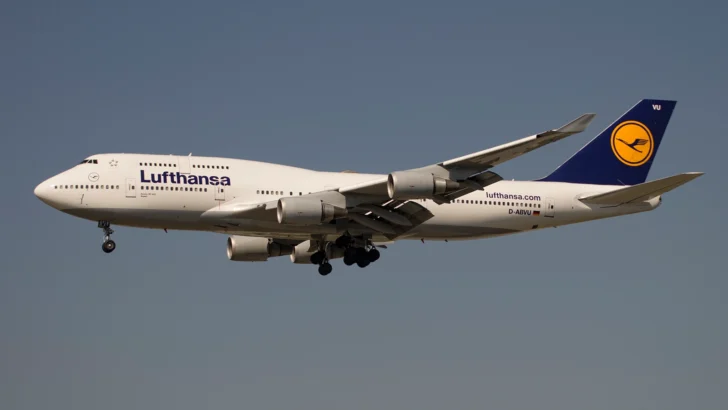
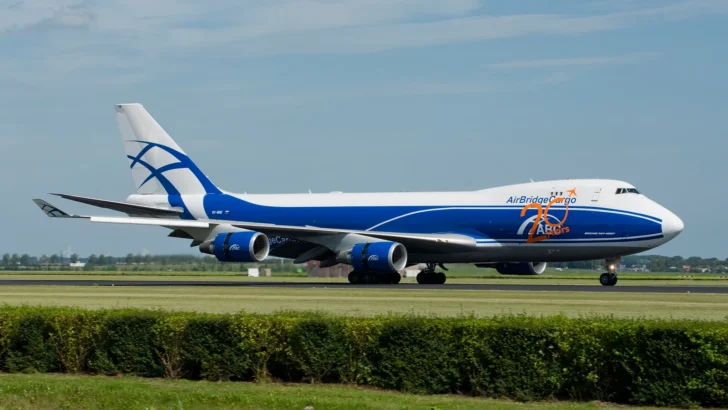
Scheduled passenger operations have contracted significantly as airlines transition to twin-engine wide-body aircraft. Lufthansa and Rossiya Airlines remain the primary scheduled passenger operators, alongside limited VIP and government transport fleets. In the cargo sector, dozens of 747-400F, 747-400ERF, and 747-400BCF aircraft remain in active service with major freight carriers including Atlas Air, UPS Airlines, Cargolux, Kalitta Air, Korean Air Cargo, and Silk Way West Airlines.
Former Operators
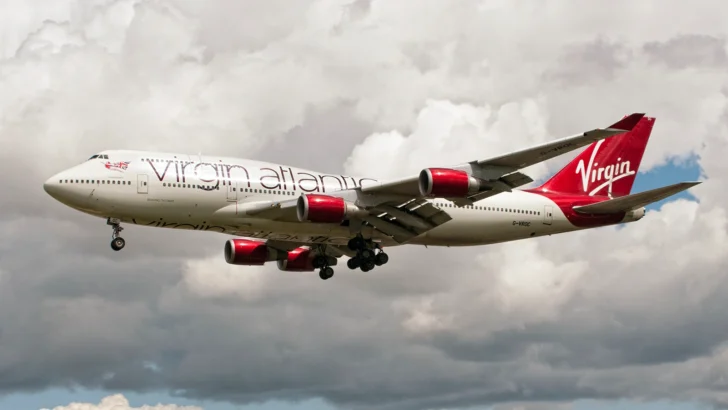
Prominent historical operators of the passenger and combi variants include British Airways, Japan Airlines, KLM, United Airlines, Delta Air Lines, Northwest Airlines, Singapore Airlines, Cathay Pacific, Qantas, Air France, China Airlines, and Virgin Atlantic.
Future Operators
No future passenger airline orders exist, as production ended in 2009 and remaining passenger fleets are scheduled for retirement by the late 2020s. Future transfers are limited to secondary cargo operators acquiring retired passenger jets for freighter conversion or existing freighter airlines redistributing active cargo airframes.
Specifications
General Characteristics
- Crew: 2 cockpit crew (Captain and First Officer)
- Length: 70.66 m
- Wingspan: 64.44 m
- Height: 19.41 m
- Wing Area: 560 m²
- Empty Weight: 178,756 kg to 183,523 kg (varies by engine and interior configuration)
- Maximum Takeoff Weight (MTOW): 396,890 kg (412,770 kg for 747-400ER)
- Maximum Landing Weight: 295,740 kg
- Maximum Fuel Capacity: 216,840 liters (241,140 liters for 747-400ER)
- Powerplant: 4 × Pratt & Whitney PW4056/4062, General Electric CF6-80C2B1F/B5F, or Rolls-Royce RB211-524G/H turbofans (252 kN to 282 kN thrust each)
Performance
- Maximum Speed: Mach 0.92 (988 km/h at cruise altitude)
- Typical Cruise Speed: Mach 0.85 to 0.855 (907 km/h to 917 km/h)
- Maximum Range: 13,450 km to 13,490 km (14,045 km for 747-400ER)
- Service Ceiling: 13,700 m
- Takeoff Field Length (at MTOW): 2,960 m to 3,200 m
- Landing Distance: 2,180 m
Passenger Layout
- Typical 3-Class Configuration: 416 passengers (23 First Class, 78–80 Business Class, 313–315 Economy Class)
- Typical 2-Class Configuration: 524 passengers
- High-Density Domestic Configuration (747-400D): Up to 568 passengers
- Cabin Width: 6.13 m (main deck)
The Boeing 747-400 stands as the definitive evolution of the classic jumbo jet, bridging the gap between early wide-body airliners and modern long-haul twinjets. Its combination of range, payload capacity, and digital cockpit automation transformed international airline networks for over three decades. While scheduled passenger airlines continue phasing out their remaining fleets in favor of more fuel-efficient twin-engine aircraft, Boeing 747-400 freighters will remain an essential pillar of global air cargo operations well into the 2030s.