Introduction
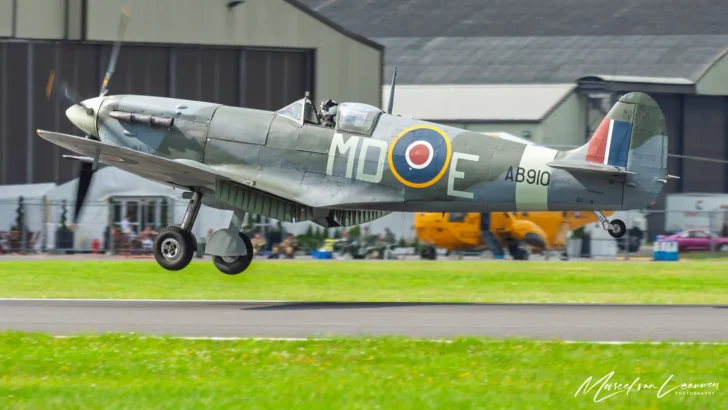
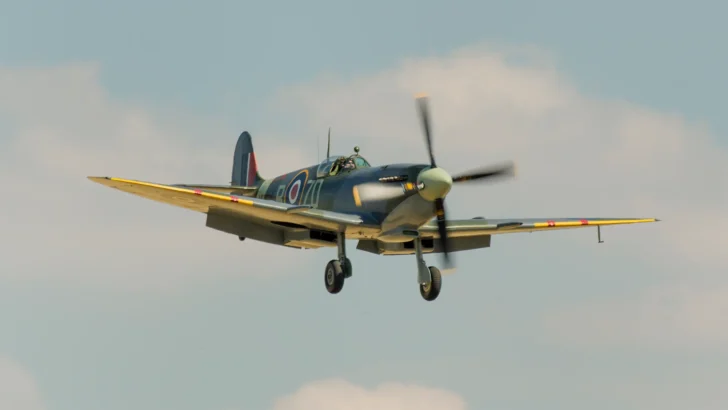
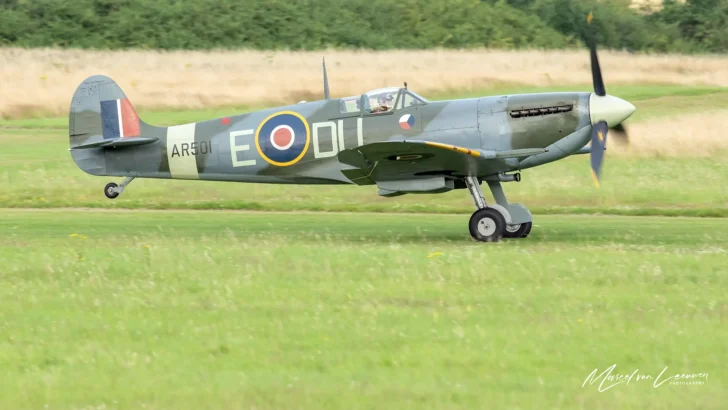
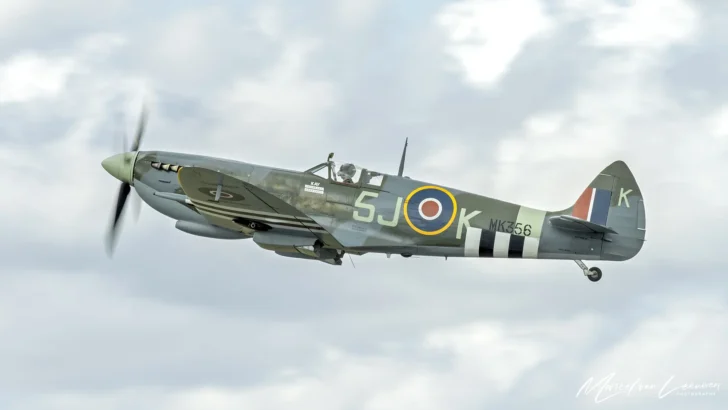
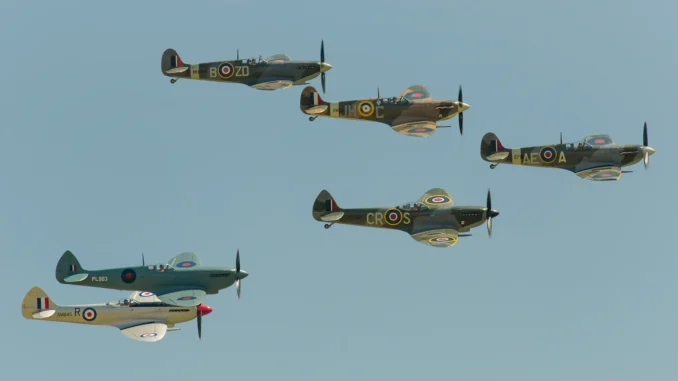
The Supermarine Spitfire stands as Britain’s premier single-seat fighter of the Second World War. Engineered by R.J. Mitchell, the aircraft combined an aerodynamic elliptical wing with the powerful Rolls-Royce Merlin engine. Renowned for its critical defensive role in the Battle of Britain, the Spitfire served across all major theaters as an enduring symbol of Allied air superiority.
General Information
- Type: Single-seat interceptor / fighter aircraft
- Manufacturer: Supermarine Aviation Works (Vickers-Armstrongs)
- First Flight: 5 March 1936
- Status: Retired (operational service ended 1954–1955; active in historic flight displays)
- Primary Users: Royal Air Force, Royal Navy Fleet Air Arm, Royal Canadian Air Force, Royal Australian Air Force, Royal New Zealand Air Force, South African Air Force, United States Army Air Forces, Soviet Air Forces, Free French Air Force, Belgian Air Force, Royal Netherlands Air Force
- Number Built: 20,351 (excluding 2,408 naval Seafire airframes)
History
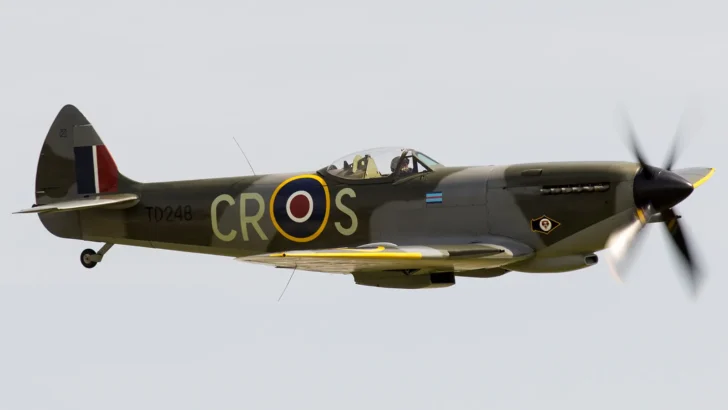
The origins of the Supermarine Spitfire stem from the British Air Ministry’s Specification F.7/30 in 1931, which sought an all-metal day-and-night interceptor. Supermarine’s chief designer, R.J. Mitchell, initially submitted the Type 224, an open-cockpit monoplane with inverted gull wings and fixed landing gear. Its disappointing flight performance prompted Mitchell to draft an entirely new private-venture aircraft, the Type 300.
Recognizing its potential, the Air Ministry issued Specification F.37/34 in December 1934 to finance a prototype. Mitchell incorporated the newly developed 990-horsepower Rolls-Royce PV-XII (later named the Merlin) into an ultra-streamlined fuselage. Prototype K5054 conducted its maiden flight at Eastleigh Airfield on 5 March 1936, piloted by Joseph “Mutt” Summers. Impressed by test results, the British government placed an initial contract for 310 production aircraft in June 1936 under Specification 16/36. Following Mitchell’s premature death in June 1937, his colleague Joseph Smith assumed lead development, overseeing the fighter’s evolution across 24 distinct marks.
Design
The airframe featured an all-metal duralumin monocoque fuselage with flush-riveted skin. Its hallmark elliptical wing, designed with aerodynamicist Beverley Shenstone, provided an exceptionally thin cross-section, minimizing wave drag while delivering structural volume to house eight machine guns, retractable landing gear, and ammunition. Mitchell incorporated wing twist (washout), allowing the wing root to stall before the tips and preserving aileron control during violent maneuvers. Later production marks transitioned from the single-stage Merlin to two-stage supercharged engines, and eventually to the high-displacement Rolls-Royce Griffon.
Operational Impact
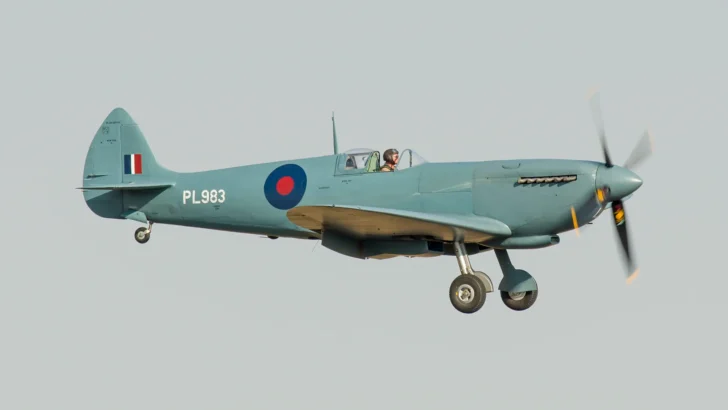
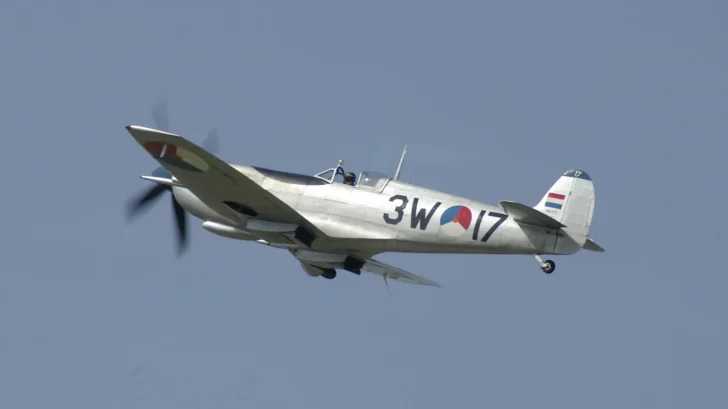
The Spitfire achieved worldwide prominence during the 1940 Battle of Britain, where it intercepted escorting Messerschmitt Bf 109 fighters while Hawker Hurricanes engaged German bombers. Its agility, rate of climb, and responsive handling proved vital. Beyond the home front, the aircraft served in North Africa, Malta, the Mediterranean, the Soviet Union, and the Pacific. Advanced unarmed photo-reconnaissance variants tracked Axis naval maneuvers across Europe from high altitudes.
Variants
- Spitfire Mk I / II: Early production variants armed with eight 7.7 mm Browning machine guns, powered by Merlin II/III/XII engines.
- Spitfire Mk V: The most widely produced variant (6,487 units), introducing the Merlin 45 series and the cannon-equipped “B” and “C” wings.
- Spitfire Mk IX: Interceptor introduced in 1942 featuring two-stage supercharged Merlin 60 series engines to counter the Focke-Wulf Fw 190.
- Spitfire Mk XIV: High-altitude fighter powered by the 2,050 hp Rolls-Royce Griffon 65 engine with a five-bladed propeller, effective against V-1 flying bombs.
- Supermarine Seafire: Carrier-adapted naval variant fitted with arrestor hooks, catapult spools, and folding wings.
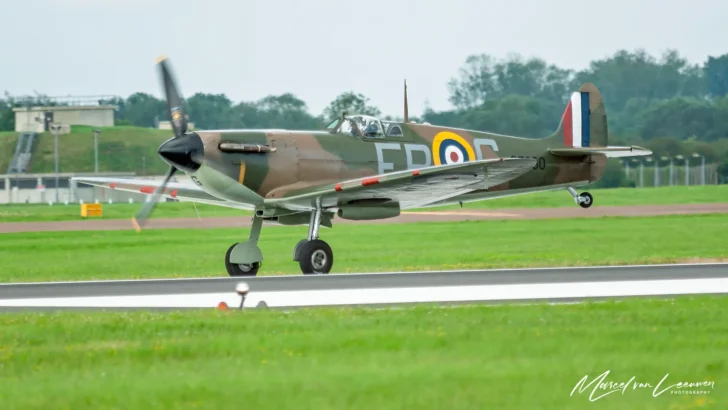
Operators
- Current: Civil operators and preservation trusts (display and airshow flights).
- Former: Royal Air Force, Royal Navy, Royal Australian Air Force, Royal Canadian Air Force, Royal New Zealand Air Force, South African Air Force, United States Army Air Forces, Soviet Air Forces, Free French Air Force, Belgian Air Force, Royal Netherlands Air Force, Royal Norwegian Air Force, Israeli Air Force, Indian Air Force, and Egyptian Air Force.
Specifications (Spitfire Mk Ia)
General Characteristics
- Crew: 1
- Length: 9.12 m
- Wingspan: 11.23 m
- Height: 3.48 m
- Wing Area: 22.48 m²
- Empty Weight: 1,953 kg
- Gross Loaded Weight: 2,692 kg
- Powerplant: 1 × Rolls-Royce Merlin III liquid-cooled V12 engine, 768 kW (1,030 hp) at 4,877 m
Performance
- Maximum Speed: 582 km/h at 5,670 m
- Combat Range: 400 km on internal fuel
- Ferry Range: 1,827 km with external fuel tank
- Service Ceiling: 10,485 m
- Rate of Climb: 11.0 m/s
Armament
- Guns: 8 × 7.7 mm (.303 in) Browning Mk II machine guns (350 rounds per gun)
- Ordnance (Later Variants): Up to 227 kg bomb load or two 20 mm Hispano Mk II cannons alongside four 7.7 mm machine guns
The Supermarine Spitfire proved to be one of the most structurally versatile piston-engine airframes in aviation history, evolving seamlessly from early interwar designs into the transonic era. Its aerodynamic qualities ensured front-line operational capability across an entire decade of high-intensity conflict. Today, preserved airworthy examples remain headline centerpieces at international air displays, preserving a vital chapter in aerospace engineering.