McDonnell Douglas F-4 Phantom II: The Definitive Cold War Fighter Fact Sheet
Introduction
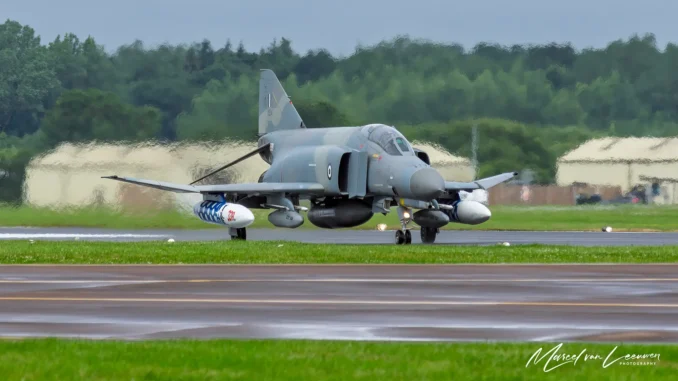
The McDonnell Douglas F-4 Phantom II is an American twin-engine, two-seat, all-weather, long-range supersonic interceptor and fighter-bomber. Originally developed for the United States Navy, it became one of the most versatile and widely deployed multi-role combat aircraft of the Cold War era, serving heavily across air superiority, fleet defense, and precision strike missions.
General Information
- Type: All-weather supersonic interceptor and fighter-bomber
- Manufacturer: McDonnell Aircraft / McDonnell Douglas
- First Flight: May 27, 1958
- Status: In active service (limited)
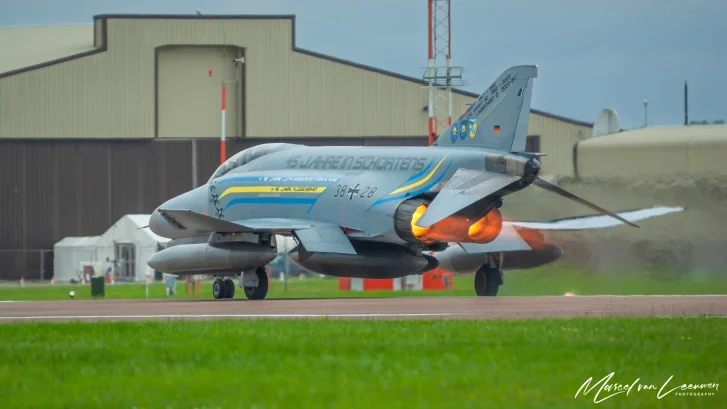
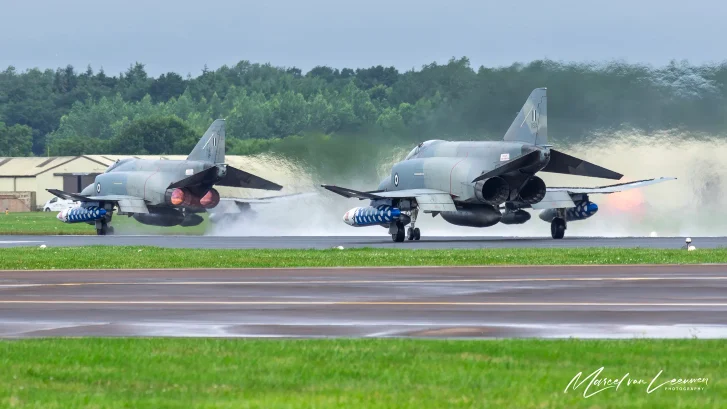
- Primary Users: United States Air Force, United States Navy, United States Marine Corps, Israeli Air Force, German Air Force, Japan Air Self-Defense Force, Royal Air Force, Turkish Air Force, Islamic Republic of Iran Air Force, Hellenic Air Force
- Number Built: 5,195
History
Development began in 1953 when McDonnell Aircraft redesigned its F3H Demon naval fighter to meet emerging United States Navy fleet defense requirements. On July 25, 1955, the Navy ordered two XF4H-1 prototypes and five YF4H-1 pre-production aircraft. Test pilot Robert C. Little flew the maiden flight on May 27, 1958, from Lambert Field in St. Louis, Missouri.
On December 17, 1958, the US Navy selected the two-seat F4H-1 over the single-seat Vought XF8U-3 Crusader III, valuing the dedicated Radar Intercept Officer (RIO) for complex Beyond-Visual-Range (BVR) engagements. The Department of Defense adopted the standardized F-4 designation under the 1962 Tri-Service aircraft system. Production ran from 1958 to 1981, solidifying the Phantom as the most-produced American supersonic jet aircraft in history.
Design
The F-4 Phantom II features an aerodynamic design built for extreme speed and heavy payload delivery:
- Aerodynamic Configuration: The airframe incorporates 45-degree swept wings with outer wing panels angled upward at a 12-degree dihedral. The all-moving tailplanes (stabilators) feature a 23-degree anhedral to maintain elevator authority and prevent boundary-layer stall at high angles of attack.
- Propulsion System: Two General Electric J79 turbojet engines supply high thrust-to-weight performance, using variable-geometry ramp intakes that decelerate incoming airflow to subsonic speeds before it enters the engine compressor.
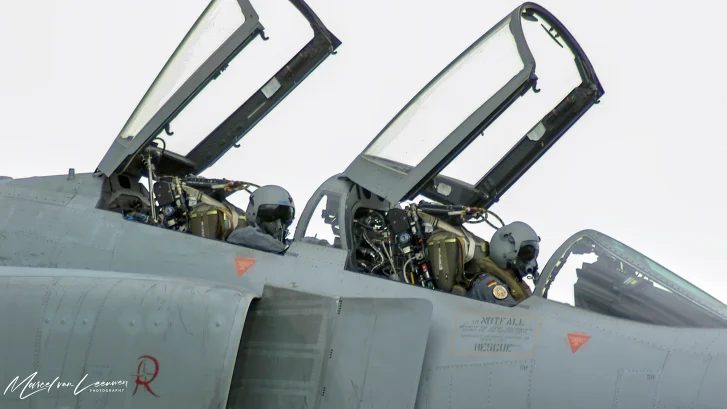
- Radar and Crew Integration: The tandem-cockpit layout pairs the pilot with a radar intercept or weapon systems officer managing the pulse-Doppler radar, maximizing radar-guided missile effectiveness without overloading the pilot.
Operational Impact
The F-4 Phantom II set sixteen world records for speed, absolute altitude, and rate of climb between 1959 and 1962. It established the standard for carrier-based air defense and frontline tactical strike operations during the Vietnam War, Yom Kippur War, and Iran-Iraq War. Early combat doctrine assumed air-to-air missiles had replaced dogfighting, but close-range engagements prompted the addition of gun pods and internal 20 mm cannons to subsequent production models. The Wild Weasel variants (EF-4C and F-4G) pioneered dedicated Suppression of Enemy Air Defenses (SEAD) tactics.
Variants
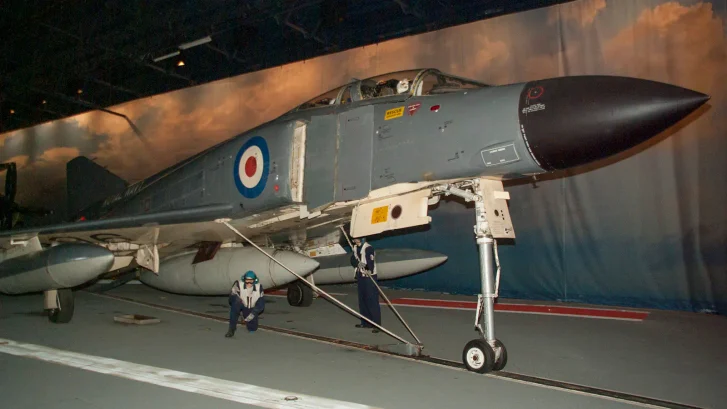
- F-4A / F-4B / F-4J / F-4S: Primary carrier-capable US Navy and US Marine Corps interceptor variants equipped with specialized arrestor gear and catapult hardware.
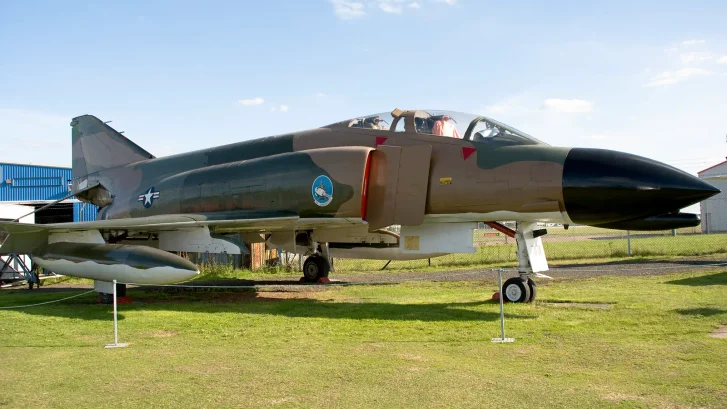
- F-4C / F-4D: Initial land-based production variants adapted for tactical roles with the United States Air Force.
- F-4E: Definitive multi-role airframe featuring an integrated nose-mounted 20 mm rotary cannon and upgraded avionics.
- RF-4C / RF-4E: Unarmed tactical reconnaissance models fitted with specialized nose-mounted camera systems and sensors.
- F-4G Wild Weasel V: Dedicated radar-hunting SEAD platform designed to neutralize enemy surface-to-air missile installations.
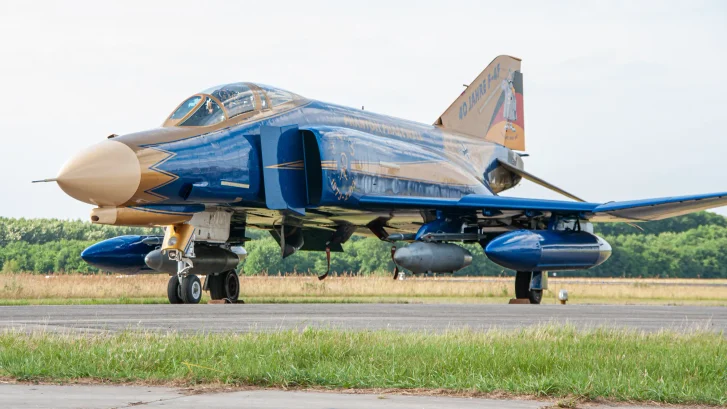
- F-4EJ: Export variant assembled under license in Japan by Mitsubishi Heavy Industries.
- F-4E Terminator 2020 / Peace Icarus 2000: Modernized life-extension packages featuring glass cockpits, modern avionics, and advanced radar suites.

Operators
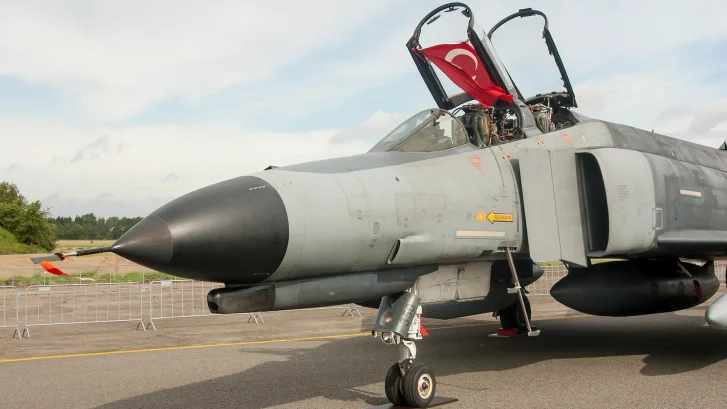
- Current: Greece (Hellenic Air Force), Turkey (Turkish Air Force), Iran (Islamic Republic of Iran Air Force).
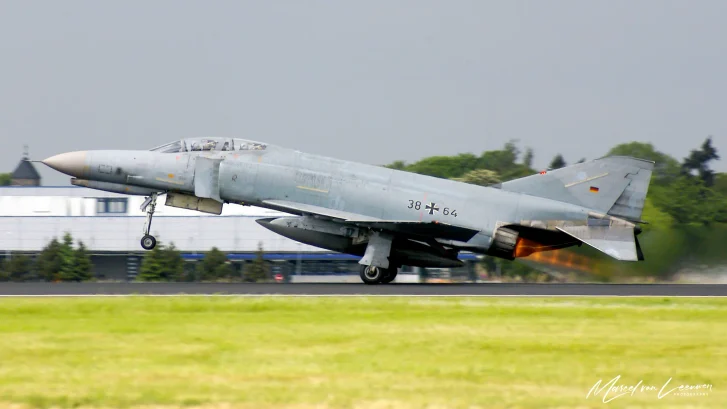
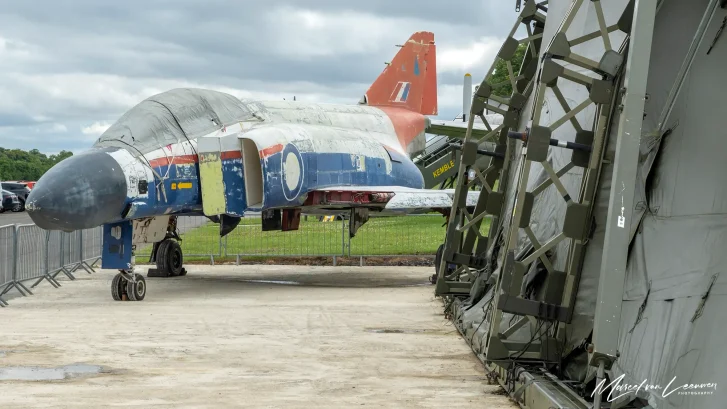
- Former: United States (Navy, Air Force, Marine Corps), Israel, Germany, Japan, United Kingdom (Royal Air Force, Royal Navy), South Korea, Spain, Egypt, Australia.
- Future: None (type out of production; current fleets undergo scheduled retirement).
Specifications
General Characteristics
- Crew: 2 (Pilot and Weapon Systems Officer / Radar Intercept Officer)
- Length: 19.20 m
- Wingspan: 11.77 m
- Height: 5.02 m
- Wing Area: 49.20 m²
- Empty Weight: 13,757 kg
- Gross Loaded Weight: 18,824 kg
- Maximum Takeoff Weight: 28,030 kg
- Powerplant: 2 × General Electric J79-GE-17A afterburning turbojets
- Dry Thrust: 52.5 kN each
- Afterburning Thrust: 79.6 kN each
Performance
- Maximum Speed: 2,370 km/h (Mach 2.23 at 12,000 m)
- Combat Radius: 680 km
- Ferry Range: 2,699 km (with external fuel tanks)
- Service Ceiling: 18,300 m
- Rate of Climb: 210 m/s
- Wing Loading: 383 kg/m²
- Thrust/Weight Ratio: 0.86 at loaded combat weight
Armament
- Guns: 1 × 20 mm M61A1 Vulcan 6-barrel rotary cannon (640 rounds, F-4E)
- Hardpoints: 9 external hardpoints carrying up to 8,480 kg of ordnance
- Air-to-Air Missiles: 4 × AIM-7 Sparrow (semi-recessed fuselage wells) and 4 × AIM-9 Sidewinder (underwing pylons)
- Air-to-Surface Missiles: AGM-65 Maverick, AGM-88 HARM, AGM-45 Shrike
- Bombs: Mk 82, Mk 83, Mk 84 general-purpose bombs, GBU-10/GBU-12 Paveway laser-guided bombs, and various cluster munitions
The McDonnell Douglas F-4 Phantom II stands as an icon of Cold War aviation engineering, combining raw engine power with heavy weapons payload capacity. The aircraft pioneered long-range missile combat tactics and demonstrated exceptional adaptability across distinct naval and land-based combat roles. While most global operators have retired their fleets in favor of modern multi-role fighters, heavily upgraded variants continue to provide frontline service in select air arms into the mid-2020s.