Introduction
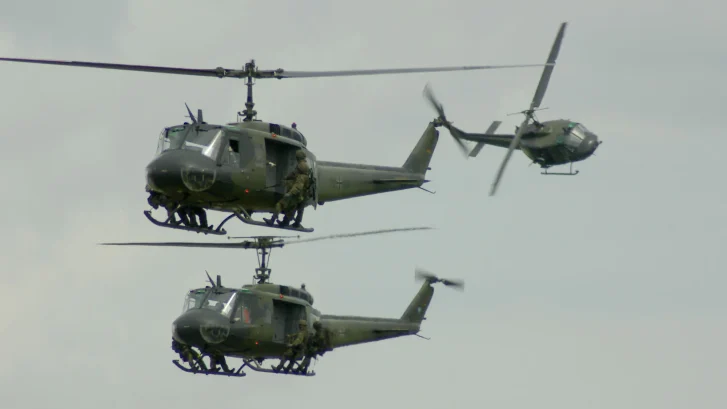
The Bell UH-1 Iroquois, universally known as the Huey, is a iconic single-turboshaft utility helicopter developed by Bell Helicopter. Renowned for its exceptional versatility, rugged reliability, and distinctive rotor sound, it revolutionized tactical air mobility, medical evacuation, and aerial combat during the Vietnam War and beyond.
General Information
- Type: Utility military helicopter
- Manufacturer: Bell Helicopter
- First Flight: October 20, 1956
- Status: Retired from primary active military service; operational with select armed forces and civil operators worldwide
- Primary Users: United States Army, United States Marine Corps, Australian Army, and numerous international military forces
- Number Built: More than 16,000 units across all variants
History
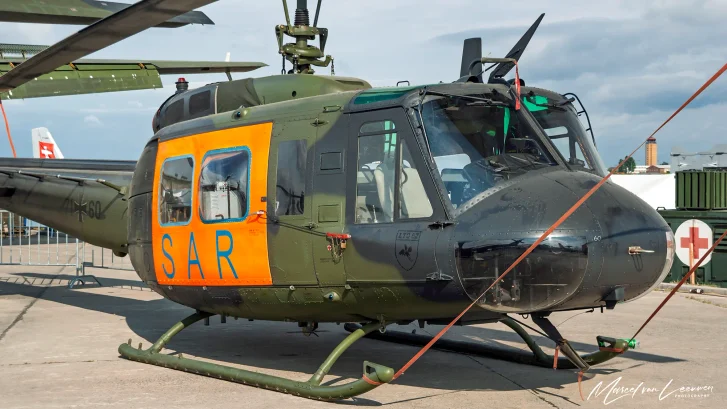
The development of the bell-uh-1-iroquois originated from a 1952 United States Army requirement for a versatile medical evacuation, transport, and training helicopter powered by a turbine engine. Bell Helicopter secured the development contract in February 1955, designating the prototype as the XH-40. Following its maiden flight in October 1956, the aircraft was officially ordered into production in March 1960, becoming the first turbine-powered helicopter to enter service with the United States military. Originally designated the HU-1, the official alphanumeric name inspired its enduring Huey nickname.
Design
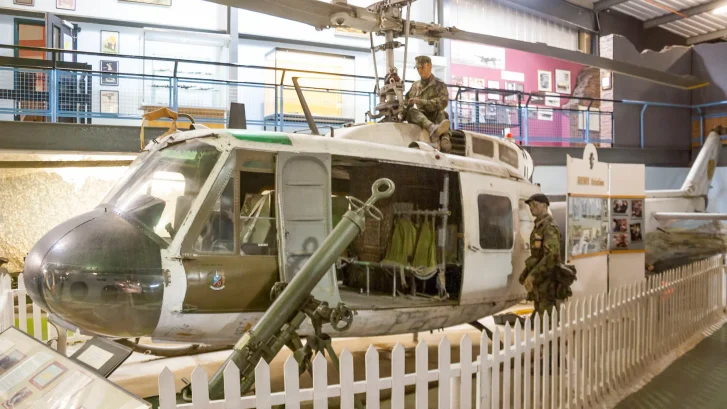
The bell-uh-1-iroquois features a semi-monocoque metal fuselage equipped with tubular landing skids. Its propulsion system centers on a single Lycoming turboshaft engine that drives a two-bladed semirigid main rotor and a two-bladed tail rotor. Subsequent iterations introduced stretched cabins to accommodate larger troop payloads, reinforced structural components, and upgraded avionics suites designed to improve overall flight safety and operational effectiveness.

Operational Impact
The introduction of the bell-uh-1-iroquois transformed modern military doctrine by establishing the concept of air mobility. During conflict scenarios, particularly in Southeast Asia, these aircraft served as “slicks” for rapid troop insertion, heavy gunships for close air support, and “Dustoff” platforms for vital medical evacuation. Its ability to operate safely from unprepared terrain and austere environments cemented its reputation as an indispensable tactical asset.
Variants
- XH-40 / YH-40: Initial prototype and evaluation test models equipped with early Lycoming turboshaft engines.
- UH-1A / UH-1B: Early production variants featuring progressive cabin length expansions and higher-output powerplants.
- UH-1C: Dedicated gunship variant optimized with modified rotor systems and enhanced armament handling.
- UH-1D / UH-1H: Definitive troop-transport and utility variants featuring an extended fuselage and the powerful Lycoming T53-L-13 engine.
- Specialized Service Models: Includes the marine-adapted UH-1E, air force UH-1F, and electronic warfare configurations such as the EH-1H.
Operators
- Current: Armed forces of various nations including Argentina, Taiwan, the Philippines, and select civil defense or government agencies globally.
- Former: United States Army, United States Air Force, United States Marine Corps, Royal New Zealand Air Force, and Canadian Forces.
- Future: Completely transitioned out of frontline procurement in major western militaries, with remaining fleets gradually succeeded by modern multi-role utility helicopters like the UH-60 Black Hawk.
Specifications
General Characteristics
- Crew: 1 to 4 personnel (typically 2 pilots and 2 door gunners)
- Capacity: Up to 14 fully equipped troops or 6 stretchers
- Length: 17.40 m (fuselage length varies by model)
- Rotor Diameter: 14.63 m
- Height: 4.42 m
- Empty Weight: 2,365 kg
- Maximum Takeoff Weight: 4,309 kg
- Powerplant: 1 × Lycoming T53-L-13 turboshaft engine, 1,044 kW (1,400 shp)
Performance
- Maximum Speed: 220 km/h
- Cruise Speed: 204 km/h
- Range: 510 km
- Service Ceiling: 5,910 m
- Rate of Climb: 8.9 m/s
Armament
- Guns: Door-mounted 7.62 mm M60 machine guns or M134 Miniguns; side-mounted rocket pods and heavy machine gun subsystems on armed configurations.
- Rockets: 70 mm (2.75 in) rocket pods.
The bell-uh-1-iroquois remains a definitive benchmark in rotary-wing aviation design. Its unparalleled operational legacy established modern tactical doctrine and set enduring standards for multi-role utility helicopter performance. Decades after its inception, the enduring silhouette of the Huey continues to represent the pinnacle of aeronautical adaptability.