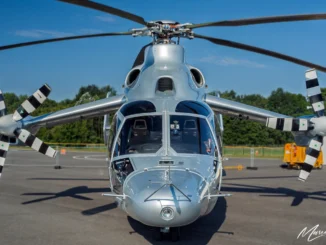
Airbus RACER Demonstrator Combines Box-Wing Aerodynamics and Pusher Propellers for High-Speed, Fuel-Efficient Rotorcraft Flight
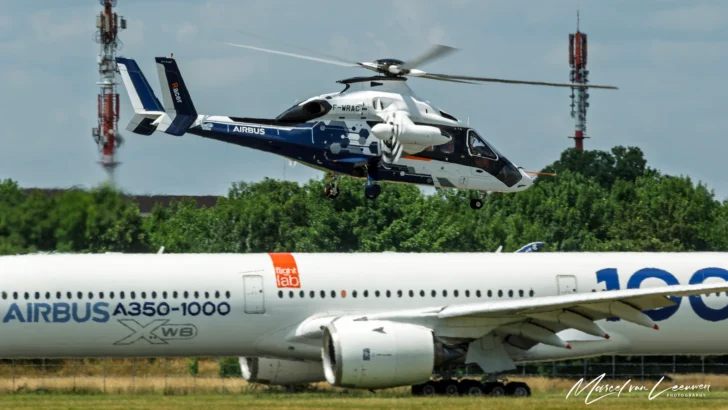
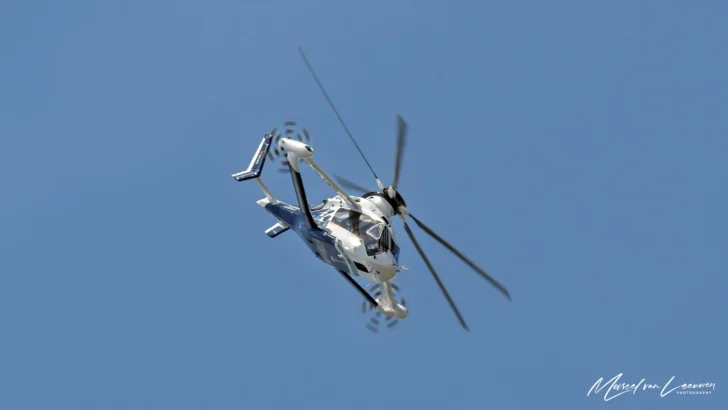
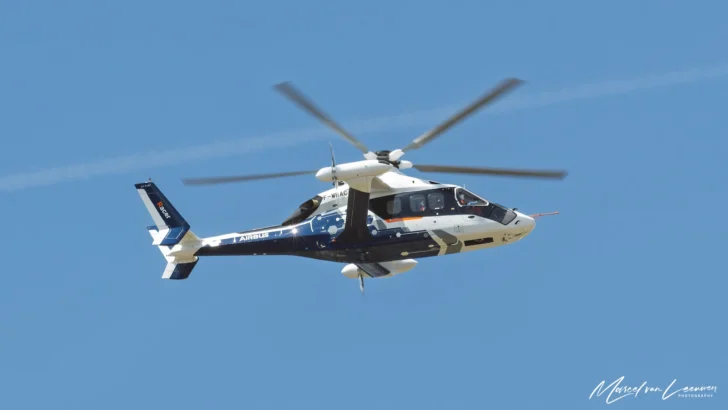
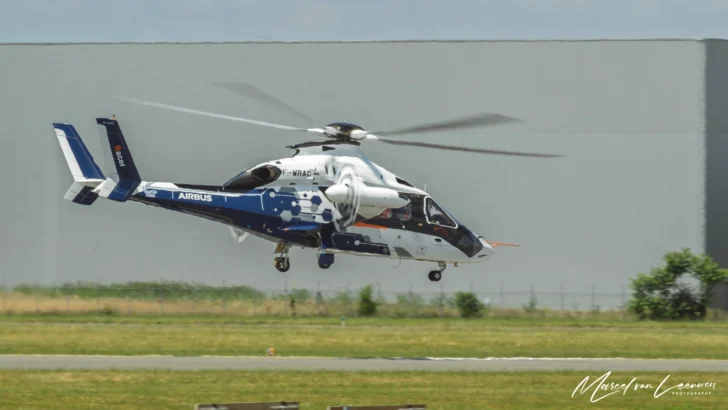
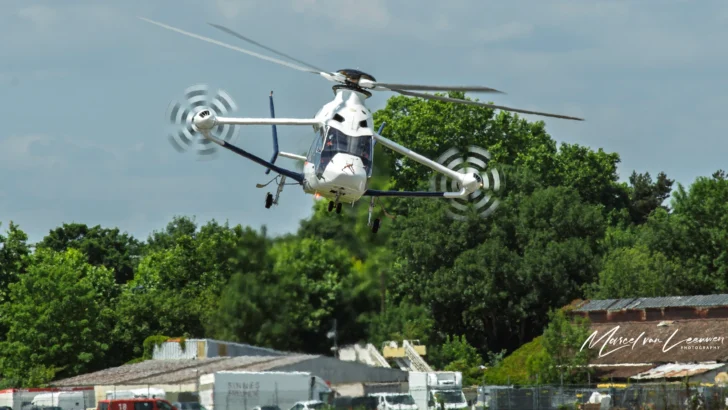
The Airbus RACER (Rapid And Cost-Effective Rotorcraft) is an experimental compound helicopter developed by Airbus Helicopters under the European Union’s Clean Sky 2 research program. Building upon the aerodynamic lessons of the Eurocopter X³, the demonstrator integrates a conventional main rotor with a joined box-wing configuration and twin lateral pusher propellers to achieve high cruise speeds alongside reduced fuel consumption and acoustic emissions.
General Information
- Type: Experimental compound helicopter
- Manufacturer: Airbus Helicopters (with European industrial and academic partners)
- First Flight: 25 April 2024
- Status: Active (flight testing and mission demonstrations)
- Primary Users: Airbus Helicopters (flight test and evaluation)
- Number Built: 1
History
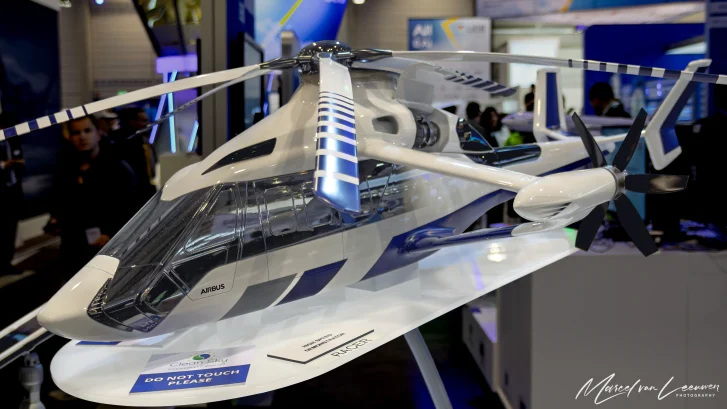
Airbus Helicopters unveiled the Airbus RACER concept at the Paris Air Show on 20 June 2017 as a flagship technology demonstrator within the European Clean Sky 2 initiative. Whereas its predecessor, the Eurocopter X³, relied heavily on off-the-shelf components from existing helicopters, engineers designed the RACER from the ground up with a dedicated airframe and propulsion architecture to validate commercial and operational viability.
Development brought together a pan-European consortium of roughly 40 partners across 13 countries, including major contributions from Aernnova, Avio Aero, Safran Helicopter Engines, and the German Aerospace Center (DLR). Following pandemic-related supply chain delays that pushed back initial schedule targets, the sole prototype completed its maiden flight on 25 April 2024 in Marignane, France. Subsequent flight test campaigns expanded the aircraft’s flight envelope, surpassing 440 km/h in level cruise and validating advanced maneuvers—including 14-degree slope landings, rapid climb rates, and high-G turns—while hosting evaluation flights by military test pilots from France, Germany, and Finland under NATO’s Next Generation Rotorcraft Capabilities (NGRC) / ENGRT studies.
Design
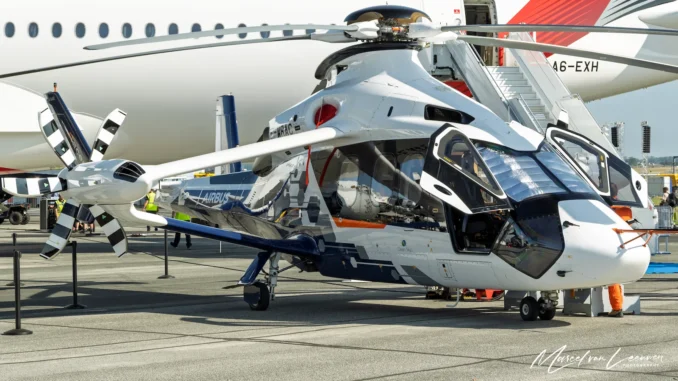
The Airbus RACER features a distinctive joined “box-wing” (double-wing) configuration mounted to a hybrid metallic-composite fuselage. At the outer junction of the upper and lower wings sit two nacelles housing six-bladed lateral pusher propellers, gear-driven by twin Safran Aneto-1X turboshaft engines. Positioning the propellers behind the wings improves aerodynamic efficiency and enhances ground safety during boarding and loading operations.
Like the X³, the RACER dispenses with an anti-torque tail rotor. Instead, yaw control during hover and low-speed flight relies on differential thrust from the lateral propellers, assisted passively by an asymmetric tail boom cross-section that channels main rotor downwash to generate anti-torque force. In forward cruise, the box wings generate substantial lift, unloading the main rotor and allowing its rotational speed to decrease to avoid retreating blade stall and advancing tip compressibility. A key technical innovation is Safran’s eco-mode hybrid-electrical propulsion management system, which enables pilots to shut down one of the two Aneto-1X engines during cruise flight while maintaining rapid electrical restart capability. This configuration reduces fuel burn by roughly 25 percent compared to conventional helicopters in the same weight class.
Operational Impact
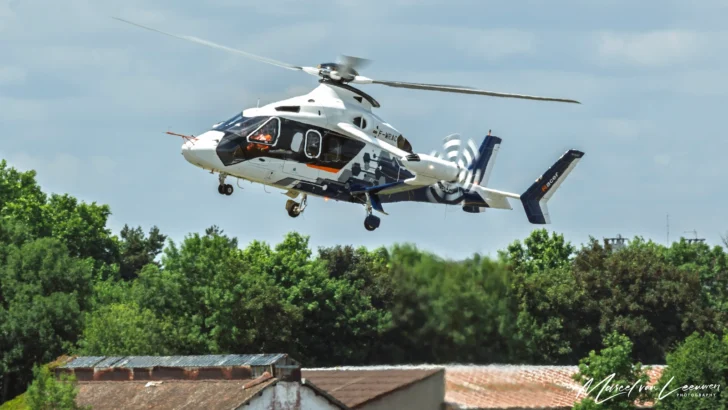
The Airbus RACER demonstrates how high-speed rotorcraft can transform time-critical civil and defense operations where fixed-wing aircraft cannot land. In emergency medical services (EMS) and search and rescue (SAR), cruising at over 400 km/h significantly expands the geographic radius reachable within the critical “golden hour” following severe trauma or maritime emergencies.
For military and parapublic applications, flight testing has shown that the aircraft’s compound architecture permits rapid acceleration and deceleration without steep pitch changes, steep climbs to evade ground threats, and stable landings on uneven terrain up to 14-degree slopes. Furthermore, optimized steeper departure and arrival trajectories reduce the aircraft’s ground noise footprint by up to 30 percent, supporting future urban and regional air mobility operations.
Variants
- RACER Demonstrator: The single flying prototype built under the Clean Sky 2 program to validate aerodynamics, eco-mode propulsion, and multi-mission flight profiles.
- Future Civil and Military Derivatives: While the RACER itself will not enter serial production, its technologies directly inform Airbus Helicopters’ proposals for future European commercial rotorcraft and NATO’s Next Generation Rotorcraft Capability (NGRC) / European Next Generation Rotorcraft Technologies (ENGRT) programs.
Operators
- Current: Airbus Helicopters (France — flight test and evaluation)
- Former: None
- Future: None (technology demonstrator informing future civil and NATO rotorcraft platforms)
Specifications
General Characteristics
- Crew: 2 (pilot and co-pilot)
- Capacity: Approximately 10 passengers (mission-reconfigurable cabin)
- Maximum Takeoff Weight: 8,000–9,000 kg
- Powerplant: 2 × Safran Aneto-1X turboshaft engines, 1,900 kW each (with eco-mode single-engine cruise capability)
- Propellers: 2 × 6-bladed lateral pusher propellers (gear-driven from main engines)
- Airframe Construction: Hybrid metallic-composite structure with joined box-wing and asymmetric tail boom
Performance
- Cruise Speed: Up to 444 km/h (twin-engine); approximately 330 km/h (single-engine eco-mode)
- Range: 740 km
- Rate of Climb: 18.3 m/s (demonstrated climb to 3,048 m in 2 minutes 44 seconds at 260 km/h)
- Maneuverability: Demonstrated sustained 2g turns at 370 km/h and slope landings up to 14 degrees
Passengers Layout
- Cabin Configuration: Modular main cabin equipped with telemetry and flight-test instrumentation during trials, designed to accommodate up to 10 passengers, medical stretchers for EMS/SAR roles, or tactical equipment.
The Airbus RACER represents a major step forward in transitioning high-speed compound helicopter concepts from experimental speed-record platforms into practical, energy-efficient rotorcraft. By combining a 440 km/h cruise capability with box-wing aerodynamics and single-engine eco-mode operation, the demonstrator addresses both performance and sustainability demands. Insights gained from its ongoing flight test campaigns will directly shape the next generation of European civil rescue helicopters and NATO military rotorcraft entering service in the 2030s and beyond.