Complete Aircraft Fact Sheet and Technical Overview
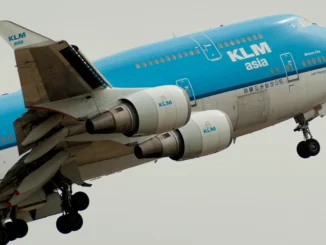
The Boeing 747-300 is the third major production generation of the classic four-engine wide-body airliner family. Introduced in 1983, it became the first 747 variant to feature the iconic stretched upper deck as standard, increasing passenger capacity by roughly 10 percent while maintaining the three-crew analog cockpit of earlier models.
General Information
- Type: Wide-body commercial airliner and combi passenger-cargo transport
- Manufacturer: Boeing Commercial Airplanes (United States)
- First Flight: October 5, 1982
- Status: Retired from scheduled commercial airline service (very limited stored or special-mission airframes remain)
- Primary Users: Japan Airlines, Swissair, Qantas, Cathay Pacific, Singapore Airlines, KLM, Air France, Sabena, Thai Airways International, Pakistan International Airlines
- Number Built: 81
History
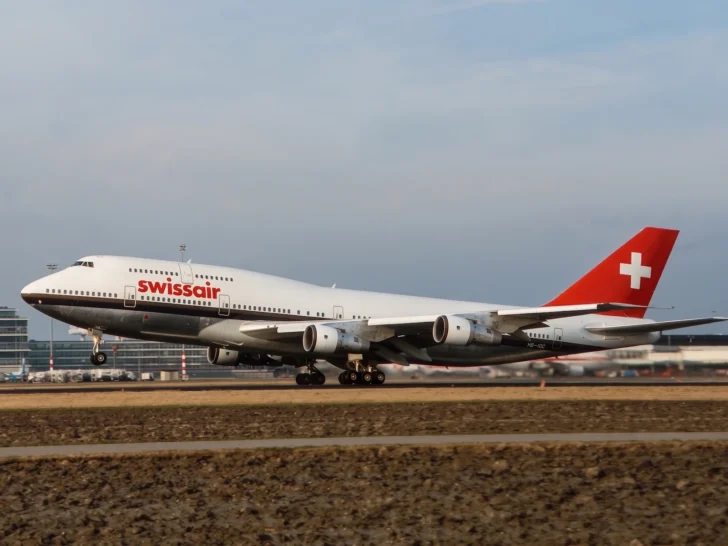
In the late 1970s, Boeing conducted engineering studies to increase seating capacity on the Boeing 747-200 without lengthening the main fuselage or building a full-length double-deck airframe. Initially designated the 747SUD (Stretched Upper Deck) and 747EUD (Extended Upper Deck), the project was officially launched as the Boeing 747-300 on June 11, 1980, when Swissair placed the launch order. UTA (Union de Transports Aériens) and South African Airways soon followed with additional commitments.
Boeing completed assembly of the first prototype at its Everett, Washington facility in September 1982, and the aircraft performed its maiden flight on October 5, 1982. Following flight testing and certification, Swissair accepted the first delivery on March 23, 1983, and inaugurated commercial service shortly afterward. Production remained relatively brief, as Boeing launched the two-crew, glass-cockpit Boeing 747-400 in October 1985. The final Boeing 747-300—a 747-300M Combi—was delivered to Sabena in September 1990, concluding production at 81 aircraft.
Design
The Boeing 747-300 retained the wings, landing gear, and basic systems of the 747-200B while introducing key structural and aerodynamic refinements:
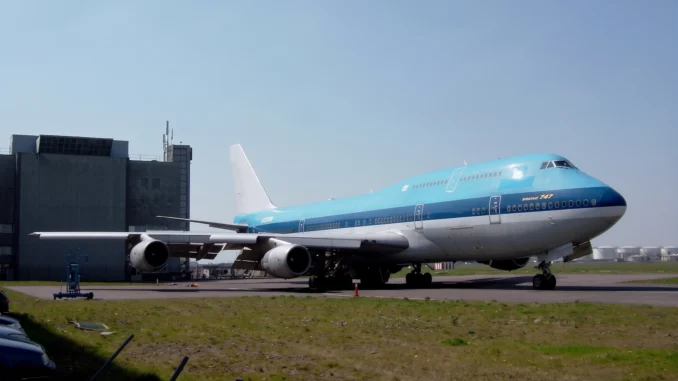
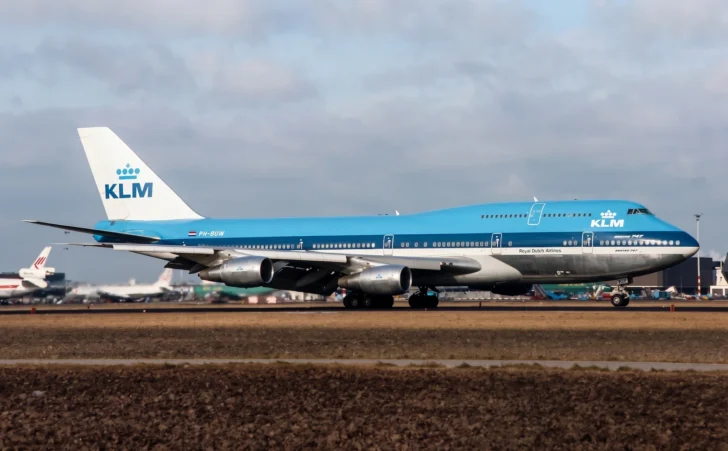
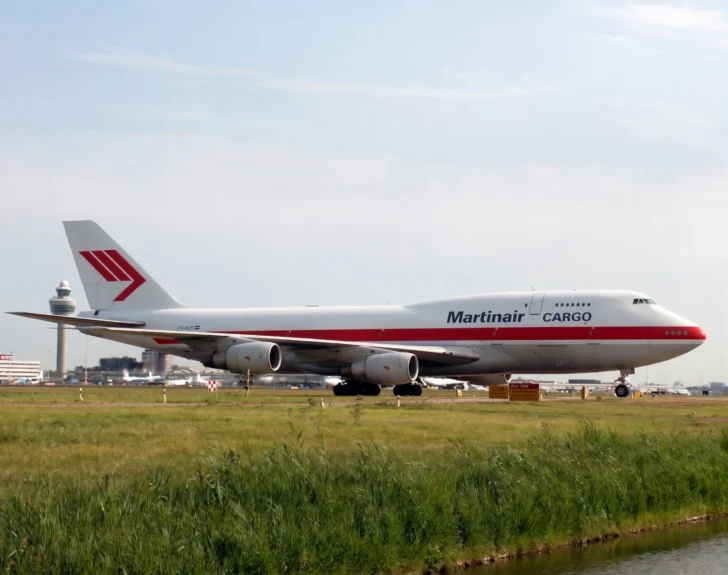
- Stretched Upper Deck (SUD): Engineers extended the upper deck rearward by 7.11 meters (280 inches) compared to the 747-200, adding two new emergency exit doors and space for up to 69 economy-class passengers. A straight staircase replaced the tight spiral staircase of earlier variants, improving cabin flow and galley space.
- Aerodynamic Refinements: The longer upper-deck fairing smoothed airflow over the forward fuselage, reducing aerodynamic drag and increasing typical cruise speed from Mach 0.84 to Mach 0.85.
- Classic Three-Crew Flight Deck: Unlike the subsequent 747-400, the 747-300 retained a conventional electromechanical cockpit operated by a three-person flight crew consisting of a captain, first officer, and flight engineer.
- Propulsion Options: Airlines selected from three high-bypass turbofan engine families: the Pratt & Whitney JT9D-7R4G2, General Electric CF6-50E2 or CF6-80C2B1, and Rolls-Royce RB211-524C2/D4.
Operational Impact
The Boeing 747-300 established the definitive exterior silhouette that characterized every subsequent member of the 747 family, including the 747-400 and 747-8. By accommodating approximately 40 to 44 additional passengers at the same maximum takeoff weights as the 747-200B, the aircraft lowered seat-mile operating costs on high-density intercontinental routes across Europe, Asia, and Australia.
Although its production run was curtailed by the rapid arrival of the more automated Boeing 747-400, the 747-300 served reliably for over two decades with flagship global carriers. Furthermore, Boeing offered the stretched upper deck as a structural retrofit for existing 747-100 and 747-200 airframes, a modification adopted by KLM, Japan Airlines, and UTA.
Variants
- 747-300: The baseline intercontinental passenger airliner featuring the 7.11-meter stretched upper deck as standard (56 built).
- 747-300M (Combi): A mixed passenger-and-cargo variant equipped with a large port-side rear main-deck cargo door and movable bulkhead, allowing airlines to balance passenger and freight capacity (21 built).
- 747-300SR (Short Range): A high-density, short-range variant built exclusively for Japan Airlines domestic trunk routes, featuring strengthened fuselage structures and landing gear for frequent takeoff and landing cycles (4 built).
- 747-300SF (Special Freighter): Retired passenger and combi airframes converted into dedicated main-deck cargo freighters starting in 2000, as Boeing never produced a factory-built 747-300 freighter.
Operators
Current Operators
Scheduled commercial passenger and cargo operations of the Boeing 747-300 have ended worldwide. Mahan Air in Iran was the final commercial airline to operate the type on scheduled passenger flights, retiring its last active airframe in 2022, while TransAVIAexport Airlines operated one of the final cargo conversions.
Former Operators
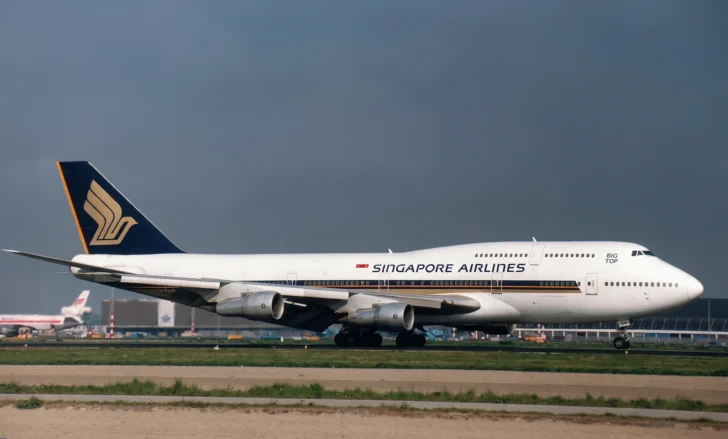
Major historical airline operators included Japan Airlines (the largest operator with 16 aircraft), Swissair, Qantas, Cathay Pacific, Singapore Airlines, KLM, Air France, Sabena, Thai Airways International, Pakistan International Airlines, South African Airways, UTA, Iberia, VARIG, Korean Air, Saudi Arabian Airlines, Ansett Australia, EgyptAir, and Surinam Airways.
Future Operators
No future operators exist. Production ended in September 1990, and all remaining airframes have been retired, scrapped, or preserved.
Specifications
General Characteristics
- Crew: 3 cockpit crew (Captain, First Officer, and Flight Engineer)
- Length: 70.66 m
- Wingspan: 59.64 m
- Height: 19.33 m
- Wing Area: 511.0 m²
- Empty Weight: 174,134 kg to 178,171 kg (varies by engine model and cabin layout)
- Maximum Takeoff Weight (MTOW): 377,840 kg (272,160 kg for 747-300SR)
- Maximum Landing Weight: 260,320 kg
- Maximum Fuel Capacity: 198,370 liters
- Powerplant: 4 × Pratt & Whitney JT9D-7R4G2, General Electric CF6-50E2 / CF6-80C2B1, or Rolls-Royce RB211-524C2 / RB211-524D4 turbofans (230.4 kN to 243.5 kN thrust each)
Performance
- Maximum Speed: Mach 0.92 (979 km/h to 988 km/h at cruise altitude)
- Typical Cruise Speed: Mach 0.85 (900 km/h to 910 km/h)
- Maximum Range: 11,720 km to 12,400 km (with typical passenger payload)
- Service Ceiling: 13,700 m
- Takeoff Field Length (at MTOW): 3,300 m to 3,320 m
- Landing Distance: 2,110 m
Passenger Layout
- Typical 3-Class Configuration: 412 passengers
- Typical 2-Class Configuration: 470 to 496 passengers
- High-Density Configuration (747-300SR): Up to 624 passengers (660 maximum certified exit limit)
- Cabin Width: 6.08 m to 6.13 m (main deck)
The Boeing 747-300 played a pivotal transitional role in wide-body aviation history by introducing the stretched upper deck that defined the appearance of all modern 747 models. Although eclipsed in sales by the two-crew Boeing 747-400 just a few years after entering service, its 81 airframes delivered decades of reliable long-haul and high-density trunk service for leading international airlines. Today, the Boeing 747-300 stands as the final chapter of the three-crew Classic 747 era.