Eurocopter X³ Hybrid Rotorcraft Achieves Unprecedented Speeds by Combining Helicopter Lift with Fixed-Wing Propulsion
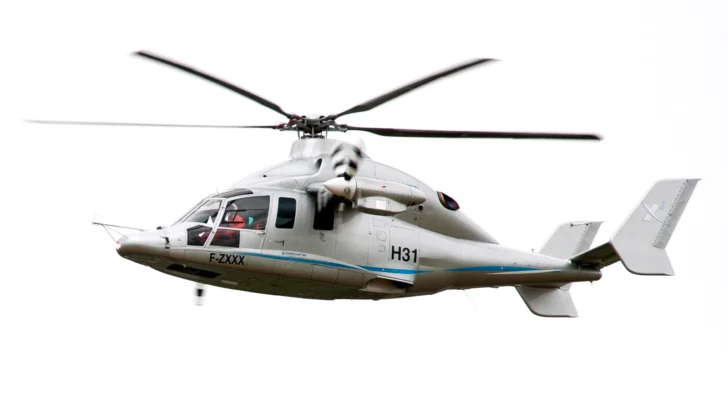
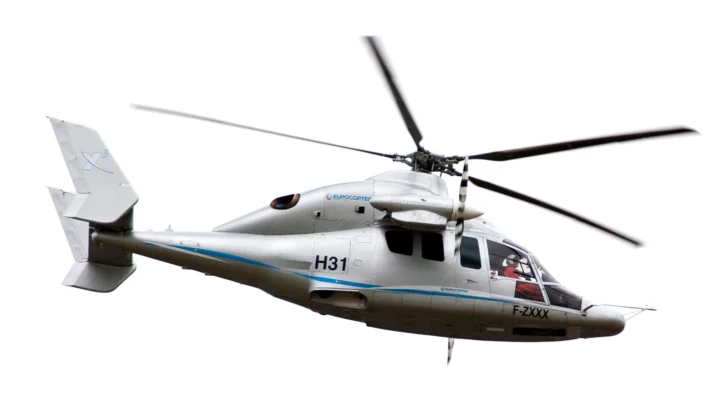
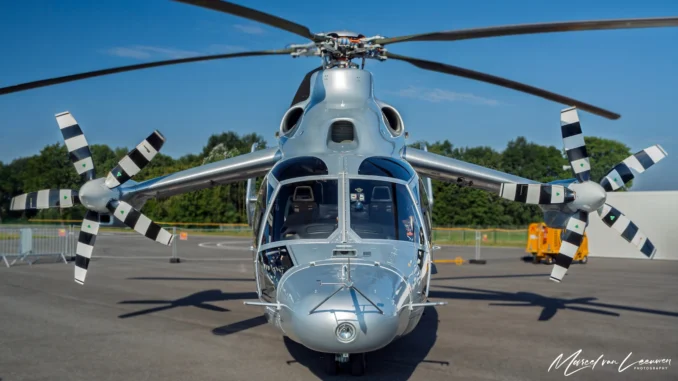
The Eurocopter X³ (pronounced “X-Cubed”) is an experimental compound helicopter developed by Eurocopter (now Airbus Helicopters) to overcome the aerodynamic speed limits of conventional rotorcraft. By pairing a traditional main rotor with short-span wings and twin tractor propellers, the aircraft combines vertical takeoff and landing capabilities with turboprop-like cruise speeds.
General Information
- Type: Experimental compound helicopter
- Manufacturer: Eurocopter (now Airbus Helicopters)
- First Flight: 6 September 2010
- Status: Retired (preserved for public display)
- Primary Users: Eurocopter / Airbus Helicopters (flight test and demonstration)
- Number Built: 1
History
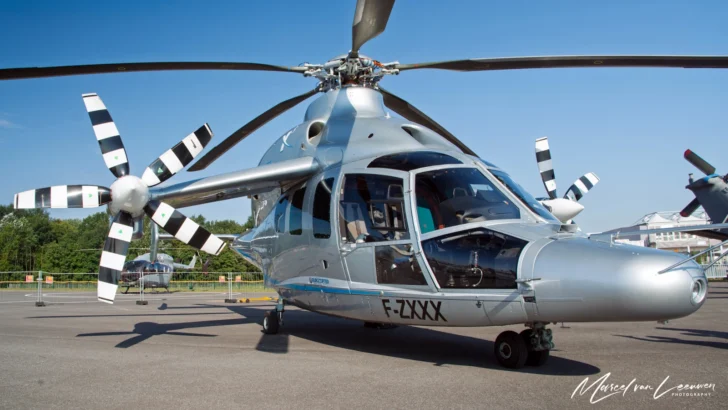
Eurocopter initiated the Eurocopter X³ program in January 2008 as an internally funded technology demonstrator aimed at increasing rotorcraft cruise speeds by roughly 50 percent at an affordable cost. To accelerate development and minimize expenses, engineers utilized components from existing production helicopters, integrating an airframe derived from the Eurocopter AS365 N3 Dauphin, a five-bladed main rotor from the EC155, and a main gearbox adapted from the EC175.
The sole prototype completed its maiden flight on 6 September 2010 at the French Direction Générale de l’Armement (DGA) flight-test center in Istres, France. Following gearbox upgrades in early 2011, the aircraft steadily expanded its flight envelope. In June 2012, Eurocopter conducted an extensive demonstration tour across the United States, showcasing the high-speed hybrid helicopter to civil operators and U.S. military officials. On 7 June 2013, piloted by Hervé Jammayrac, the aircraft achieved a historic milestone by reaching 472 km/h in level flight, establishing an unofficial speed record for a non-jet helicopter. After completing its test campaign, the aircraft was retired in 2014 and placed on permanent display at the Musée de l’Air et de l’Espace at Le Bourget Airport near Paris.
Design
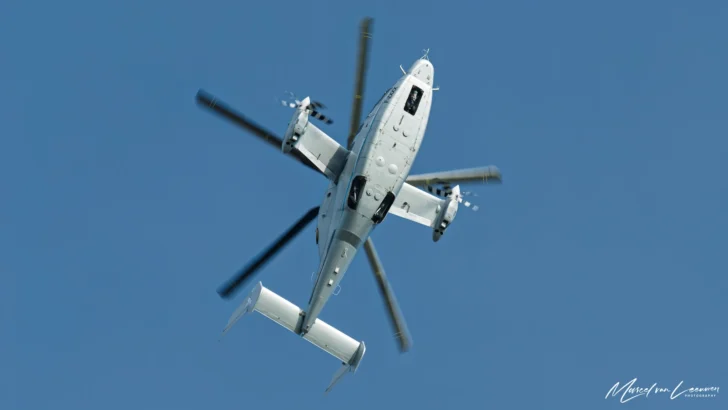
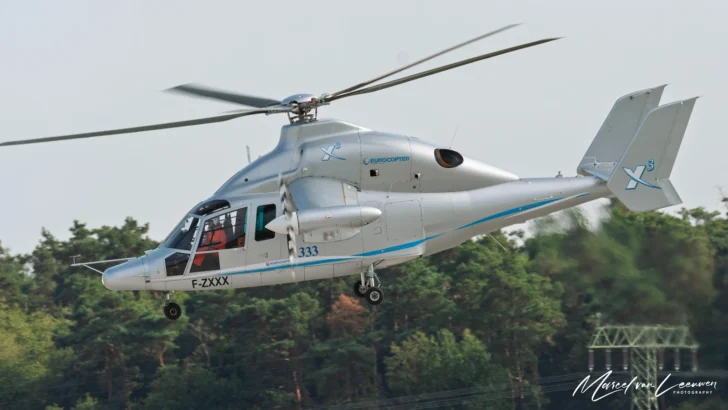
The Eurocopter X³ eliminates the traditional anti-torque tail rotor found on conventional helicopters. Instead, it features two short-span fixed wings mounted on the lower fuselage, each fitted with a five-bladed tractor propeller. Both the main rotor and the wing-mounted propellers are gear-driven by two Rolls-Royce Turbomeca RTM322 turboshaft engines.
During hover and low-speed flight, differential pitch and rotational speed between the left and right propellers counteract the torque generated by the main rotor, providing yaw control. In forward flight, the propellers generate horizontal thrust while the stub wings offload up to 80 percent of the lift from the main rotor. This load-sharing design slows the main rotor’s rotational speed, preventing retreating blade stall and advancing tip compressibility—the primary aerodynamic barriers that restrict conventional helicopters. Additional design features include retractable wheeled landing gear, a conventional empennage with twin vertical stabilizers, and a digital fly-by-wire control system.

Operational Impact
Although never intended for commercial or military serial production, the Eurocopter X³ validated the aerodynamic viability, low vibration levels, and maneuverability of the compound rotorcraft configuration. Flight testing proved that high-speed rotorcraft could perform steep climbs, rapid decelerations, and high-G turns without requiring complex active vibration-damping systems. The data gathered directly informed subsequent European high-speed rotorcraft initiatives, demonstrating potential operational advantages for time-critical missions such as long-range search and rescue (SAR), offshore energy transport, emergency medical services, and tactical military insertion.
Variants
- X³ Demonstrator: The single experimental prototype built using a modified Dauphin airframe and twin RTM322 engines.
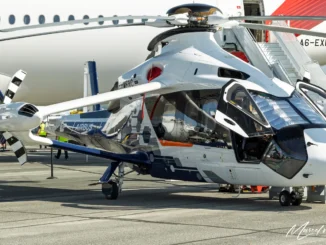
- Airbus RACER (Rapid And Cost-Effective Rotorcraft): A direct technological successor developed by Airbus Helicopters under the European Clean Sky 2 research program. Unveiled in 2017, the RACER refines the X³’s box-wing and pusher-propeller architecture for improved fuel efficiency and commercial viability.
Operators
- Current: None (prototype retired from active flight)
- Former: Eurocopter / Airbus Helicopters (France)
- Future: None (succeeded by the Airbus RACER technology demonstrator)
Specifications
General Characteristics
- Crew: 2 (pilot and co-pilot)
- Maximum Takeoff Weight (Gross Weight): 5,200 kg
- Powerplant: 2 × Rolls-Royce Turbomeca RTM322-01/9a turboshaft engines, 1,693 kW each
- Main Rotor Diameter: 12.6 m
- Main Rotor Area: 124.7 m²
- Propellers: 2 × 5-bladed tractor propellers (gear-driven from main engines)
Performance
- Maximum Speed: 472 km/h (level flight at approximately 3,048 m)
- Never-Exceed Speed (Dive): 487 km/h
- Cruise Speed: 407 km/h
- Service Ceiling: 3,810 m
- Rate of Climb: 28 m/s
Passengers Layout
- Cabin Configuration: Reconfigurable Dauphin-derived main cabin equipped with flight-test instrumentation and telemetry racks during trials; capable of accommodating passengers or cargo in an operational layout.
The Eurocopter X³ stands as a landmark achievement in modern rotorcraft engineering, successfully bridging the performance gap between conventional helicopters and fixed-wing turboprop aircraft. By reaching 472 km/h in level flight, the demonstrator proved that compound aerodynamics could overcome long-standing speed barriers without sacrificing vertical flight agility. While the sole prototype now resides in a museum, its architectural innovations continue to shape the next generation of high-speed civil and military rotorcraft.