Airbus A330 MRTT Multi-Role Tanker Transport Overview
Introduction
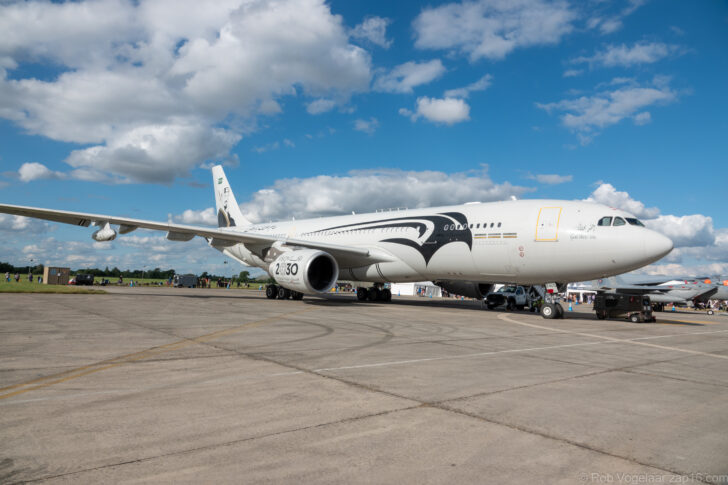
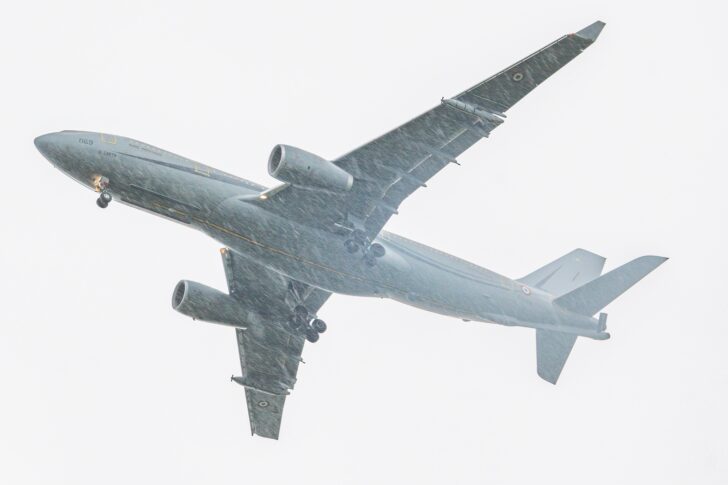
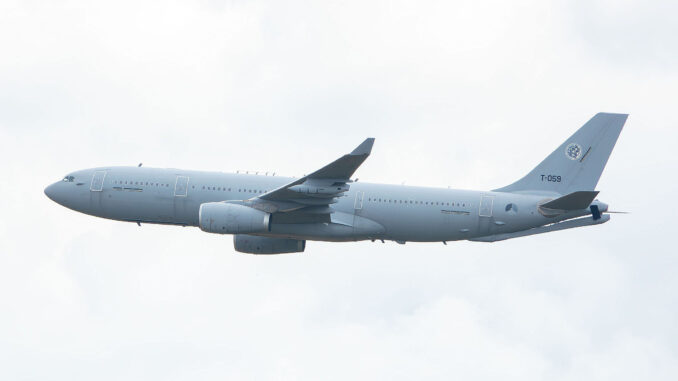
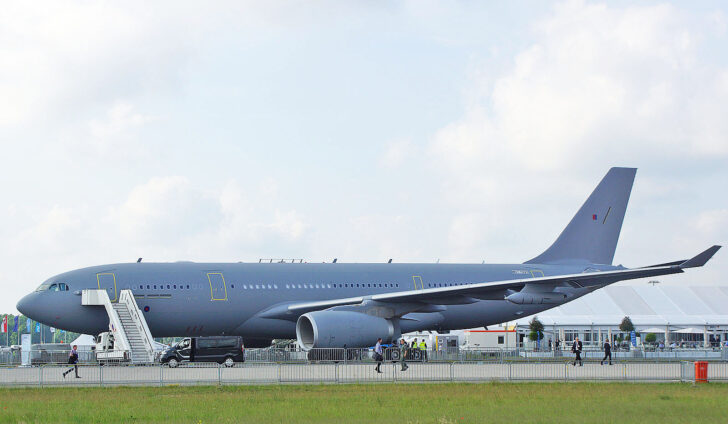
The Airbus A330 MRTT (Multi Role Tanker Transport) is a military derivative of the Airbus A330-200 commercial airliner. Designed as a dual-role aerial refueling and strategic transport aircraft, it combines high fuel offload capacity with passenger, cargo, and aeromedical transport capabilities without requiring auxiliary fuel tanks in the main cabin.
General Information
-
Type: Multi-role aerial refueling tanker and strategic transport aircraft
-
Manufacturer: Airbus Defence and Space
-
First Flight: June 15, 2007 (A330 MRTT prototype)
-
Status: In service
-
Primary Users: Royal Air Force (UK), French Air and Space Force, Royal Australian Air Force, Multinational MRTT Fleet (NATO), Royal Saudi Air Force, Republic of Singapore Air Force, Republic of Korea Air Force, United Arab Emirates Air Force, Royal Canadian Air Force, Spanish Air and Space Force
-
Number Built: Over 60 delivered (with total orders exceeding 90 aircraft)
History
The development of the Airbus A330 MRTT stemmed from a military requirement for modern wide-body tanker aircraft to replace aging fleets of KC-135 and VC10 tankers. Airbus designed the platform using the proven airframe of the A330-200, leveraging existing wing structures shared with the four-engine Airbus A340 to install hardpoints for under-wing refueling pods.
Australia became the launch customer in 2004, selecting the platform as the KC-30A, followed by the United Kingdom selecting the aircraft for its Future Strategic Tanker Aircraft program. Commercial airframes are manufactured in Toulouse, France, and converted into military configurations at the Airbus facility in Getafe, Spain. The platform received military certification in October 2010 and entered operational service shortly thereafter.
Design
The Airbus A330 MRTT features a wide-body layout supported by fly-by-wire controls and modern glass cockpit avionics. The fuel storage system utilizes the standard internal wing and center fuel tanks, allowing the cabin and lower hold to remain completely clear for cargo and personnel transport.
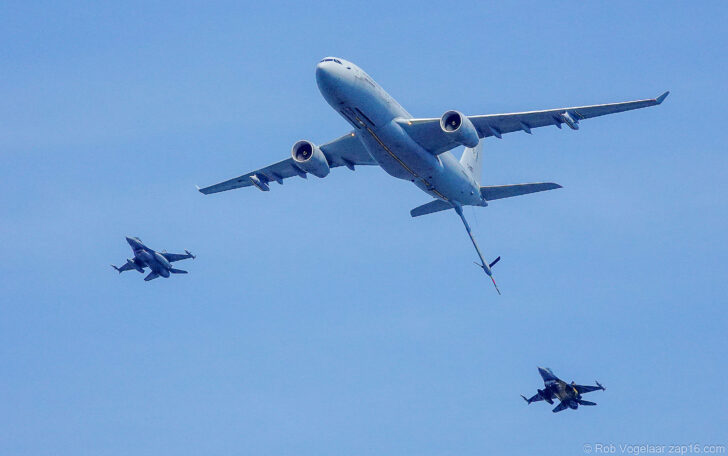
Refueling equipment includes the Airbus Military Aerial Refueling Boom System (ARBS) for receptacle-equipped receiver aircraft, as well as Cobham 905E under-wing hose-and-drogue pods or a Cobham 805 Fuselage Refueling Unit (FRU) for probe-equipped receivers. Boom refueling operations rely on an advanced 3D vision console located in the flight deck rather than direct visual observation ports.
Operational Impact
The platform substantially expands strategic deployment reach for operating nations. Its high offload capacity allows simultaneous refueling missions while deploying ground personnel, support equipment, and cargo over intercontinental distances without forward staging bases. During humanitarian and coalition missions, operators utilize the aircraft for large-scale medical evacuations, disaster relief transport, and tactical air support.
Variants
-
A330 MRTT (Standard): Baseline variant derived from the A330-200 commercial airframe.
-
Voyager KC2 / KC3: Dedicated designations for aircraft operated by the Royal Air Force under the UK Future Strategic Tanker Aircraft arrangement.
-
KC-30A: Official designation for aircraft operated by the Royal Australian Air Force.
-
CC-330 Husky: Official designation for aircraft operated by the Royal Canadian Air Force.
-
A330 MRTT+: Enhanced variant announced in 2024, built on the A330-800 platform and powered by Rolls-Royce Trent 7000 engines for increased range, lower fuel burn, and higher maximum takeoff weight.
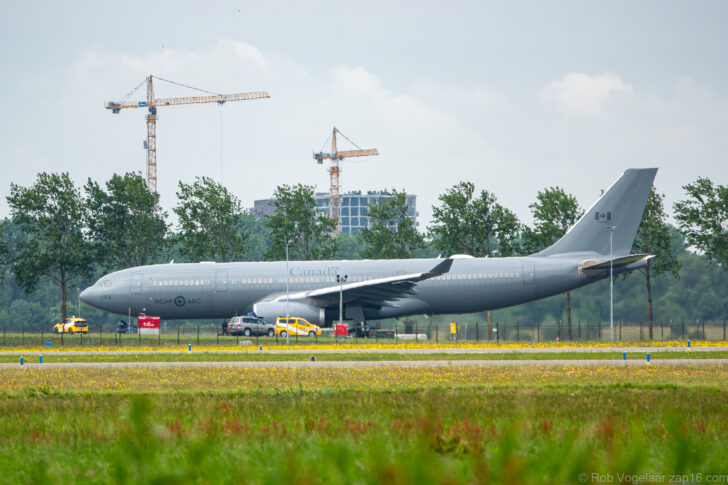
Operators
-
Current: Royal Air Force, French Air and Space Force, Royal Australian Air Force, Royal Saudi Air Force, Republic of Singapore Air Force, Republic of Korea Air Force, United Arab Emirates Air Force, Multinational MRTT Fleet (NATO operational fleet), Spanish Air and Space Force, Royal Canadian Air Force.
-
Former: None.
-
Future: Royal Thai Air Force.
Specifications
General Characteristics
-
Crew: 3 (2 pilots, 1 refueling operator)
-
Capacity: Up to 300 passengers, 130 stretchers (MedEvac), or 45,000 kg of cargo payload
-
Length: 58.8 m
-
Wingspan: 60.3 m
-
Height: 17.4 m
-
Wing Area: 362 m²
-
Empty Weight: 125,000 kg
-
Maximum Takeoff Weight: 233,000 kg (up to 242,000 kg on A330 MRTT+)
-
Maximum Fuel Capacity: 111,000 kg
-
Powerplant: 2 × Rolls-Royce Trent 772B or General Electric CF6-80E1 turbofans
Performance
-
Maximum Speed: 880 km/h
-
Cruise Speed: 860 km/h (Mach 0.86)
-
Range: 14,800 km
-
Service Ceiling: 13,000 m
Armament & Defense
-
Hardpoints: Under-wing hardpoints dedicated to refueling pods.
-
Defensive Avionics: DIRCM (Directed Infrared Countermeasures) suite and radar/missile warning receiver systems.
The Airbus A330 MRTT remains a benchmark multi-role transport and refueling platform for air forces globally. Its multi-mission versatility allows operating forces to fulfill aerial refueling, cargo transport, and passenger airlift requirements with a single aircraft type. With the rollout of the A330 MRTT+ variant based on modern A330neo architecture, the aircraft is positioned to maintain long-term operational relevance for strategic airlift and refueling missions well into the future.