Introduction
The British Master of Short Takeoffs and Clandestine Night Operations
The Westland Lysander was a British army co-operation aircraft renowned for its exceptional short takeoff and landing (STOL) performance. Built to operate from rough fields, it gained fame in World War II conducting nocturnal clandestine operations behind enemy lines, inserting and extracting secret agents and resistance fighters across occupied Europe.
General Information
- Type: Army co-operation and liaison aircraft
- Manufacturer: Westland Aircraft (also built under license by National Steel Car)
- First Flight: 15 June 1936
- Status: Retired
- Primary Users: Royal Air Force, Royal Canadian Air Force, Indian Air Force, Egyptian Air Force, Free French Air Force, Turkish Air Force, Irish Air Corps, Portuguese Air Force
- Number Built: 1,786 units

History
In 1934, the British Air Ministry issued Specification A.39/34 seeking a dedicated army co-operation platform to replace the Hawker Hector. Westland designer Arthur Davenport, working under technical director Edward Petter, interviewed front-line army pilots to determine operational needs, prioritizing downward visibility, low-speed handling, and field takeoff capabilities.
Westland submitted its P.8 design against rival concepts from Bristol and Hawker. The prototype completed its maiden flight on 15 June 1936. Following successful service trials, the Air Ministry awarded a production contract in September 1936. Entering service in June 1938, the aircraft carried the name of the Spartan military commander Lysander. Production continued in Britain and Canada until 1944, completing 1,786 airframes.
Design
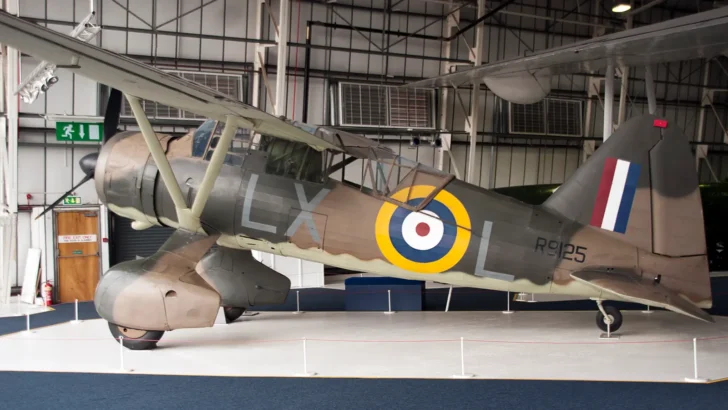
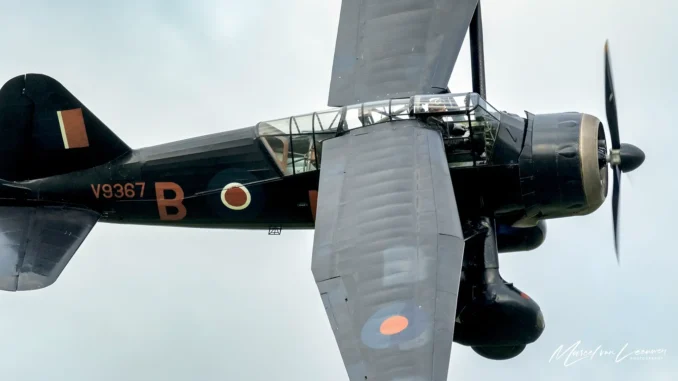
The Westland Lysander featured a high-wing monoplane configuration with an unusual reverse-tapered wing, narrowest at the root to maximize pilot visibility. The wing incorporated automated Handley Page leading-edge slats and slotted trailing-edge flaps connected mechanically to deploy automatically at low airspeeds. These high-lift devices gave the aircraft exceptional low-speed control and allowed landings on extremely short, unprepared clearings.
The fuselage used an internal welded steel-tube structure with fabric skin, while the large fixed landing gear housed internal shock absorbers. Aerodynamic wheel spats featured mounting lugs for small stub wings, allowing ground crews to attach light bombs, supply canisters, or reconnaissance flare racks. A glazed greenhouse canopy enclosed the pilot and the rear observer/gunner, offering an unobstructed view of the ground.

Operational Impact
During the Battle of France in 1940, the aircraft suffered heavy combat losses when facing modern German fighters. The RAF promptly reallocated the type to air-sea rescue, target towing, and tactical liaison.
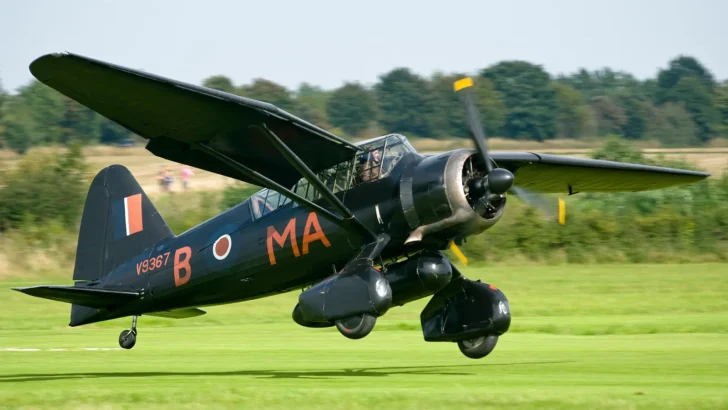
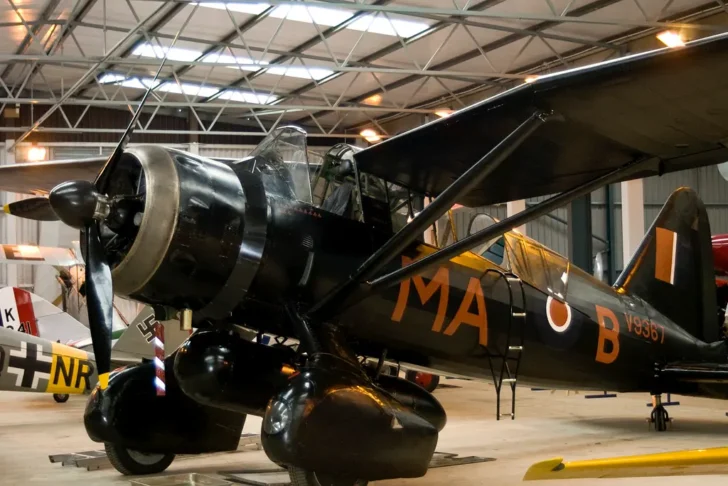
Its most celebrated contribution came under No. 138 Squadron and No. 161 Squadron flying Special Duties missions for the Special Operations Executive (SOE). Painted matte black and fitted with auxiliary long-range fuel tanks and passenger ladders, these specialized aircraft landed by moonlight on small French farm pastures to retrieve downed Allied airmen, deploy secret agents, and support resistance networks.
Variants
- Lysander Mk I: Initial production variant powered by a Bristol Mercury XII radial engine.
- Lysander Mk II: Major production variant fitted with a Bristol Perseus XII sleeve-valve radial engine.
- Lysander Mk III: Standard variant powered by a Bristol Mercury XX or Mercury 30 engine.
- Lysander Mk IIIA: Upgraded version with dual rear defensive machine guns.
- Lysander Mk III (SCW): Special Contract Westland variant modified for clandestine SOE missions, featuring a 682-liter auxiliary belly tank, passenger ladder, and deleted armament.
- Lysander TT Mk I / II / III: Dedicated target tug conversions used for gunnery training.

Operators
Current
- None (several preserved aircraft remain airworthy with museums and historic collections)
Former
- United Kingdom (Royal Air Force)
- Canada (Royal Canadian Air Force)
- India (Indian Air Force)
- Egypt (Egyptian Air Force)
- France (Free French Air Force)
- Turkey (Turkish Air Force)
- Ireland (Irish Air Corps)
- Portugal (Portuguese Air Force)
- Finland (Finnish Air Force)
- United States (United States Army Air Forces)

Future
- None
Specifications
General Characteristics
- Crew: 2 (pilot and observer/gunner; up to 3 passengers in Special Duties role)
- Length: 9.30 m
- Wingspan: 15.24 m
- Height: 4.42 m
- Wing Area: 24.15 m²
- Empty Weight: 1,980 kg
- Maximum Takeoff Weight: 2,871 kg
- Powerplant: 1 × Bristol Mercury XX 9-cylinder air-cooled radial piston engine, 649 kW (870 hp)
Performance
- Maximum Speed: 341 km/h at 1,520 m altitude
- Stall Speed: 105 km/h
- Range: 966 km (up to 1,850 km with external overload tank on Special Duties variants)
- Service Ceiling: 6,550 m
- Rate of Climb: 7.2 m/s
Armament
- Guns: 2 × forward-firing 7.7 mm Browning machine guns in wheel fairings; 1 or 2 × flexible 7.7 mm Lewis or Vickers K machine guns in the rear cockpit
- Bombs: Up to 227 kg of light bombs, tactical supply containers, or flares carried on wheel-spat stub wings and under-fuselage racks
The Westland Lysander secured an enduring legacy during the darkest periods of World War II through its remarkable short-field agility. While vulnerable in daylight air combat, its high-lift wings and rugged landing gear made it an indispensable instrument for intelligence agencies and rescue flights. Today, painstakingly restored examples in the United Kingdom and Canada keep the story of Allied clandestine aviation alive for modern spectators.