Introduction
The Pioneer of Twin-Engine Agility and Hingeless Rotor Technology
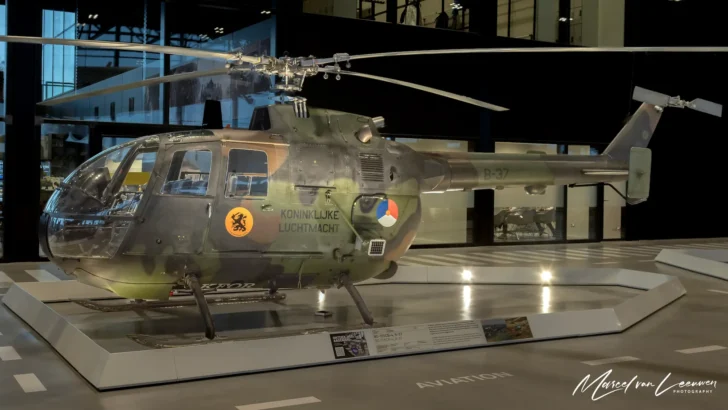
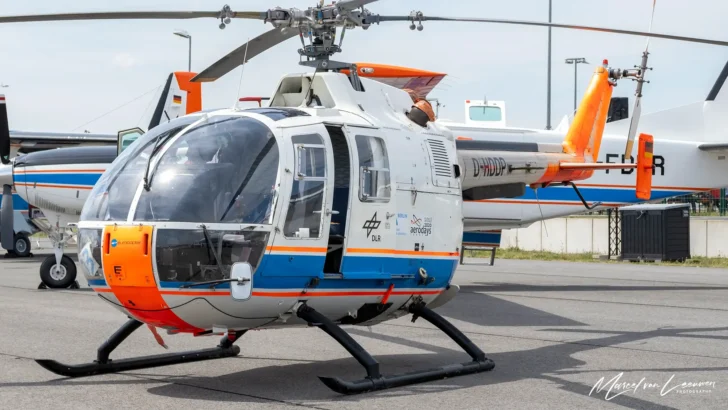
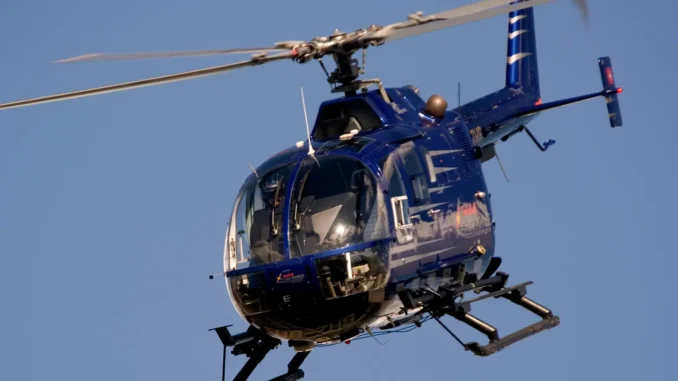
The MBB Bo 105 is a multipurpose light utility helicopter that redefined rotorcraft engineering through its revolutionary rigid rotor system and twin-turbine safety. Engineered for extreme maneuverability and rugged reliability, it served as a versatile backbone for aeromedical evacuation, military reconnaissance, anti-tank defense, and civil utility operations across the globe.
General Information
- Type: Light utility helicopter
- Manufacturer: Messerschmitt-Bölkow-Blohm (MBB) (later Eurocopter / Airbus Helicopters)
- First Flight: 16 February 1967
- Status: In service (production ended)
- Primary Users: Indonesian Army, Republic of Korea Army, Philippine Navy, Royal Bahraini Air Force, Mexican Navy, Colombian Navy
- Number Built: Approximately 1,640 units

History
In the early 1960s, German aerospace engineer Ludwig Bölkow initiated the development of a modern, multi-role light helicopter in West Germany. Bölkow collaborated with French firm Sud Aviation to develop and flight-test an innovative rotor concept using an Aérospatiale Alouette II testbed.
The program officially coalesced under Messerschmitt-Bölkow-Blohm (MBB) following corporate mergers in the late 1960s. The second prototype achieved its maiden flight on 16 February 1967 at Ottobrunn, powered by twin Allison Model 250 turboshafts. West German civil aviation authorities certified the aircraft on 13 October 1970, followed swiftly by FAA certification in 1972. In 1975, the German Federal Ministry of Defence selected the type for anti-tank and liaison roles, initiating massive military production that ran alongside global civilian deliveries until final production ceased in 2001.

Design
The engineering hallmark of the MBB Bo 105 is its hingeless rotor system (gelenkloser Rotorkopf). The four-bladed main rotor features a solid, forged titanium rotor hub connected to flexible, glass-fiber-reinforced plastic (GFRP) composite rotor blades. This rigid architecture eliminates traditional flapping and lead-lag mechanical hinges, using the natural aeroelastic flexing of the composite blades to accommodate flight stresses.
The design delivers instantaneous cyclic response and exceptional structural tolerance, making the aircraft the first production helicopter certified to execute full aerobatic maneuvers, including loops and barrel rolls. Dual turboshaft engines feed a consolidated transmission system to ensure safe single-engine operation. The fuselage includes rear clamshell loading doors below the tail boom, allowing rapid loading of stretchers and oversized cargo directly into the rear cabin.
Operational Impact
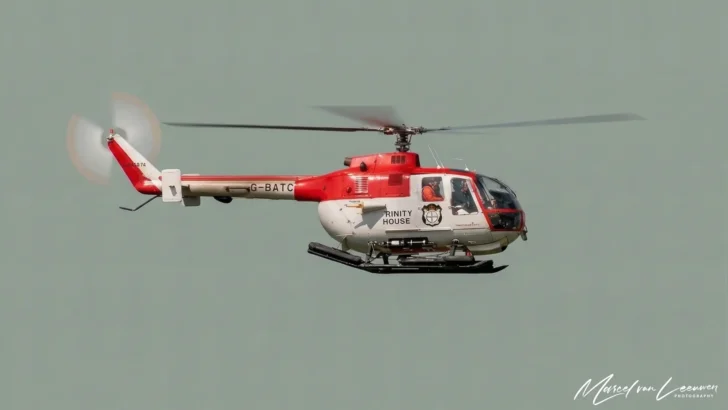
The Bo 105 pioneered modern air medical services (HEMS), setting the international design blueprint for dedicated rescue helicopters due to its rear patient-loading capability and twin-engine security over urban areas. Organizations like ADAC Luftrettung and the German Federal Ministry of the Interior established modern aeromedical networks around the airframe. Militarily, the platform demonstrated the viability of lightweight, highly agile scout helicopters capable of flying nap-of-the-earth anti-armor missions during the Cold War.
Variants
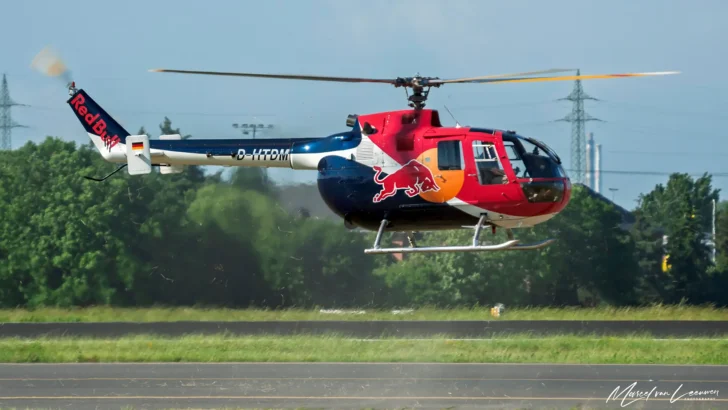
- Bo 105A: Initial civil baseline production model powered by Allison 250-C18 engines.
- Bo 105C: Standard production version introduced in 1972 with uprated Allison 250-C20 engines.
- Bo 105CB: Mainline variant from 1975 powered by Allison 250-C20B turboshafts.
- Bo 105CBS: Stretched utility transport version with a 25 cm fuselage extension to facilitate aeromedical transport.
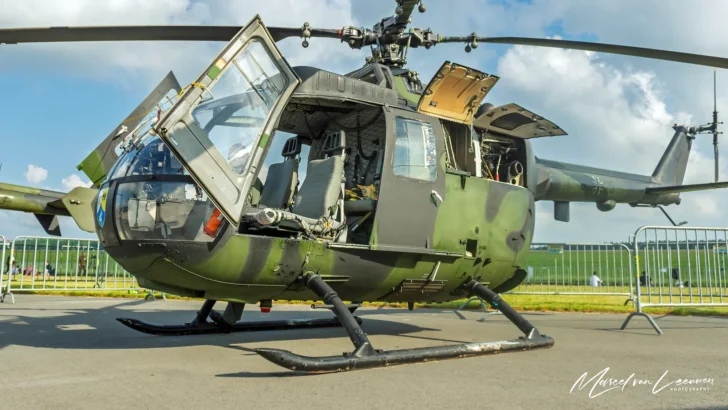
- Bo 105M (VBH): Liaison, light transport, and observation variant developed for the German Army.
- Bo 105P (PAH-1): Dedicated anti-tank helicopter variant for the German Army, fitted with missile racks and a roof-mounted sight.
- Bo 105LS: High-altitude, hot-weather derivative equipped with more powerful Allison 250-C28 engines, manufactured in Canada.
- NBO-105: License-built variant manufactured in Indonesia by IPTN (Indonesian Aerospace).
Operators
Current
- Indonesian Army
- Republic of Korea Army
- Philippine Navy
- Royal Bahraini Air Force
- Mexican Navy
- Colombian Navy
Former
- German Army
- Spanish Army
- Royal Netherlands Air Force
- Swedish Armed Forces
- Canadian Coast Guard
- Iraqi Air Force
Future
- None planned. Active operators are gradually phasing out the airframe in favor of newer platforms such as the Airbus H135 and Airbus H145.
Specifications
General Characteristics
- Crew: 1 or 2 pilots
- Capacity: Up to 4 passengers or 2 stretchers with medical attendant
- Overall Length: 11.86 m
- Fuselage Length: 8.56 m
- Height: 3.00 m
- Main Rotor Diameter: 9.84 m
- Main Rotor Area: 76.05 m²
- Empty Weight: 1,276 kg
- Maximum Takeoff Weight: 2,500 kg
- Fuel Capacity: 456 kg (570 L) internal capacity
- Powerplant: 2 × Allison 250-C20B turboshaft engines, 313 kW each
Performance
- Maximum Speed: 242 km/h
- Never Exceed Speed (VNE): 270 km/h
- Cruising Speed: 204 km/h
- Range: 657 km (standard fuel)
- Ferry Range: 1,112 km (with auxiliary fuel tanks)
- Service Ceiling: 5,200 m
- Rate of Climb: 8.0 m/s
Armament
- Anti-Tank Guided Missiles: Up to 6 × Euromissile HOT / HOT-2 missiles (Bo 105 PAH-1 variant)
- Air-to-Air Missiles: Up to 4 × FIM-92 Stinger missiles (Bo 105 BSH escort configuration)
- Guns & Rockets: External pods for 7.62 mm or 12.7 mm machine guns, and 68 mm or 70 mm unguided rocket launchers (export combat configurations)
The MBB Bo 105 remains one of the most influential light utility helicopters in aviation history, having proven the commercial and tactical viability of rigid rotor dynamics. Its exceptional agility, crashworthiness, and multi-mission flexibility set baseline standards for civilian air ambulances and military scouts alike. While front-line fleets continue to transition to next-generation airframes, specialized operators, heritage flight groups, and display teams ensure its aerodynamic legacy endures.