Antonov An-225 Mriya the World’s Largest Strategic Airlifter
Introduction
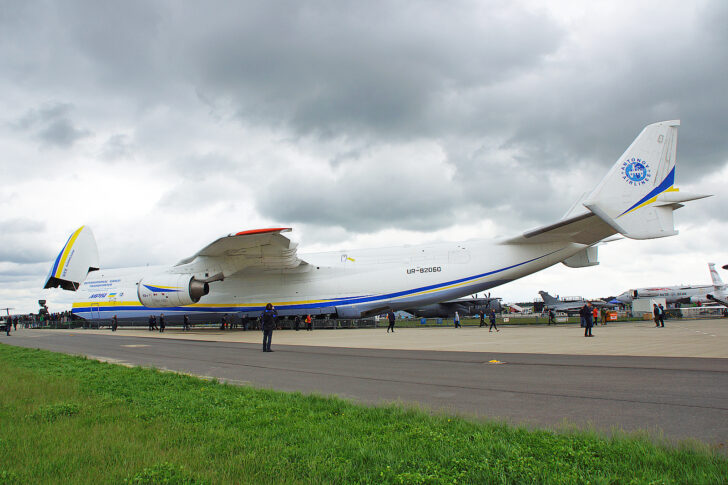
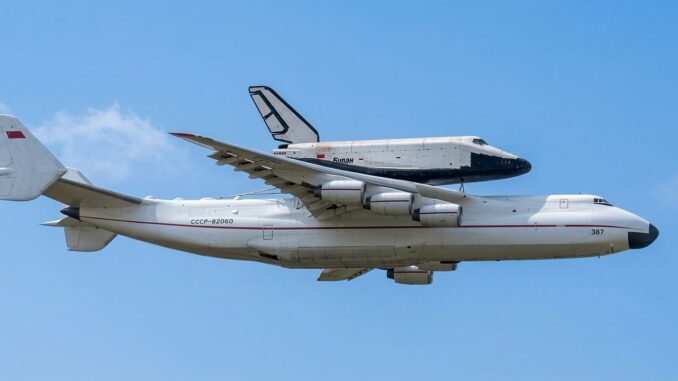
The Antonov An-225 Mriya was a six-engine strategic airlift cargo aircraft designed by the Antonov Design Bureau in the Ukrainian Soviet Socialist Republic during the 1980s. Developed primarily to transport the Soviet Union’s Buran space shuttle and Energia rocket boosters, it stands as the heaviest aircraft ever built, possessing the largest wingspan of any operational aircraft in history.
General Information
- Type: Strategic heavy-lift cargo aircraft
- Manufacturer: Antonov Design Bureau
- First flight: December 21, 1988
- Status: Destroyed (February 24, 2022)
- Primary users: Soviet Air Forces, Antonov Airlines
- Number built: 1 (a second airframe was partially completed)
History
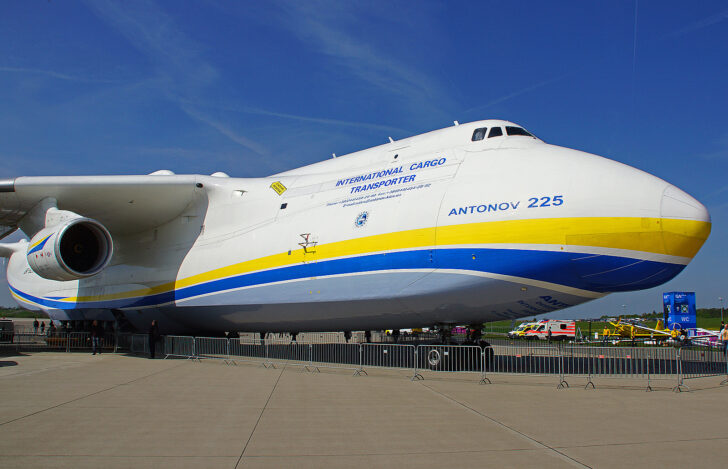
The Soviet government initiated the Antonov An-225 program in the mid-1980s to replace the Myasishchev VM-T for transporting heavy aerospace components. Engineers selected the Antonov An-124 Ruslan as the baseline design, expanding its frame to accommodate heavier payloads. Lead designer Viktor Tolmachev directed the design team, which achieved the aircraft’s maiden flight on December 21, 1988. The An-225 made its international public debut carrying the Buran orbiter at the 1989 Paris Air Show. Following the cancellation of the Soviet space program and a period of storage, Antonov Airlines commercialized the aircraft in 2001 for super-heavy commercial freight transport. Russian forces destroyed the sole operational aircraft at Hostomel Airport during the Battle of Antonov Airport in February 2022.
Design
Engineers extended the An-124 fuselage length and added two additional Ivchenko-Progress D-18T turbofan engines, raising the total to six. To maintain directional stability while transporting oversized external loads mounted on its back, designers replaced the single vertical stabilizer with a twin-tail assembly. The main landing gear comprised 32 wheels in a multi-axle arrangement to distribute heavy loads across runways. Unlike the An-124, designers removed the rear cargo door and ramp to optimize structural weight, leaving access strictly through the nose-cone cargo door.
Operational Impact
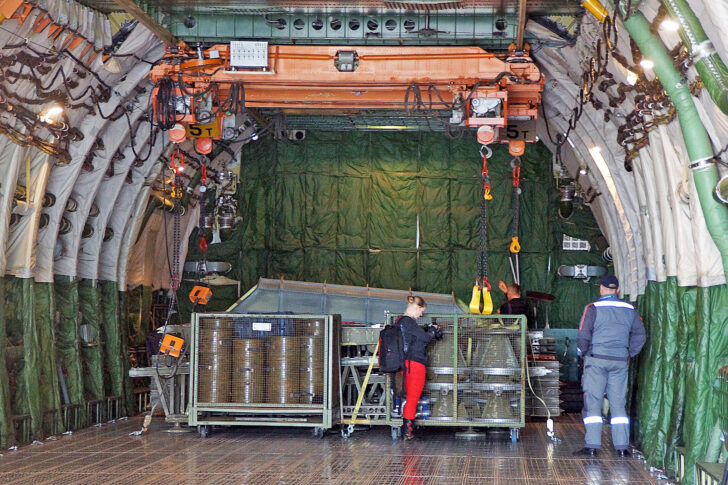
The Antonov An-225 transformed global air logistics by establishing unprecedented transport capabilities for ultra-heavy and outsized cargo. It set 240 aviation records, including carrying a single-item payload of 187.6 metric tons and a total payload of 253.8 metric tons. During its service, the aircraft delivered emergency humanitarian aid, industrial generators, locomotives, and long-form equipment such as wind turbine blades across the globe.
Variants
- An-225: Original base variant developed for the Soviet space shuttle program.
- An-225-100: Modernized civil freighter variant featuring upgraded navigation, traffic collision avoidance systems, and communication equipment.
Operators
- Current: None
- Former: Soviet Union (Soviet Air Forces / Buran space program), Ukraine (Antonov Airlines)
- Future: Potential rebuild using the unfinished second airframe under discussion by Antonov.

Specifications
General Characteristics
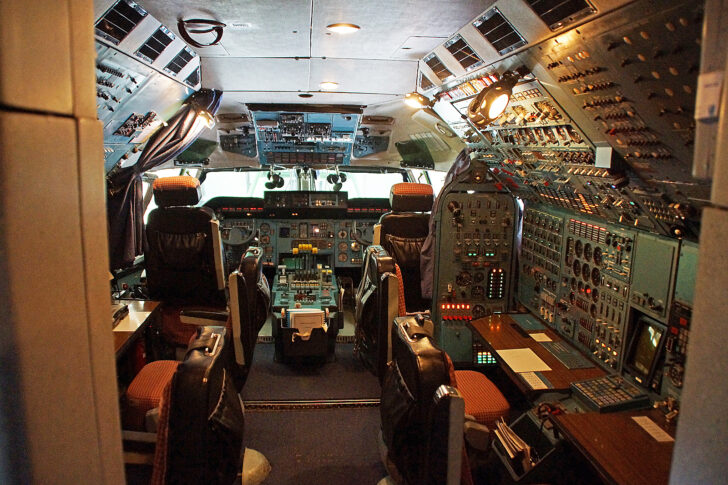
- Crew: 6
- Length: 84 meters
- Wingspan: 88.4 meters
- Height: 18.1 meters
- Wing area: 905 square meters
- Empty weight: 285,000 kilograms
- Maximum takeoff weight: 640,000 kilograms
- Payload capacity: 250,000 kilograms
- Cargo hold volume: 1,200 cubic meters
- Powerplant: 6 × Ivchenko-Progress D-18T turbofans, 229.5 kilonewtons of thrust each
Performance
- Maximum speed: 850 kilometers per hour
- Cruise speed: 800 kilometers per hour
- Range with maximum fuel: 15,400 kilometers
- Range with 200,000 kg payload: 4,000 kilometers
- Service ceiling: 11,000 meters
Passengers Layout
- Cabin configuration: Upper deck cabin behind cockpit accommodating up to 60 or 70 passengers / technicians supporting primary cargo operations.
The Antonov An-225 Mriya remains a landmark achievement in strategic aerospace engineering and oversized freight transport. Its unprecedented payload capacity enabled global logistical operations that no other aircraft could perform. Though destroyed in 2022, the An-225 retains an enduring legacy in commercial aviation history, with potential plans for future restoration using the secondary airframe.