Airbus H145 Fact Sheet: Specifications, History, and Performance
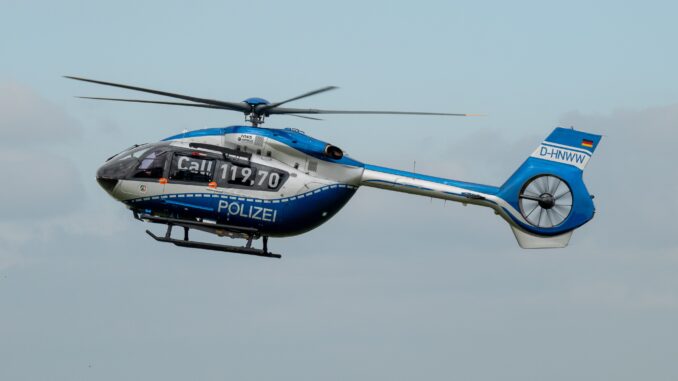
The Airbus H145 is a versatile twin-engine light utility helicopter recognized globally for its reliability, spacious cabin, and advanced safety features. Originally developed as the Eurocopter EC145, this multi-role platform excels in emergency medical services, law enforcement, aerial work, corporate transport, and military utility missions. Its adaptable design allows operators to execute demanding operational profiles efficiently.
General Information
-
Type: Twin-engine light utility helicopter
-
Manufacturer: Airbus Helicopters (formerly Eurocopter)
-
First Flight: June 12, 1979 (original BK 117 prototype); June 12, 1999 (EC145 / BK 117 C-2)
-
Status: In service, active production
-
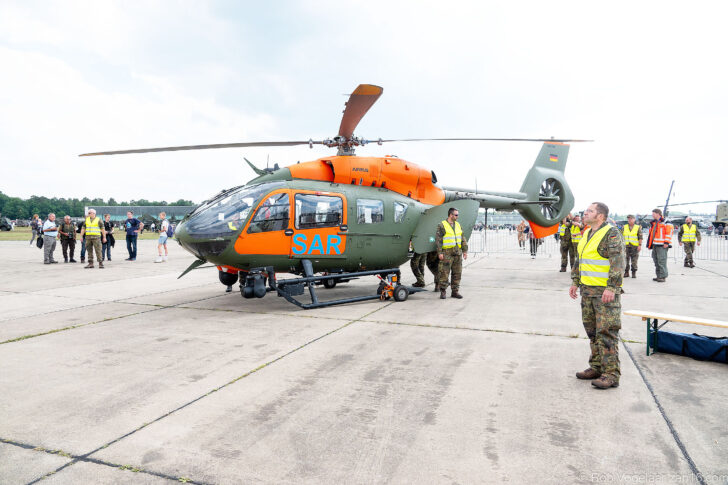
Primary Users: United States Army, German Armed Forces, ADAC Luftrettung, DRF Luftrettung, Royal Thai Armed Forces, French Civil Security, Royal Air Force
-
Number Built: Over 1,600 units (entire BK 117 / EC145 / H145 family)
History
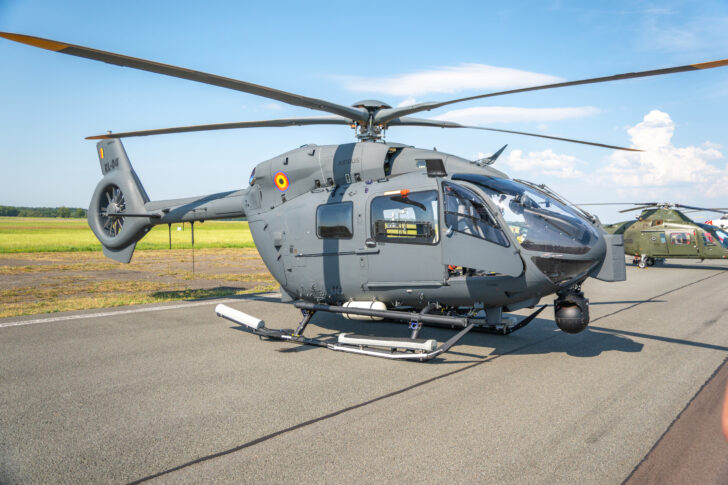
The origins of the Airbus H145 trace back to a joint venture between Messerschmitt-Bölkow-Blohm and Kawasaki Heavy Industries, which produced the BK 117 in the late 1970s. Eurocopter later redesigned the aircraft into the EC145 to increase cabin capacity, payload, and avionics capabilities. The modernized variant made its maiden flight in 1999 and achieved certification in 2000.
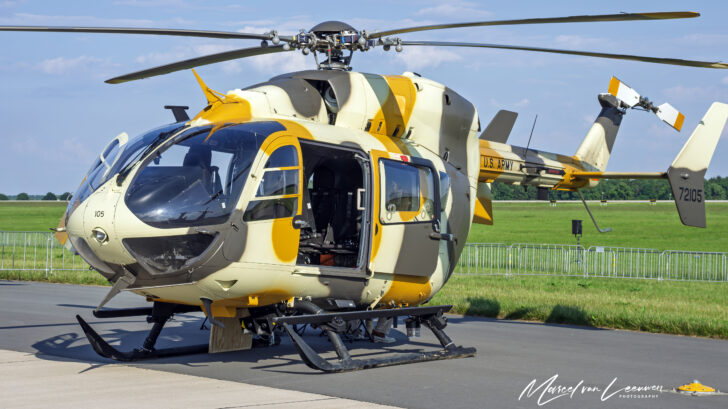
The platform gained significant momentum when the United States Army selected a modified version, designated the UH-72 Lakota, for light utility and training operations in 2006. Eurocopter updated the design in 2014 by adding Safran Arriel 2E turboshaft engines and an enclosed Fenestron tail rotor. Rebranded as the H145 under Airbus Helicopters, the platform underwent further improvements, including a bearingless five-blade main rotor introduced in 2020 to boost useful load capacity and flight smoothness.

Design
The Airbus H145 features a wide, partition-free cabin constructed with rear clamshell doors and large side sliding doors for rapid access and loading. Modern variants incorporate a Fenestron shrouded tail rotor, which reduces ground hazard risk and minimizes noise emissions.
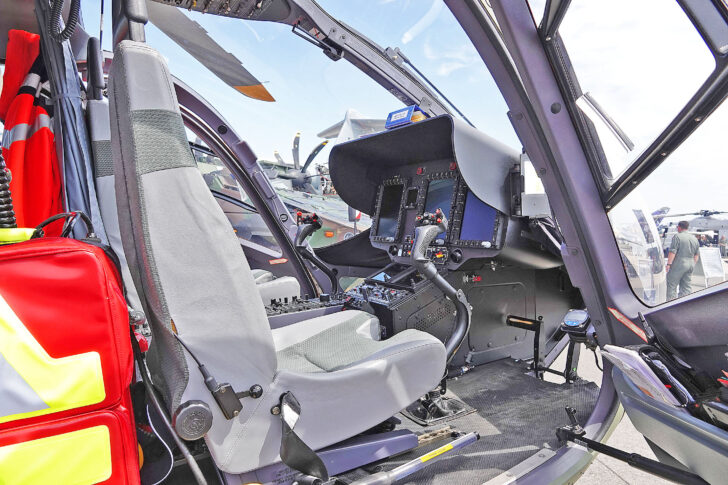
Power originates from two Safran Arriel 2E engines governed by dual-channel FADEC technology. The flight deck houses the proprietary Helionix avionics suite, featuring integrated multi-function displays and an advanced four-axis automatic flight control system. These control systems lower pilot workload and improve situational awareness during severe weather or night operations.
Operational Impact
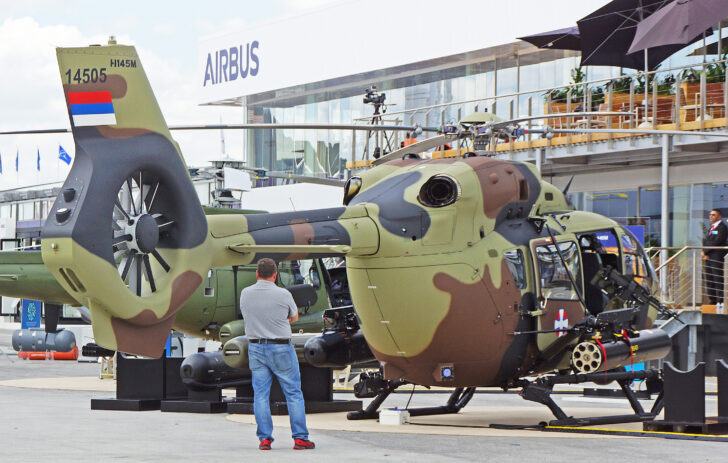
The Airbus H145 serves critical roles in civilian and military sectors worldwide. In air medical roles, its obstruction-free interior allows emergency medical teams to install intensive care equipment and care for patients in transit. The enclosed Fenestron design provides high safety margins in confined urban or wilderness landing zones. Military operator forces utilize the armed H145M configuration for light attack, special operations support, and tactical transport missions in complex environments.
Variants
-
EC145 (BK 117 C-2): Base production version utilizing conventional tail rotors and Safran Arriel 1E2 engines.
-
EC145e (BK 117 C-2e): Utility-oriented variant featuring stripped-down avionics for higher payload capacity.
-
H145 (BK 117 D-2): Upgraded version equipped with Safran Arriel 2E engines, Helionix avionics, and a Fenestron tail rotor.
-
H145 (BK 117 D-3): Latest variant introducing an unhinged five-blade main rotor head to increase useful load by 150 kg.
-
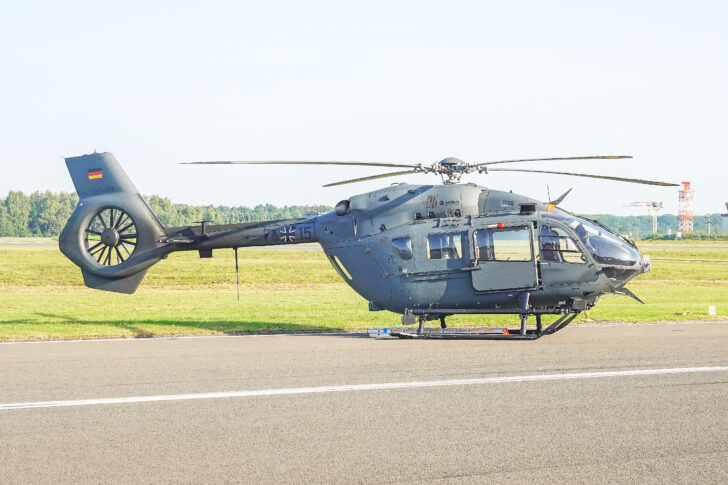
H145M: Militarized light attack and utility version configurable with the HForce weapons system.
-
UH-72 Lakota: United States Army light utility variant built for utility and training requirements.
-
ACH145: Dedicated luxury corporate transport line with custom interior options.
Operators
-
Current: German Armed Forces, United States Army, ADAC Luftrettung, DRF Luftrettung, French Civil Security, Royal Thai Armed Forces, Royal Air Force, Kazakhstan Ministry of Defence, Belgian Armed Forces
-
Former: Selected early BK 117 civil and emergency medical operators that transitioned to modern H145 fleets.
Specifications
General Characteristics
-
Crew: 1–2 pilots
-
Capacity: Up to 10 passengers
-
Length: 13.64 m
-
Height: 3.95 m
-
Main Rotor Diameter: 11.00 m
-
Empty Weight: 2,230 kg
-
Maximum Takeoff Weight: 3,800 kg
-
Powerplant: 2 × Safran Arriel 2E turboshaft engines, 667 kW takeoff power per engine
Performance
-
Maximum Cruise Speed: 248 km/h
-
Never Exceed Speed (VNE): 278 km/h
-
Maximum Range: 680 km
-
Service Ceiling: 6,096 m
-
Rate of Climb: 7.62 m/s
Armament
-
Gun Pods: 12.7 mm heavy machine gun pods, 20 mm autocannon pods
-
Rockets: 70 mm guided and unguided rocket pods
-
Missiles: SPIKE ER2 anti-tank guided missiles

The Airbus H145 remains a benchmark in modern rotary-wing aviation through continuous technological upgrades. Its flexible design architecture allows rapid reconfiguration for medical transport, search and rescue, law enforcement, and light combat. The integration of advanced rotor systems and digital flight control technologies secures its position across global operators. As fleet modernizations continue, the platform maintains strong market growth worldwide.