Introduction
The Antonov An-32, designated by NATO as the Cline, is a twin-engine turboprop tactical transport aircraft. Developed by the Antonov Design Bureau, it is specifically engineered for exceptional performance in “hot and high” environments, featuring high power-to-weight ratios and rugged structural qualities that enable reliable operations from austere, high-altitude airstrips.
General Information
- Type: Tactical military and cargo transport aircraft
- Manufacturer: Antonov Design Bureau
- First Flight: July 9, 1976
- Status: In active service
- Primary Users: Indian Air Force, National Air Force of Angola, Sri Lanka Air Force, Ukrainian Air Force, Peruvian Air Force
- Number Built: 373 units
History
The genesis of the Antonov An-32 traces back to a specialized requirement from the Indian Air Force for a high-performance transport capable of operating effectively from elevated airfields in extreme ambient temperatures. Using the successful airframe of the An-26 as a baseline, the Antonov Design Bureau incorporated vastly more powerful turboprop engines and relocated the engine nacelles above the wing structure to accommodate much larger propellers. Following the prototype’s maiden flight on July 9, 1976, serial production commenced at the Kyiv Aviation Plant, establishing the type as a premier tactical transport for challenging geographic regions.
Design
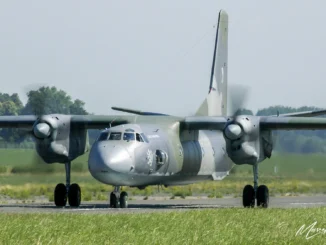
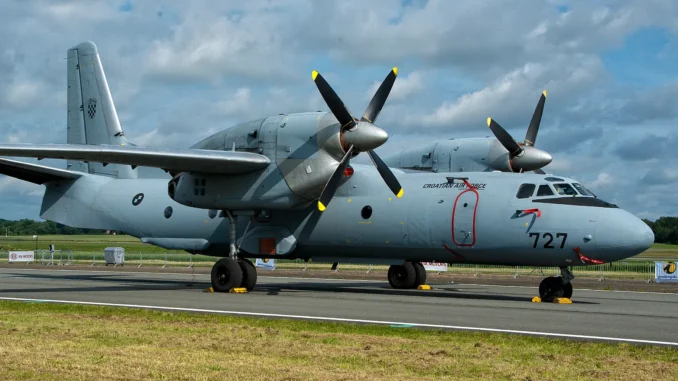
The Antonov An-32 features a high-wing cantilever monoplane layout powered by two massive Ivchenko-Progress AI-20 turboprop engines mounted high on the wings to prevent foreign object ingestion. It utilizes a robust, retractable tricycle landing gear system equipped with low-pressure tires designed to absorb severe vertical loads on unpaved, muddy, or snow-covered surfaces. Cargo loading is facilitated by a large rear ramp-door combination that allows rapid loading and airdropping of troops, vehicles, and heavy freight.
Operational Impact
The introduction of the Antonov An-32 fundamentally transformed logistical capabilities in mountainous and tropical regions characterized by thin air and high temperatures. Operators routinely deploy the aircraft to supply remote mountain outposts, execute tactical paratrooper insertions, and deliver humanitarian disaster relief. Its remarkable single-engine performance at high altitude and rugged build quality have made it an indispensable asset for militaries operating in severe environments globally.
Variants
- An-32A: The initial commercial variant utilized primarily for government and enterprise factory transport duties.
- An-32B: An improved military production model featuring an increased maximum takeoff weight and improved systems.
- An-32P Firekiller: A dedicated aerial firefighting variant equipped with external tanks to drop water or retardant.
- An-32RE: A modern upgrade program featuring digital glass cockpit displays, upgraded avionics, and an extended operational lifespan.
Operators
- Current: Indian Air Force, Peruvian Air Force, Iraqi Air Force, Ukrainian Air Force, and several other military and civilian operators worldwide.
- Former: Soviet Air Force, Afghan Air Force, and various commercial freight operators.
- Future: Fleet retention relies on ongoing deep-depot life-extension and avionics modernization packages, supplemented by gradual medium-transport procurement alternatives.
Specifications
General Characteristics
- Crew: 4 members
- Capacity: Up to 50 passengers, 42 paratroopers, or 6,700 kg of cargo
- Length: 23.78 m
- Wingspan: 29.20 m
- Height: 8.75 m
- Empty Weight: 16,800 kg
- Maximum Takeoff Weight: 28,500 kg
- Powerplant: 2 × Ivchenko-Progress AI-20DM turboprop engines, each developing 3,812 kW
Performance
- Maximum Speed: 530 km/h
- Range with Maximum Payload: 1,400 km
- Service Ceiling: 9,500 m
- Rate of Climb: High structural capability optimized for 4,500 m altitude airfield departures
Armament
- Armament: None standard; fitted strictly as a transport, though certain military operators have provisioned hardpoints for secondary contingency roles.
The Antonov An-32 remains a legendary workhorse of tactical military aviation, unmatched in its niche of high-altitude hot-weather performance. Its exceptional engineering allows it to conquer austere environments where standard transports fail. Through extensive modernization initiatives, the aircraft continues to secure its critical role in modern global logistics.