Introduction
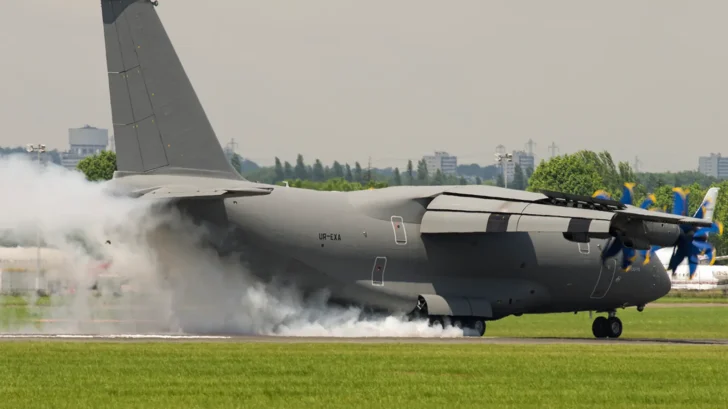
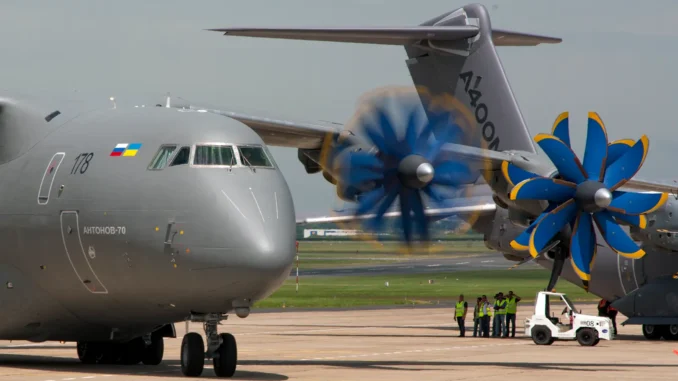
The Antonov An-70 is a four-engine medium tactical transport aircraft developed by the Antonov Design Bureau. As the world’s first large aircraft powered exclusively by advanced propfan engines, it combines high-speed jet-like performance with exceptional short takeoff and landing (STOL) capabilities designed to operate from unpaved, austere airstrips.
General Information
- Type: Medium tactical military transport aircraft
- Manufacturer: Antonov Design Bureau
- First Flight: December 16, 1994
- Status: Completed state tests
- Primary Users: Ukrainian Air Force
- Number Built: 2 prototypes (plus limited airframe completions)
History
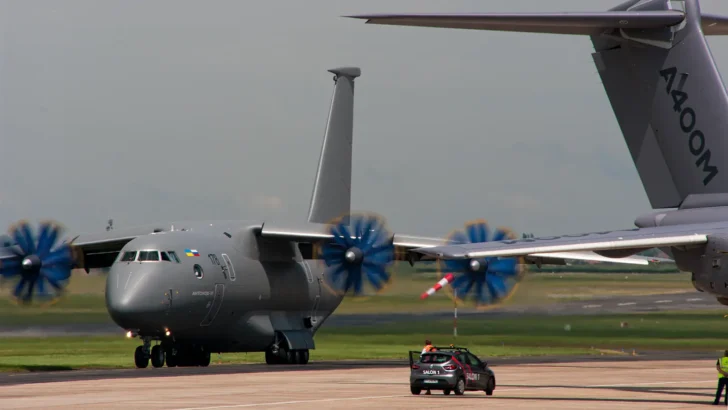
The development of the Antonov An-70 began during the late Soviet era as a prospective replacement for aging Antonov An-12 transport aircraft. Led by the Antonov Design Bureau, engineers sought to create an advanced cargo lifter utilizing revolutionary propfan technology to maximize fuel efficiency and payload capacity. Following the rollout of the initial prototype, the aircraft successfully completed its maiden flight on December 16, 1994, in Kyiv. Despite facing geopolitical and funding disruptions across subsequent decades, the type completed state qualification tests and officially entered service with the Ukrainian armed forces.
Design
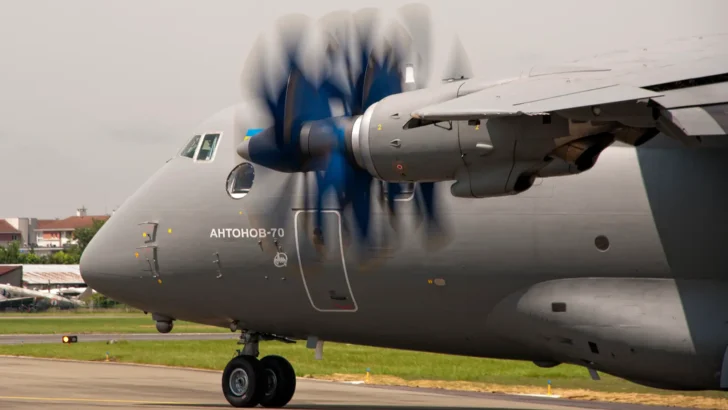
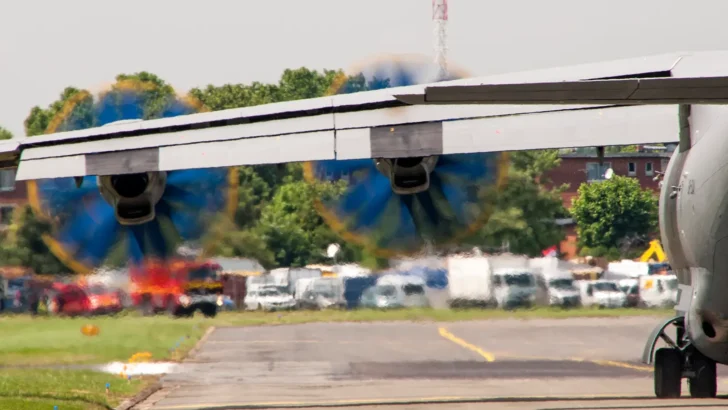
The Antonov An-70 features a high-wing cantilever monoplane airframe constructed with extensive use of composite materials to reduce structural weight. Its propulsion system comprises four Ivchenko-Progress D-27 three-shaft propfan engines driving counter-rotating, scimitar-bladed propellers. The pressurized cargo compartment incorporates an integrated overhead hoist system and a wide rear ramp-door designed to handle heavy industrial freight, military vehicles, and large-scale troop airdrops.
Operational Impact
The introduction of the Antonov An-70 redefined medium tactical airlift benchmarks by bridging the performance gap between slower turboprops and heavy jet freighters. Its advanced STOL performance allows operators to deliver substantial payloads into short, unpaved strips that are inaccessible to standard transport aircraft. The aircraft provides vital versatility for military logistics, humanitarian disaster relief, and outsized cargo deployment.
Variants
- An-70: The baseline military transport variant optimized for tactical cargo and troop airdrops.
- An-70T: A proposed commercial freight-oriented derivative designed for civilian cargo operations.
- An-70-600: A joint developmental configuration featuring updated avionics and system integrations.
- An-112KC / An-188: Derivative concepts exploring aerial refueling and Western-engine integration options.
Operators
- Current: Ukrainian Air Force
- Former: None
- Future: Fleet status remains tied to strategic defense procurement priorities and localized industrial manufacturing capabilities in Ukraine.
Specifications
General Characteristics
- Crew: 3 to 4 flight crew members
- Capacity: Up to 300 troops or 47,000 kg of maximum payload
- Length: 40.73 m
- Wingspan: 44.06 m
- Height: 16.38 m
- Empty Weight: 66,230 kg
- Maximum Takeoff Weight: 145,000 kg
- Powerplant: 4 × Ivchenko-Progress D-27 propfan engines, 10,350 kW (13,880 hp) each
Performance
- Maximum Speed: 780 km/h
- Cruise Speed: 750 km/h
- Range with Maximum Payload: 1,350 km
- Service Ceiling: 12,000 m
- Rate of Climb: 24.9 m/s
Armament
- Armament: None (strictly operated as an unyielding tactical and strategic transport aircraft).
The Antonov An-70 stands out as a unique technological milestone in aviation history through its pioneering use of high-power propfan propulsion. Its rare blend of jet-like speed, heavy cargo capacity, and short-field agility highlights advanced engineering innovation. While built in limited numbers, its design legacy continues to influence modern transport aircraft development.