Introduction
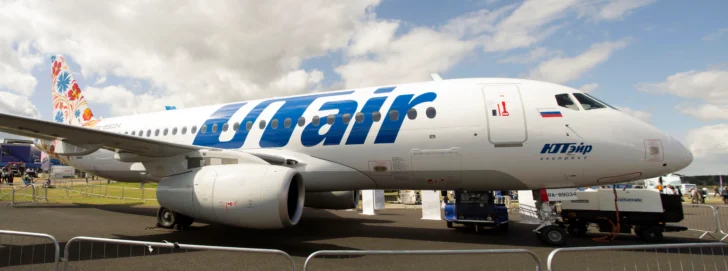
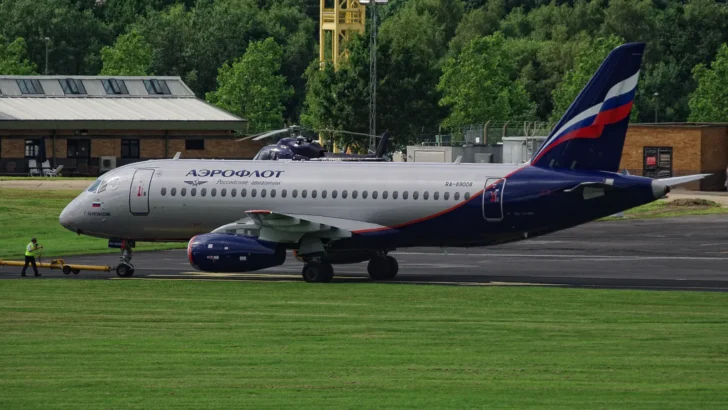
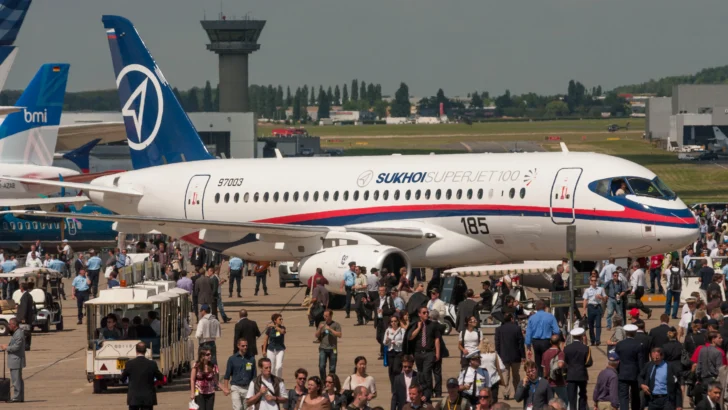
The sukhoi superjet 100 (SSJ100) is a modern twin-engine regional jet developed by the Sukhoi Civil Aircraft Company. Designed to connect secondary hubs and regional markets, it seats between 87 and 98 passengers in a comfortable five-abreast layout, combining high-bypass turbofan efficiency with advanced digital flight controls.
General Information
- Type: Regional passenger airliner
- Manufacturer: United Aircraft Corporation / Yakovlev (formerly Sukhoi Civil Aircraft)
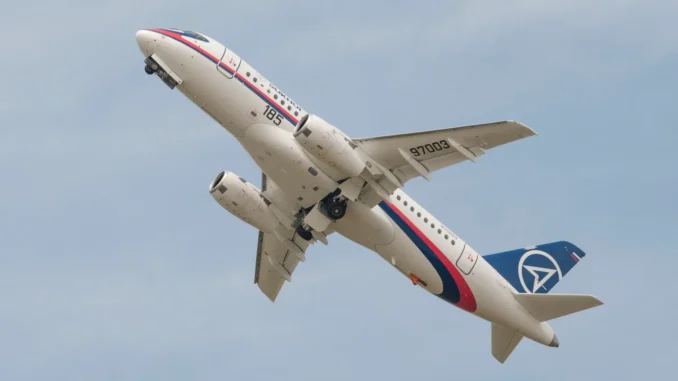
- First Flight: May 19, 2008
- Status: In service and ongoing production evolution
- Primary Users: Aeroflot, Rossiya Airlines, Azimuth, Red Wings Airlines, Yamal Airlines, Gazpromavia, IrAero
- Number Built: Over 220 units

History
The development of the sukhoi superjet 100 commenced in 2000 under the leadership of Sukhoi, incorporating international engineering partnerships to build a globally competitive narrow-body airliner. Following the prototype’s maiden flight on May 19, 2008, from Komsomolsk-on-Amur, the aircraft entered commercial service with Armenian carrier Armavia on April 21, 2011. Subsequent manufacturing adaptations focused on modernizing avionics and substituting domestic systems to ensure continuous production autonomy.
Design
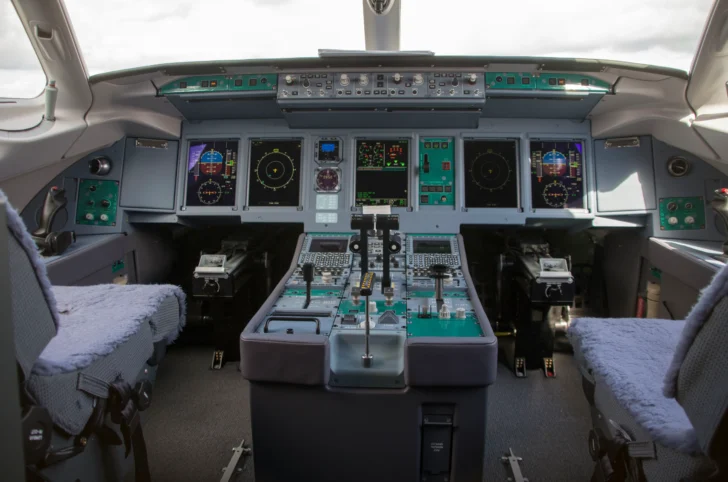
The sukhoi superjet 100 features a low-wing monoplane configuration equipped with a supercritical wing design to minimize high-speed drag. It incorporates an advanced full-authority digital fly-by-wire (FADEC) control system and a spacious cabin arrangement with five-abreast seating. Power is supplied by two underwing turbofan engines designed to balance fuel economy with low acoustic signatures during takeoff and landing phases.

Operational Impact
The introduction of the sukhoi superjet 100 substantially modernized regional fleet operations by replacing aging Soviet-era aircraft like the Tupolev Tu-134 and Yakovlev Yak-42. Airlines deploy the aircraft extensively across domestic and regional international networks, benefiting from its optimized short-to-medium sector economics, high dispatch reliability, and passenger-friendly cabin cross-section.
Variants
- SSJ100-95B (Baseline): The initial production variant configured for standard regional ranges and powered by Franco-Russian turbofans.
- SSJ100-95LR (Long Range): An extended-range version featuring increased fuel capacity and a higher maximum takeoff weight.
- Business Jet (SBJ): A corporate layout variant customized for executive and VIP transport missions.
- SJ-100 (“Superjet New”): A heavily updated, import-substituted variant featuring Russian domestic systems and PD-8 turbofan engines.
Operators
- Current: Aeroflot, Rossiya Airlines, Azimuth, Red Wings Airlines, Yamal Airlines, Gazpromavia, and IrAero
- Former: Armavia, Interjet, and various early lease operators
- Future: Expanding domestic fleets via the Russified SJ-100 production pipeline managed by the United Aircraft Corporation
Specifications: General characteristics, Performance, Passengers layout
General Characteristics
- Crew: 2 flight deck crew (plus cabin attendants)
- Length: 29.94 m
- Wingspan: 27.80 m
- Height: 10.28 m
- Empty Weight: 25,100 kg
- Maximum Takeoff Weight: 45,880 kg (Baseline) / 49,450 kg (Long Range)
- Powerplant: 2 × PowerJet SaM146 turbofans (or domestic PD-8 engines on recent models)
Performance
- Maximum Speed: Mach 0.81 (approx. 860 km/h)
- Cruise Speed: Mach 0.78 (828 km/h)
- Range: 3,048 km (Baseline) up to 4,578 km (Long Range)
- Service Ceiling: 12,200 m (40,000 ft)
Passengers Layout
- Seating Capacity: 87 to 98 passengers in a standard configuration (with high-density layouts accommodating up to 103 seats).
- Cabin Configuration: Single-class or dual-class arrangements utilizing a five-abreast seating profile with two seats on one side and three on the other.
The sukhoi superjet 100 remains a central pillar of regional aviation networks, providing efficient point-to-point transit across demanding geography. Its ongoing evolution through domestic engineering adaptations ensures its continued relevance in modern commercial fleets. As airline networks adapt to shifting industrial landscapes, the type sustains vital connectivity for regional passengers worldwide.