Lockheed Martin F-16 Fighting Falcon: The Definitive Multi-Role Fighter Fact Sheet
Introduction
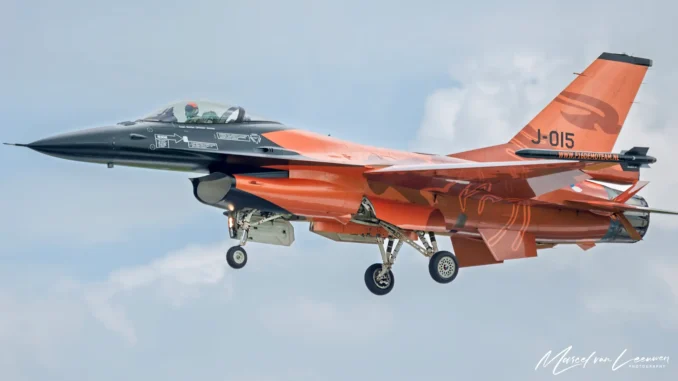
The Lockheed Martin F-16 Fighting Falcon is an American single-engine supersonic multi-role fighter aircraft originally developed by General Dynamics for the United States Air Force. Designed as an agile air-superiority day fighter, it evolved into an all-weather multi-role strike platform. It remains one of the most prolific and combat-proven fighter aircraft in modern aviation history.
General Information
- Type: Single-engine multi-role fighter
- Manufacturer: General Dynamics (original), Lockheed Martin (current)
- First Flight: January 20, 1974 (unplanned taxi test); February 2, 1974 (official first flight)
- Status: In active service; ongoing production
- Primary Users: United States Air Force, Turkish Air Force, Israeli Air Force, Egyptian Air Force, Republic of China (Taiwan) Air Force, Republic of Korea Air Force, Royal Jordanian Air Force, Pakistan Air Force, Ukrainian Air Force
- Number Built: Approximately 4,604+ units
History
The development of the F-16 traces back to the Lightweight Fighter (LWF) program initiated by the United States Air Force in January 1972. Influenced by Colonel John Boyd and the tactical advocacy group known as the “Fighter Mafia,” the program prioritized energy-maneuverability theory, lower procurement costs, and extreme agility over excessive aircraft weight and complexity.
On January 13, 1975, the USAF officially selected the General Dynamics YF-16 prototype over the competing Northrop YF-17 design. Shortly thereafter, the Multinational Fighter Program Group—comprising Belgium, Denmark, the Netherlands, and Norway—selected the aircraft to replace the aging F-104 Starfighter. Full-rate production expanded through transatlantic co-production arrangements, firmly establishing the jet as a cornerstone of NATO air defense.
Design
The airframe incorporates several pioneering aerodynamic and cockpit innovations:
- Relaxed Static Stability and Fly-by-Wire: The F-16 introduced an electronic fly-by-wire flight control system paired with relaxed static aerodynamic stability, granting superior roll rates, turning authority, and flight safety.
- High-g Cockpit Integration: A 30-degree reclined ejection seat enhances pilot tolerance during sustained 9-g maneuvers, while a side-stick controller ensures precise inputs under high acceleration.
- Bubble Canopy: A seamless, single-piece frameless bubble canopy provides pilots with unobstructed 360-degree situational awareness.
- Aerodynamic Blending: Blended wing-body contours and forebody strakes generate controlled vortex lift, expanding internal fuel capacity and maintaining stability at high angles of attack.
Operational Impact
The F-16 Fighting Falcon redefined modern aerial warfare across air-to-air dogfights and precision strike missions. The platform achieved its first air-to-air victory in 1981 and played a decisive role in Operation Opera, Operation Desert Storm, Allied Force, and modern precision-guided air campaigns. Its proven airframe adaptation enables electronic attack, SEAD (“Wild Weasel”) surface-to-air missile suppression, and strategic ground attack missions.
Variants
- F-16A/B: Baseline single-seat (A) and twin-seat combat-capable operational trainer (B) variants.
- F-16C/D: Modernized standard with improved avionics, all-weather beyond-visual-range radar, and expanded precision weapons integration.
- F-16E/F (Block 60): Advanced export variant featuring conformal fuel tanks and AN/APG-80 active electronically scanned array (AESA) radar.
- F-16V (Block 70/72): Current modern production standard equipped with the AN/APG-83 SABR AESA radar, updated mission computers, and structural life extensions.
- QF-16: Reconfigured full-scale aerial target drone program for weapon evaluation and advanced pilot training.
Operators
- Current Operators: United States, Turkey, Israel, Egypt, South Korea, Taiwan, Greece, Pakistan, Jordan, Singapore, Poland, Chile, Bahrain, Morocco, Ukraine, among others.
- Former Operators: Italy, Norway, Netherlands, Denmark, Belgium (actively transitioning fleets).
- Future Operators: Bulgaria, Slovakia, Argentina.
Specifications
General Characteristics
- Crew: 1 (single-seat) or 2 (twin-seat)
- Length: 15.06 m
- Wingspan: 9.96 m (including wingtip rails)
- Height: 4.88 m
- Wing Area: 27.87 m²
- Empty Weight: 8,570 kg
- Gross Loaded Weight: 12,020 kg
- Maximum Takeoff Weight: 19,200 kg
- Fuel Capacity (Internal): 3,175 kg
- Powerplant: 1 × Pratt & Whitney F100-PW-229 or General Electric F110-GE-129 afterburning turbofan
- Dry Thrust: 76.3 kN to 79.2 kN
- Afterburning Thrust: 127 kN to 131 kN
Performance
- Maximum Speed: 2,178 km/h (Mach 2.05 at altitude)
- Combat Radius: 550 km on a hi-lo-hi mission with four 454 kg bombs
- Ferry Range: 4,220 km (with drop tanks)
- Service Ceiling: 15,240 m
- Rate of Climb: 254 m/s
- Wing Loading: 431 kg/m²
- Thrust/Weight Ratio: 1.095 (with typical combat weight)
Armament
- Guns: 1 × 20 mm M61A1 Vulcan 6-barrel rotary cannon (511 rounds)
- Hardpoints: 9 to 11 stations (wingtip rails, under-wing pylons, and centerline station) with a capacity of up to 7,700 kg of ordnance
- Air-to-Air Missiles: AIM-9 Sidewinder, AIM-120 AMRAAM, IRIS-T, Python-5
- Air-to-Surface Missiles: AGM-65 Maverick, AGM-88 HARM, AGM-158 JASSM
- Anti-Ship Missiles: AGM-84 Harpoon, Penguin
- Bombs: JDAM series, Paveway laser-guided bombs, Small Diameter Bombs (SDB), Mk 80 series unguided munitions
The F-16 Fighting Falcon remains a primary combat asset across modern air arms due to its adaptable design, high maneuverability, and continuous modular upgrades. Advanced radar packages, structural life enhancements, and global industrial integration ensure the platform maintains operational effectiveness alongside fifth-generation fighters. Production of the Block 70/72 standard guarantees the aircraft will remain deployed on front lines well into the mid-21st century.