Complete Double-Deck Airliner Fact Sheet and Specifications
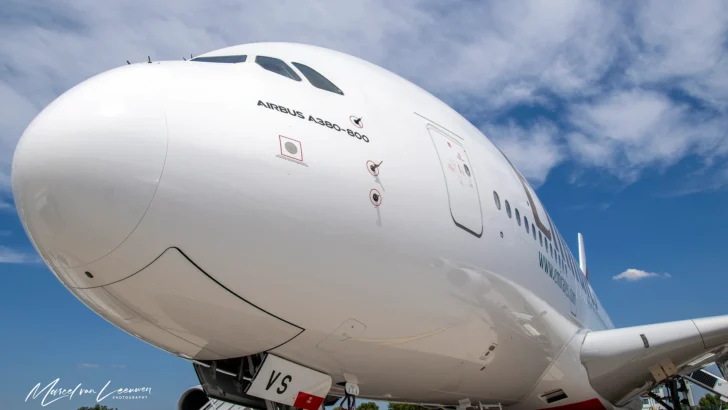
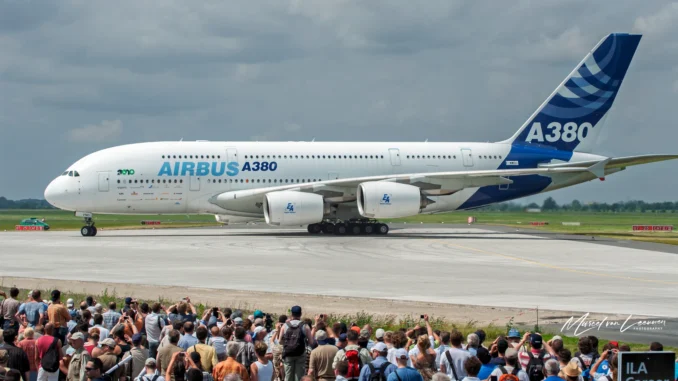
The Airbus A380 is the world’s largest passenger airliner and the only commercial jet featuring two full-length passenger decks, engineered by Airbus to serve high-density, long-haul international routes.
General Information
- Type: Four-engine, wide-body, double-deck passenger airliner
- Manufacturer: Airbus
- First Flight: 27 April 2005
- Status: In service (production ended in 2021)
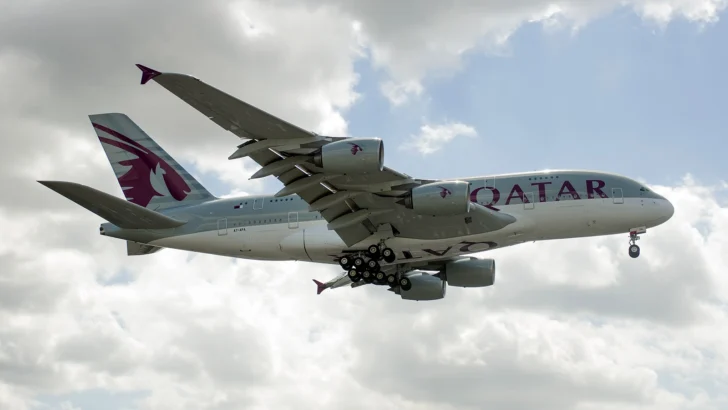
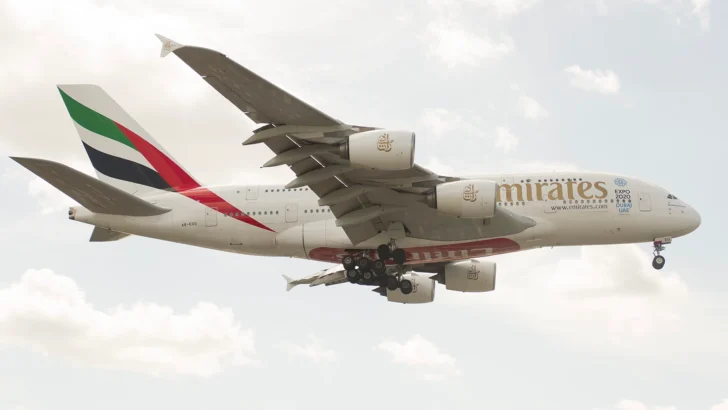
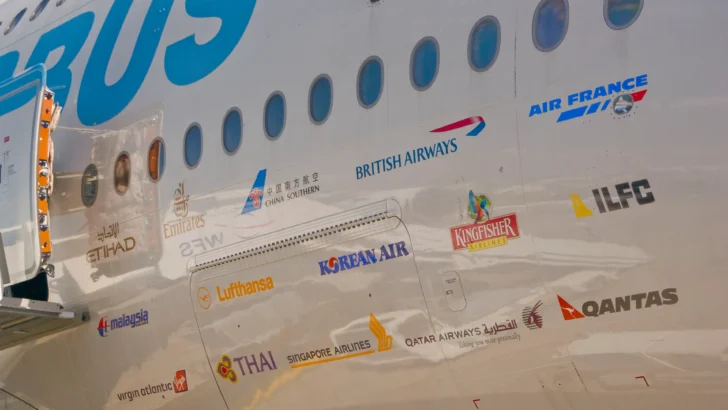
- Primary Users: Emirates, Singapore Airlines, British Airways, Qantas, Lufthansa, Etihad Airways, Qatar Airways, Asiana Airlines, Korean Air, All Nippon Airways
- Number Built: 254 (including 3 test aircraft and 251 customer deliveries)
History
The Airbus A380 originated in mid-1988 when a group of Airbus engineers led by Jean Roeder began secret studies on an ultra-high-capacity airliner to challenge the Boeing 747 monopoly in the large aircraft market. Airbus formally announced the program in 1990 and presented the initial double-deck design, designated A3XX, in June 1994.
On 19 December 2000, the Airbus supervisory board officially launched the €9.5 billion program after securing firm launch orders from major international carriers, including Emirates, Singapore Airlines, Qantas, and Air France. Manufacturing involved major industrial facilities across France, Germany, Spain, and the United Kingdom, with final assembly taking place in Toulouse, France. Following extensive structural and flight testing, the first A380 entered commercial passenger service on 25 October 2007 with Singapore Airlines on a flight between Singapore and Sydney.
Design
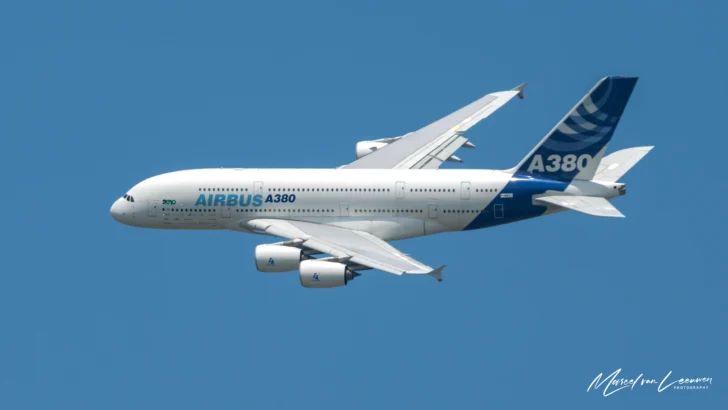
Engineers built the Airbus A380 around a massive, oval-shaped fuselage housing two full-length passenger decks and a lower cargo hold. To minimize structural weight across its 79.75-meter wingspan, Airbus constructed approximately 25 percent of the airframe from advanced composite materials, including carbon-fiber-reinforced polymer (CFRP) in the center wing box and tail sections, alongside GLARE (glass-reinforced aluminum laminate) on the upper fuselage.
The aircraft introduced several key aerospace technologies:
- Supercritical Wing Design: Optimized for high subsonic cruise speeds, the 845-square-meter wing generates exceptional lift, allowing the aircraft to take off and land at lower speeds than comparable large wide-bodies.
- 22-Wheel Landing Gear: Five separate landing gear assemblies distribute the aircraft’s 575-tonne maximum weight evenly across existing airport runways and taxiways.
- Integrated Modular Avionics: The two-crew glass cockpit features eight large interactive displays, sidestick fly-by-wire flight controls, and the Brake-to-Vacate system, which automates deceleration to hit pre-selected runway exits.
- Quiet Propulsion: Operators selected between four Rolls-Royce Trent 900 or four Engine Alliance GP7200 high-bypass turbofan engines, giving the aircraft one of the lowest noise footprints in its weight class.
Operational Impact
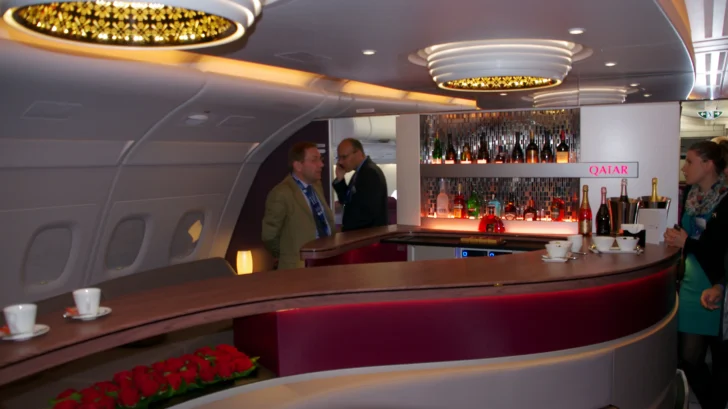
The Airbus A380 reshaped long-haul hub-and-spoke aviation by allowing airlines to transport over 500 passengers per flight into slot-constrained major airports such as London Heathrow, Dubai, and Tokyo Narita. Its spacious interior enabled carriers to introduce unprecedented onboard amenities, including private first-class suites, shower spas, and upper-deck lounges.
However, global airline strategy gradually shifted away from four-engine hub-to-hub aircraft toward smaller, more fuel-efficient twin-engine long-haul jets like the Airbus A350 and Boeing 787. Declining new orders led Airbus to announce the termination of the program in February 2019, delivering the final production aircraft to Emirates in December 2021. Despite the end of production, strong post-pandemic travel demand and delivery delays for replacement jets prompted most remaining operators to keep their A380 fleets active well into the 2030s.
Variants
- A380-800: The baseline and sole commercial passenger variant produced. Sub-designations include the A380-841 and A380-842 (powered by Rolls-Royce Trent 900 engines) and the A380-861 (powered by Engine Alliance GP7200 engines).
- A380F (Proposed): A planned freighter variant capable of carrying 150 tonnes of cargo; development was suspended and eventually canceled after launch customers shifted orders to smaller freighters.
- A380-900 (Proposed): A proposed stretched passenger variant designed to accommodate up to 650 passengers in a standard layout or 900 in an all-economy configuration, which was never launched.
- A380plus (Proposed): A 2017 aerodynamic and structural enhancement study featuring large split winglets, higher takeoff weights, and cabin optimizations that remained unbuilt.
Operators
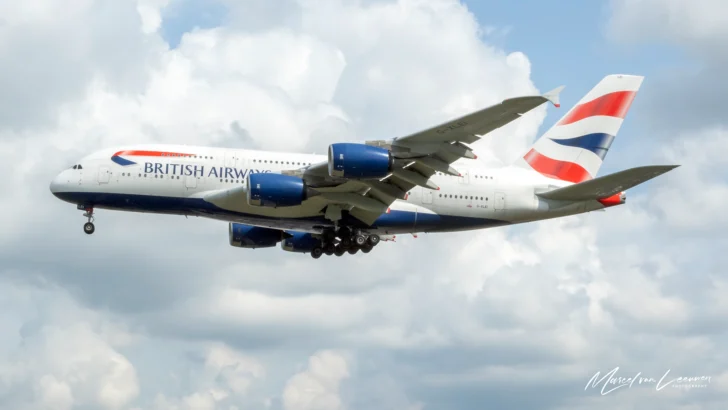
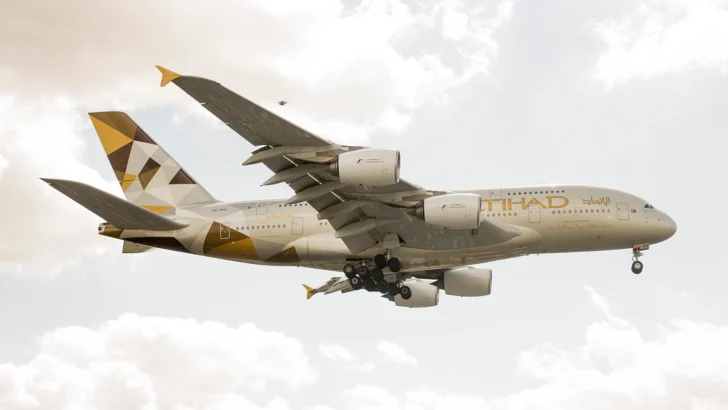
- Current: Emirates, Singapore Airlines, British Airways, Qantas, Lufthansa, Etihad Airways, Qatar Airways, Asiana Airlines, Korean Air, All Nippon Airways
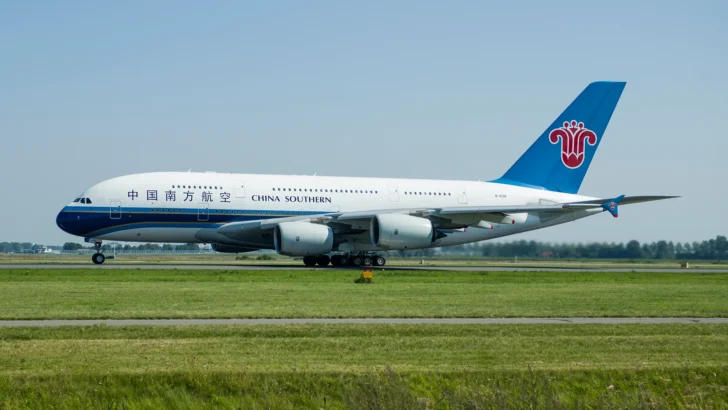
- Former: Air France, China Southern Airlines, Global Airlines, Hi Fly Malta, Malaysia Airlines, Thai Airways International
- Future: None (production has ended and no new airlines have announced plans to acquire the type)
Specifications
General Characteristics
- Crew: 2 flight crew
- Length: 72.72 m
- Wingspan: 79.75 m
- Height: 24.09 m
- Wing Area: 845 m²
- Operating Empty Weight: 277,000 kg
- Maximum Takeoff Weight: 575,000 kg
- Maximum Landing Weight: 394,000 kg
- Fuel Capacity: 320,000 liters (approx. 258,840 kg usable fuel)
- Powerplant: 4 × Rolls-Royce Trent 900 or 4 × Engine Alliance GP7200 turbofans (311 to 363 kN thrust each)
Performance
- Maximum Operating Speed: Mach 0.89 (approx. 945 km/h at cruise altitude)
- Cruise Speed: Mach 0.85 (approx. 903 km/h)
- Range: 14,800 to 15,200 km
- Service Ceiling: 13,100 m
- Takeoff Distance (at MTOW): 2,970 m
Passengers Layout
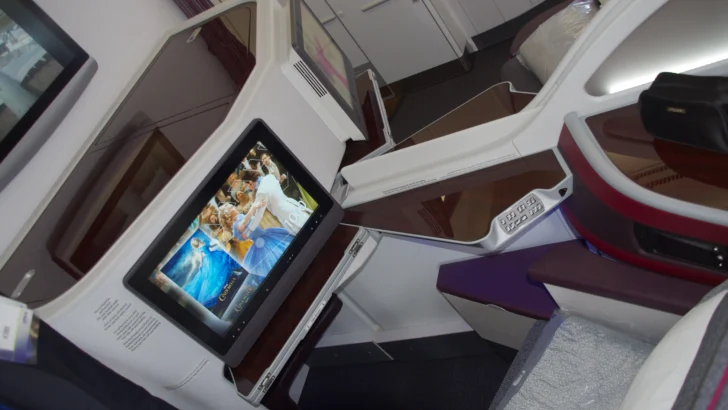
- Seating Capacity: Typically 525 to 545 passengers in a standard three- or four-class layout; certified for up to 853 passengers in a single-class, all-economy configuration
- Cabin Arrangement: Full-length double-deck fuselage featuring a 10-abreast (3-4-3) economy layout on the main deck and an 8-abreast (2-4-2) economy or premium cabin layout on the upper deck
The Airbus A380 stands as a landmark achievement in aerospace engineering, proving that a full-length double-deck airliner could operate safely and reliably across global trunk routes. Although changing airline economics ended its production run in 2021, the aircraft’s composite structures, digital systems, and aerodynamic advancements directly shaped modern wide-body designs. Over the coming decade, the A380 will remain a flagship fixture at major international hubs while also serving as a flying testbed for next-generation sustainable propulsion technologies.