
Introduction
The focke-wulf-fw-190, widely known as the Würger (Shrike), is a German single-seat, single-engine monoplane fighter developed by Focke-Wulf. Renowned for its exceptional roll rate, rugged construction, and heavy firepower, it served as one of the backbone fighters of the Luftwaffe during World War II.
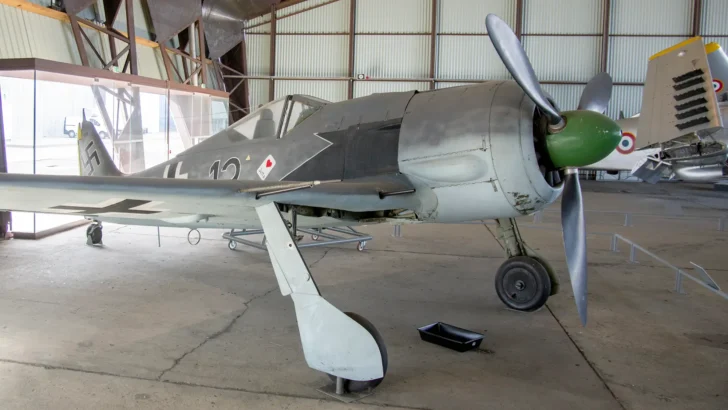
General Information
- Type: Fighter / Fighter-bomber aircraft
- Manufacturer: Focke-Wulf
- First Flight: June 1, 1939
- Status: Retired from military service
- Primary Users: Luftwaffe, Hungarian Air Force, Turkish Air Force
- Number Built: Over 20,000 units
History
The development of the focke-wulf-fw-190 began in 1937 when the German Air Ministry (RLM) sought a new fighter to supplement the Messerschmitt Bf 109. Led by chief designer Kurt Tank, the development team opted for a robust radial engine configuration to ensure reliability and high performance. Following the prototype’s maiden flight on June 1, 1939, and extensive testing to overcome early cooling issues, the aircraft entered operational service in August 1941, immediately proving superior to many contemporary Allied aircraft.
Design
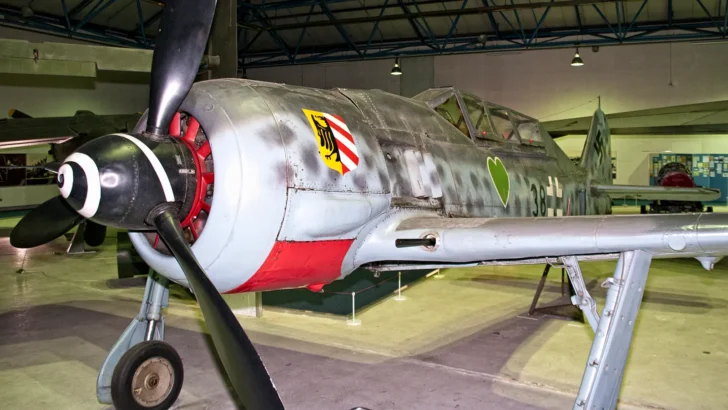
The focke-wulf-fw-190 features an all-metal monocoque structure characterized by a wide-track, inward-retracting landing gear that provided exceptional ground stability. Most operational variants were powered by a bulky, air-cooled BMW 801 twin-row radial engine. To reduce pilot workload during combat, Focke-Wulf incorporated an advanced electro-hydraulic control system known as the Kommandogerät, which automatically regulated engine management parameters such as fuel mixture, ignition timing, and propeller pitch.
Operational Impact
The introduction of the focke-wulf-fw-190 significantly shifted the aerial balance on the Western and Eastern fronts. Its exceptional performance at low and medium altitudes, combined with heavy offensive armament, allowed it to excel in multiple roles including day fighter, bomber interceptor, and close air support ground-attack (Schlachtflugzeug). Its versatility ensured it remained a formidable combat asset until the conclusion of the war.

Variants
- Fw 190A: The primary radial-engined series comprising multiple sub-variants (A-1 through A-9) optimized for day fighting and interceptor duties.
- Fw 190F: Dedicated ground-attack variant featuring increased armor protection and specialized bomb racks.
- Fw 190G: Long-range fighter-bomber configuration designed for extended combat radiuses and heavy ordnance payloads.
- Fw 190D (“Dora”): Late-war high-performance variant equipped with a Junkers Jumo inline engine designed to counter high-altitude Allied threats.
Operators
- Current: None (historic preservation fleets only)
- Former: Luftwaffe, Hungarian Air Force, Turkish Air Force, and the French Air Force (post-war)
- Future: None (historical aviation legacy only)

Specifications
General Characteristics
- Crew: 1 (pilot)
- Length: 9.00 m
- Wingspan: 10.51 m
- Height: 3.95 m
- Empty Weight: 3,200 kg
- Maximum Takeoff Weight: 4,417 kg
- Powerplant: 1 × BMW 801D-2 14-cylinder radial piston engine, 1,250 kW (1,700 PS)
Performance
- Maximum Speed: 656 km/h at an altitude of 6,000 m
- Cruise Speed: 475 km/h
- Range: 800 km
- Service Ceiling: 11,410 m
- Rate of Climb: 15 m/s
Armament
- Guns: 2 × 13 mm MG 131 synchronized machine guns and 4 × 20 mm MG 151/20 cannon
- Bombs: Provision for various configurations, including a 1,000 kg center-line bomb or underwing rockets
The focke-wulf-fw-190 stands as a masterpiece of World War II aeronautical engineering. Its combination of heavy firepower, operational adaptability, and rugged design secured its status as one of the most effective fighter aircraft in aviation history. Decades after its retirement, the aircraft continues to capture the fascination of historians and aviation enthusiasts worldwide.
