Specifications, History, and Design Fact Sheet
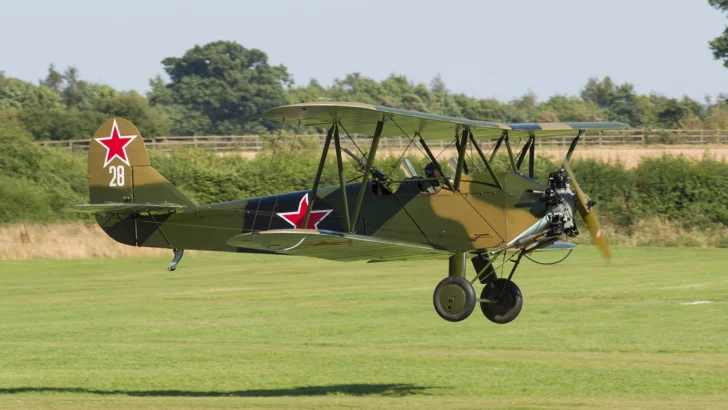
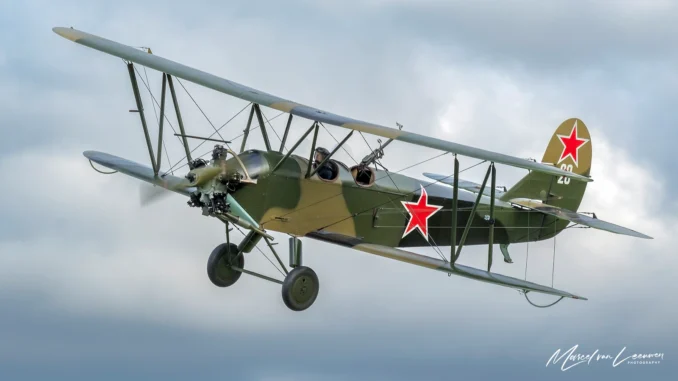
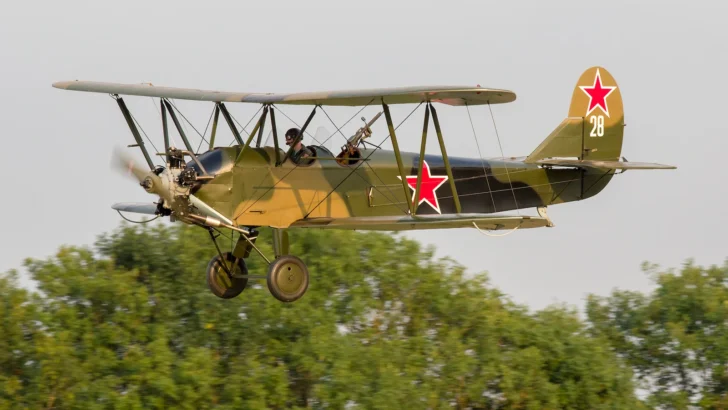
The Polikarpov Po-2 (originally designated U-2 and nicknamed Kukuruznik) is a Soviet two-seat, single-engine utility biplane designed by Nikolai Polikarpov in 1927, becoming the most-produced biplane in aviation history and serving extensively as a primary trainer, agricultural aircraft, liaison platform, and light night bomber.
General Information
- Type: Utility biplane, primary trainer, and light night bomber
- Manufacturer: Polikarpov Design Bureau (with licensed production in Poland by WSK-Okęcie and WSK-Mielec)
- First flight: 24 June 1927 (original U-2 prototype; revised production prototype flew on 7 January 1928)
- Status: Retired from military service (airworthy examples operate in museums and private collections)
- Primary users: Soviet Air Force, Polish Air Force, Korean People’s Army Air Force, Yugoslav Air Force, Romanian Air Force, Albanian Air Force, Aeroflot, DOSAAF
- Number built: Approximately 20,000 to 33,000 (exact total unconfirmed due to decentralized repair-shop and aero-club assembly)
History
The Polikarpov Po-2 originated in 1927 when Soviet aircraft designer Nikolai Polikarpov created a simple, rugged replacement for the aging Avro 504-derived U-1 primary flight trainer. Designated U-2 (Uchebnyy, meaning “training”), the initial prototype powered by a Shvetsov M-11 radial engine first flew on 24 June 1927, followed by a modified, easier-to-manufacture prototype piloted by Mikhail Gromov on 7 January 1928.
Serial production began in 1929 at State Aviation Factory No. 23 in Leningrad and rapidly expanded across multiple Soviet plants. Because of its versatility in agricultural crop-dusting, the aircraft earned the popular nickname Kukuruznik (“maize-duster”). Following Nikolai Polikarpov’s death in 1944, the Soviet government officially redesignated the aircraft Po-2 in his honor. Soviet factory production concluded in 1953, while Polish manufacturers continued license-building the CSS-13 variant until 1959.
Design
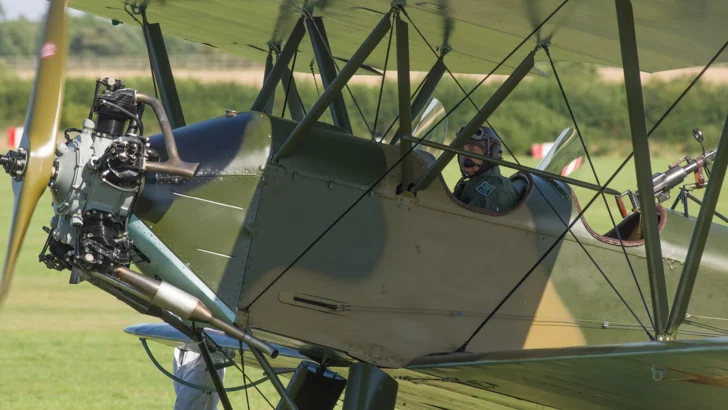
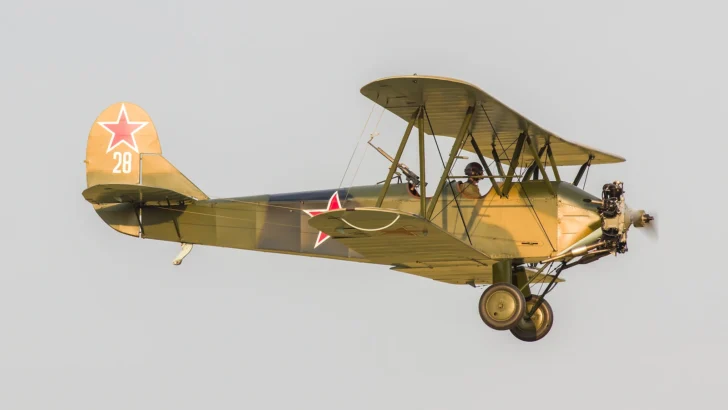
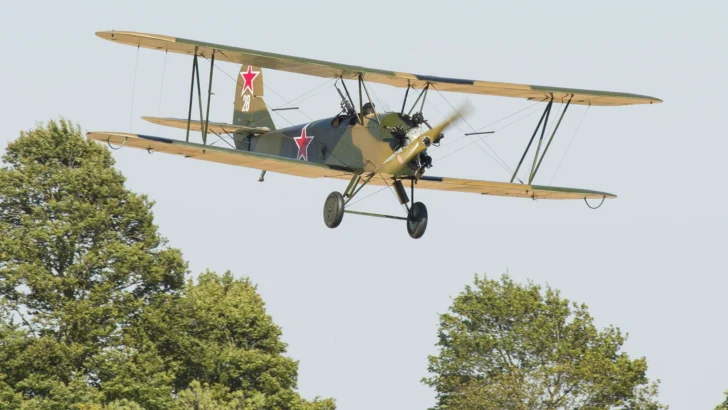
The Polikarpov Po-2 features an unequal-span, single-bay biplane layout constructed primarily of spruce wood, plywood, and doped linen fabric. Its simplified structure utilized interchangeable upper and lower wing panels and identical tail control surfaces to ease field repairs under austere conditions. The tandem open cockpits seated the pilot in front and the student, observer, or gunner in the rear.
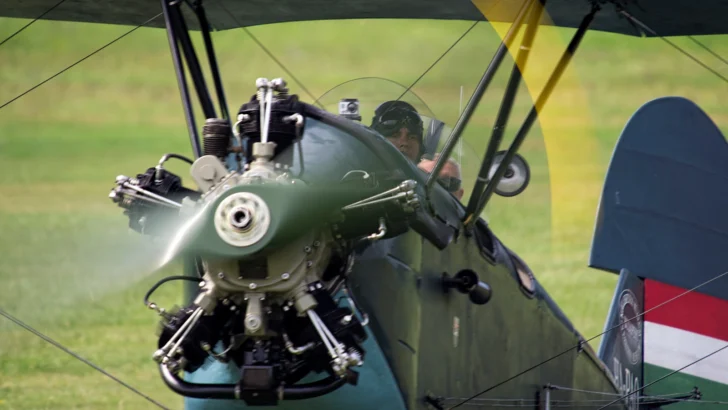
Power came from an uncowled, five-cylinder, air-cooled Shvetsov M-11 radial piston engine driving a fixed-pitch, two-bladed wooden propeller. The fixed conventional tail-skid landing gear could be swapped rapidly for skis in winter or floats for amphibious operations. Without complex hydraulics or electronics, the Po-2 required minimal runway length and demonstrated docile, spin-resistant handling with a stall speed below 65 km/h.
Operational Impact
During World War II, the Polikarpov Po-2 proved unexpectedly effective on the Eastern Front. Beyond training tens of thousands of Soviet pilots, evacuating wounded soldiers, and supplying partisan forces behind German lines, modified Po-2s served as harassment night bombers. Most notably, the all-female 588th Night Bomber Regiment (later the 46th Taman Guards Night Bomber Aviation Regiment), dubbed the “Night Witches” by German troops, flew over 24,000 combat sorties. Crews throttled back their engines and glided silently at treetop height to drop bombs on German encampments, evading faster Luftwaffe fighters whose stall speeds exceeded the Po-2’s maximum speed.
The aircraft returned to combat during the Korean War (1950–1953), where North Korean pilots conducted nocturnal nuisance raids—known to United Nations forces as “Bedcheck Charlie”—against allied airfields. Because its wood-and-fabric airframe produced a minimal radar signature and flew at low altitudes and speeds, the Po-2 became the only biplane credited with a documented jet kill when a pursuing Lockheed F-94 Starfire stalled and crashed while attempting to slow down to engage it.
Variants
- U-2: Original two-seat primary trainer powered by a 75 kW (100 hp) Shvetsov M-11 radial engine.
- U-2A / Po-2A: Agricultural crop-dusting variant fitted with an 86 kW M-11K engine and a chemical hopper.
- U-2VS / Po-2VS: Wartime military multi-purpose and light night bomber variant equipped with underwing bomb racks and a rear 7.62 mm defensive machine gun.
- U-2LNB / Po-2LNB: Dedicated night light bomber featuring exhaust flame dampers and expanded ordnance racks.
- U-2LSh / Po-2LSh: Ground-attack configuration armed with a rear machine gun, bombs, and rails for four RS-82 unguided rockets.
- U-2S / Po-2S: Air ambulance version incorporating an enclosed rear cabin or underwing stretcher pods for transporting wounded personnel.
- U-2NAK / Po-2NAK: Night artillery spotting and tactical reconnaissance model.
- CSS-13: Postwar license-built Polish version produced by WSK-Okęcie and WSK-Mielec between 1948 and 1959.
Operators
- Current: None in active military service (several dozen restored aircraft operate with aviation museums, heritage foundations, and private owners worldwide).
- Former: Soviet Union (Soviet Air Force, Soviet Naval Aviation, Aeroflot, DOSAAF), Poland (Polish Air Force, LOT Polish Airlines, Polish Air Ambulance Service), North Korea (Korean People’s Army Air Force), Yugoslavia (SFR Yugoslav Air Force), Romania (Romanian Air Force), Albania (Albanian Air Force), Bulgaria, China, Czechoslovakia, East Germany, Finland (captured examples), France (Normandie-Niemen regiment), Hungary, and Mongolia.
- Future: None
Specifications (Polikarpov Po-2 / U-2VS)
General Characteristics
- Crew: 2 (pilot and observer/gunner)
- Length: 8.17 m
- Wingspan: 11.40 m
- Height: 3.10 m
- Wing area: 33.2 m²
- Empty weight: 770 kg
- Gross weight: 1,030 kg
- Maximum takeoff weight: 1,350 kg
- Fuel capacity: 125 L
- Powerplant: 1 × Shvetsov M-11D 5-cylinder air-cooled radial piston engine, 93 kW (125 hp)
- Propellers: 2-bladed fixed-pitch wooden propeller
Performance
- Maximum speed: 152 km/h
- Cruise speed: 110 km/h
- Stall speed: 64 km/h
- Range: 630 km
- Service ceiling: 3,000 m
- Rate of climb: 2.78 m/s
- Wing loading: 41.0 kg/m²
Armament
- Guns: 1 × 7.62 mm ShKAS or DA flexible machine gun mounted in the rear cockpit (on armed military variants)
- Rockets: Up to 4 × 82 mm RS-82 unguided rockets (on Po-2LSh ground-attack variants)
- Bombs: Up to 350 kg total on underwing racks, typically 6 × 50 kg FAB-50 or 2 × 100 kg FAB-100 general-purpose bombs
The Polikarpov Po-2 demonstrated that simplicity, durability, and low-speed maneuverability could rival far more advanced warplanes in specialized roles. Across more than three decades of production, it trained generations of aviators, supported civil agriculture, and achieved legendary combat status with the Night Witches in World War II and night raiders in Korea. Today, surviving airworthy examples continue to fly at airshows and aviation museums across Europe, North America, and Oceania.