Lockheed Martin F-35 Lightning II: History, Design, and Performance
Introduction
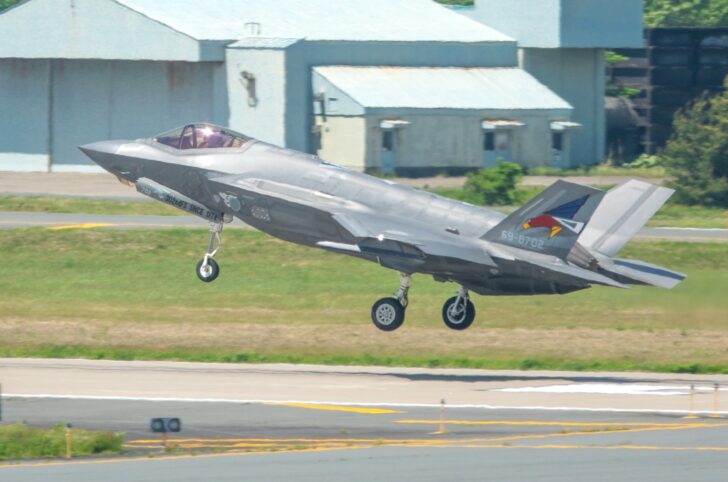
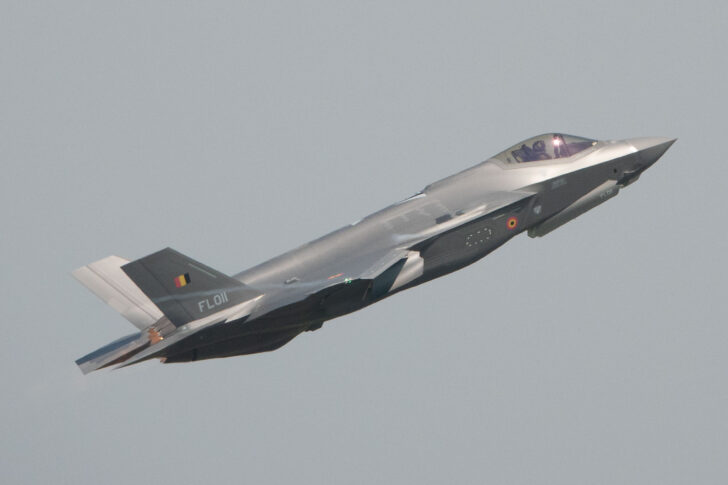
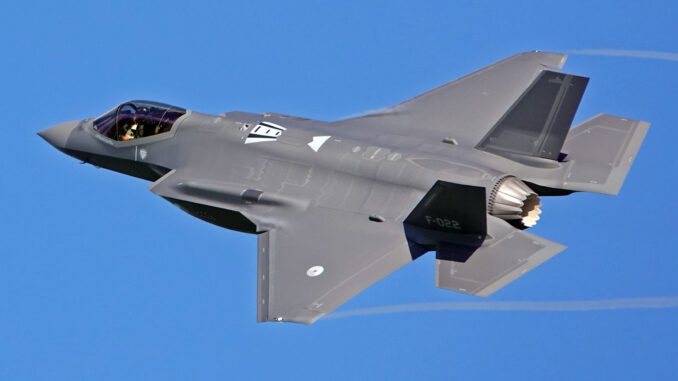
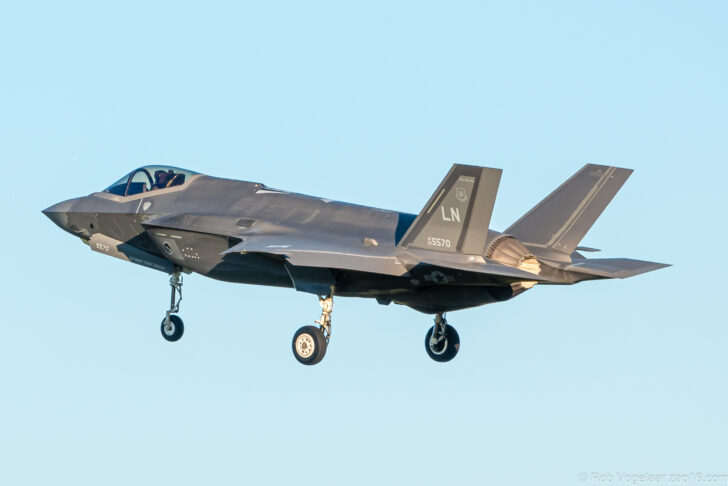
The Lockheed Martin F-35 Lightning II is an American fifth-generation single-seat, single-engine, all-weather stealth multirole combat aircraft designed to perform both air-superiority and strike missions.
The Lockheed Martin F-35 Lightning II represents the core of modern tactical air power for the United States and its allied nations. Developed to replace a variety of aging fourth-generation fighters, the stealth jet integrates advanced sensor fusion, low-observable technology, and network-centric warfare capabilities into three distinct airframe variants.
General Information
-
Type: Fifth-generation stealth multirole fighter
-
Manufacturer: Lockheed Martin Aeronautics (with principal partners Northrop Grumman and BAE Systems)
-
First Flight: December 15, 2006 (F-35A)
-
Status: In service / In full-rate production
-
Primary Users: United States Air Force, United States Marine Corps, United States Navy, Royal Air Force, Japan Air Self-Defense Force, Italian Air Force, Royal Australian Air Force, Republic of Korea Air Force, Israeli Air Force, Royal Netherlands Air Force
-
Number Built: Over 1,300 aircraft delivered

History
The origins of the Lockheed Martin F-35 Lightning II trace back to the Joint Strike Fighter (JSF) program initiated by the United States Department of Defense in the 1990s. The objective focused on developing a single, cost-effective family of stealth combat aircraft to replace legacy platforms such as the F-16 Fighting Falcon, A-10 Thunderbolt II, F/A-18 Hornet, and AV-8B Harrier II.
On October 26, 2001, Lockheed Martin won the JSF competition with its X-35 demonstrator aircraft over Boeing’s X-32 design. Following extensive development and testing, the US Marine Corps declared Initial Operational Capability (IOC) for the F-35B variant in July 2015. The US Air Force declared IOC for the F-35A in August 2016, followed by the US Navy for the F-35C in February 2019.

Design
The design of the F-35 Lightning II emphasizes low-observable radar stealth, advanced electronics, and tactical flexibility. The airframe features radar-absorbent materials, aligned edges, and internal weapons bays to maintain a minimal radar cross-section.
Power comes from a single Pratt & Whitney F135 turbofan engine, which produces high thrust without requiring complex mechanical thrust-vectoring systems. The avionics architecture features the AN/APG-81 Active Electronically Scanned Array (AESA) radar, the Electro-Optical Targeting System (EOTS), and the AN/AAQ-37 Distributed Aperture System (DAS). Sensor fusion merges data from all onboard and offboard systems into a single situational picture displayed directly on the pilot’s Helmet Mounted Display System (HMDS).

Operational Impact
The Lockheed Martin F-35 Lightning II alters modern aerial combat by acting as an airborne command node alongside its strike role. Its ability to penetrate contested airspace undetected enables the jet to share real-time battle space data with naval vessels, ground troops, and non-stealth aircraft.
Globally, the wide adoption of the F-35 across NATO members and allied Pacific nations standardizes defense logistics, combat doctrine, and coalition tactics. The platform serves as a critical deterrent in contested regional security environments.
Variants
-
F-35A: Conventional Takeoff and Landing (CTOL) variant operated primarily by air forces from standard runways.
-
F-35B: Short Takeoff and Vertical Landing (STOVL) variant equipped with a shaft-driven lift fan system for operation from amphibious assault ships and short airstrips.
-
F-35C: Carrier Variant (CV) featuring larger folding wings, reinforced landing gear, and a catapult hook for aircraft carrier operations.
-
F-35I “Adir”: Customized variant modified for the Israeli Air Force, incorporating custom Israeli avionics and electronic warfare systems.
Operators
-
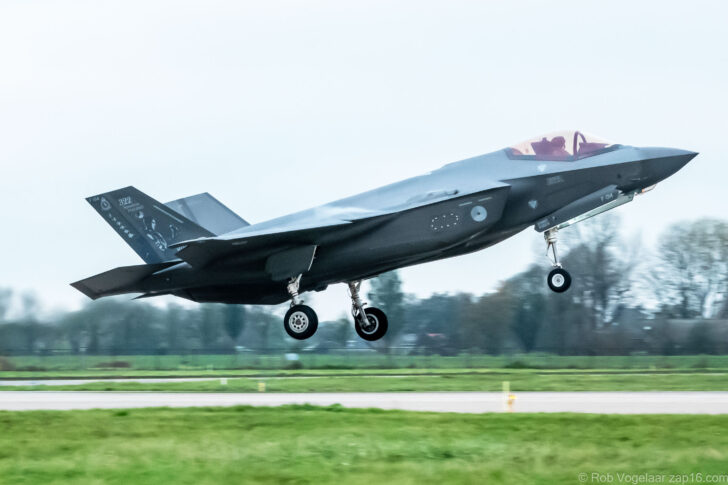
Current: United States, United Kingdom, Israel, Italy, Japan, Australia, Norway, Netherlands, South Korea, Denmark, Poland, Finland, Belgium, Switzerland.
-
Former: Turkey (removed from the program prior to operational unit deliveries).
-
Future: Germany, Czech Republic, Greece, Singapore, Romania.
Specifications
General Characteristics
-
Crew: 1 pilot
-
Length: 15.7 meters (F-35A)
-
Wingspan: 10.7 meters (F-35A / F-35B), 13.1 meters (F-35C)
-
Height: 4.38 meters
-
Wing Area: 42.7 square meters (F-35A / F-35B), 62.1 square meters (F-35C)
-
Empty Weight: 13,290 kilograms (F-35A), 14,650 kilograms (F-35B), 15,790 kilograms (F-35C)
-
Maximum Takeoff Weight: 31,800 kilograms
-
Internal Fuel Capacity: 8,278 kilograms (F-35A), 6,120 kilograms (F-35B), 8,960 kilograms (F-35C)
-
Powerplant: 1 × Pratt & Whitney F135-PW-100 low-bypass turbofan engine producing 125 kilonewtons dry thrust and 191 kilonewtons with lingering afterburner
Performance
-
Maximum Speed: Mach 1.6 (1,975 kilometers per hour at altitude)
-
Combat Radius: 1,239 kilometers (F-35A internal weapon load)
-
Range: 2,220 kilometers
-
Service Ceiling: 15,200 meters
-
g Limits: +9.0 g (F-35A), +7.0 g (F-35B), +7.5 g (F-35C)
Armament
-
Guns: 1 × 25 mm GAU-22/A 4-barrel rotary cannon mounted internally with 180 rounds (F-35A only; F-35B/C use external pod)
-
Internal Bays: 2 internal weapons bays with 4 hardpoints designed for low-observable missions. Typical loads include AIM-120 AMRAAM air-to-air missiles and GBU-31 JDAM precision-guided bombs.
-
External Hardpoints: 6 external wing hardpoints supporting up to 6,800 kilograms of additional ordnance during non-stealth missions.
The Lockheed Martin F-35 Lightning II remains the dominant global fifth-generation combat aircraft, combining stealth, situational awareness, and multi-domain connectivity. Continued software upgrades, including Block 4 capabilities, ensure the platform adapts to evolving anti-access and area-denial threats. With production scheduled well into the coming decades, the F-35 will remain the backbone of Western military aviation for generations to come.